David
David is the son of Jesse associated with Bethlehem and the king whose rule extends from the Judahite household at Hebron to all Israel at Jerusalem. The main accounts document his rise within Saul’s court, the establishment of a royal capital, administration, worship, family conflicts and succession. They preserve an explicitly religious evaluation of his conduct alongside the record of his political achievements. 1 Sam 16:1-13 2 Sam 5:1-5 2 Sam 12:1-13 (Israel’s elders anoint David king)
Nathan’s confrontation with the king uses the rich man’s seizure of a poor man’s lamb. The comparison exposes the gap between David’s judgment of another person and his own treatment of Uriah and Bathsheba. Confession before God does not erase the injuries to those people. The recorded rebuke and the plea in Ps 51:1-19 concerning bloodguilt are the textual basis for this observation. 2 Sam 12:1-13 Ps 51:1-19 (study of 19 July 2021)
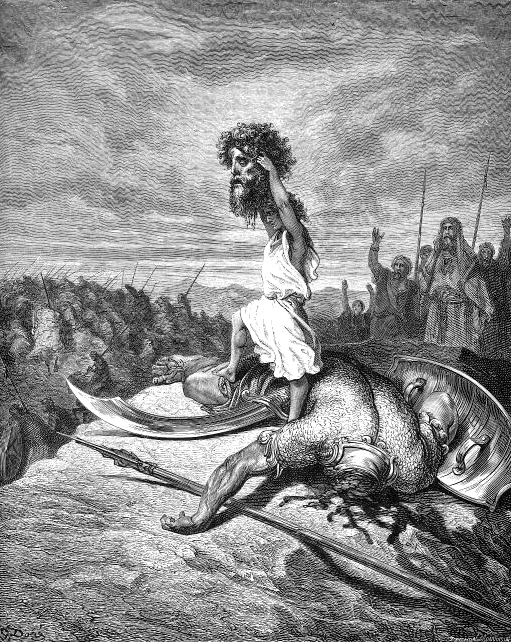
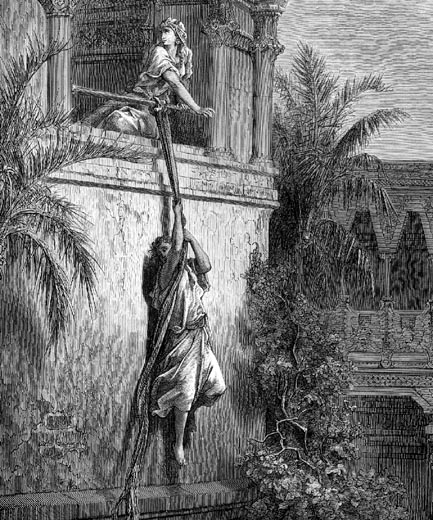
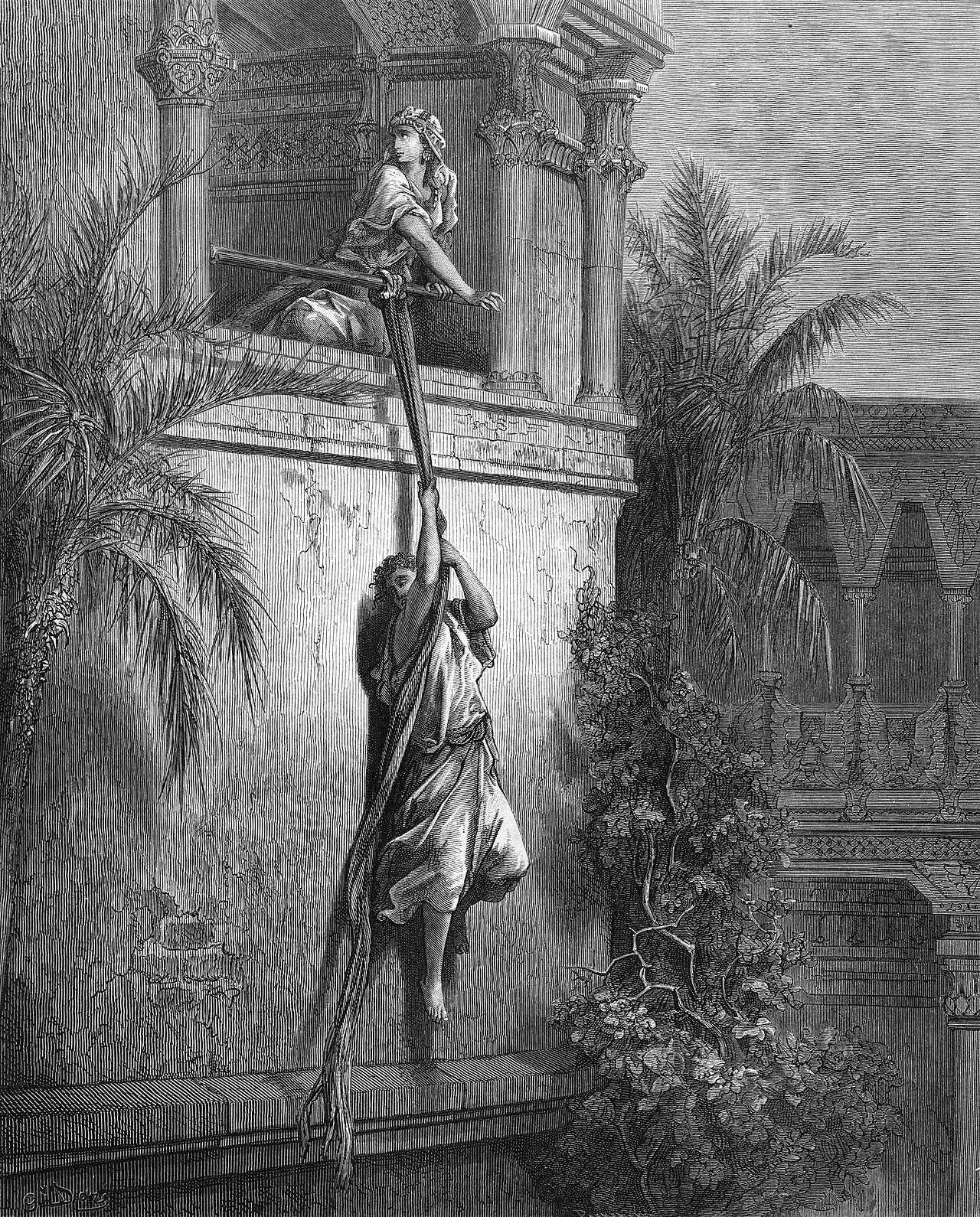
The early family notice names Eliab, Abinadab and Shammah among Jesse’s sons before Samuel anoints the youngest, David, who tends the sheep. His harp playing and service as armor-bearer belong to his relationship with Saul. The confrontation with Goliath establishes a military reputation within the conflict with the Philistines; the account attributes victory to the Lord. Jonathan forms a covenant with David, while public celebration of David’s successes increases Saul’s jealousy. His later refusal to kill Saul in the cave is an explicit limitation he places on his use of force against the reigning king. 1 Sam 16:1-23 1 Sam 17:4-11 1 Sam 17:45-51 1 Sam 18:1-9 1 Sam 24:1-22 (David Kills Goliath) (David serves Saul as a musician) (Jonathan makes a covenant with David) (Saul casts a spear at David)
Accession is a process involving competing loyalties. David is anointed at Hebron and thanks Jabesh-gilead for burying Saul. Abner supports Ish-bosheth, Saul’s son, before negotiating support for David. Joab and Abishai kill Abner in revenge for Asahel; David publicly disclaims the killing. The elders’ covenant and later anointing establish his rule over all Israel. The account gives age thirty at the beginning of his reign and distinguishes seven years and six months in Hebron from thirty-three in Jerusalem. 2 Sam 2:1-11 2 Sam 3:17-39 2 Sam 5:1-5 (David’s message to Jabesh-gilead) (David is anointed king over Judah at Hebron) (Abner negotiates with David)
The captured stronghold in Jerusalem becomes the City of David, and Hiram of Tyre supplies materials and craftsmen for the royal house. The administration list names Joab over the army, Jehoshaphat as recorder, Zadok and Ahimelech, son of Abiathar, as priests, Seraiah as scribe, and Benaiah over the Cherethites and Pelethites. These notices document differentiated military, recordkeeping, priestly and guard responsibilities. The same source describes David’s exercise of justice, providing the institutional setting for the later failures of royal judgment. 2 Sam 5:6-12 2 Sam 8:15-18 (Hiram supplies workers for David’s house)
The capital also receives the covenant ark. Its transfer involves Abinadab’s sons Uzzah and Ahio, the death of Uzzah, and a three-month stay in Obed-edom’s house before installation in the royal tent. The record includes offerings, public celebration and Michal’s criticism of David’s conduct. Through Nathan, God promises a continuing dynasty and a son who will build a house for His name. These passages connect kingship with worship while distinguishing the royal tent from the promised future building. 2 Sam 6:1-23 2 Sam 7:8-16 (G-d makes a covenant with David*)
The marriage notices include Michal, Saul’s daughter; Abigail, previously married to Nabal; and Ahinoam of Jezreel. Saul gives Michal to Phaltiel, son of Laish, while David later demands her return through Ish-bosheth and Abner. The source describes Phaltiel’s sorrow at the separation. These relationships belong to the record of household formation and dynastic politics; no claim that the named wives constitute an exhaustive list is necessary. 1 Sam 18:20-29 1 Sam 25:2-3 1 Sam 25:39-44 2 Sam 3:12-16 (David marries Michal) (Abigail prevents David’s retaliation)
The episode concerning Bathsheba, daughter of Eliam and wife of Uriah, documents a grave abuse of royal power. David summons her and she becomes pregnant. When Uriah will not return to domestic comforts while his comrades remain in the field, David sends Joab instructions placing him in deadly fighting and withdrawing support. Uriah and other soldiers die. Nathan’s indictment explicitly holds David responsible. Forgiveness is announced with lasting consequences; the child dies, and Bathsheba later bears Solomon. The psalm associated with Nathan’s visit preserves confession, bloodguilt and a plea for a renewed heart. 2 Sam 11:1-27 2 Sam 12:1-25 Ps 51:1-19 (David mourns his and Bathsheba’s child) (Solomon is born to David and Bathsheba)
The royal family’s later conflicts are also named rather than concealed. Jonadab supplies the scheme through which Amnon assaults Tamar. Absalom subsequently orders Amnon’s death and later organizes a bid for rule, joined by David’s counselor Ahithophel. Absalom’s death involves Joab and his armor-bearers. The report from Cushi is followed by David’s lament for his son. The account therefore preserves the destructive consequences within the dynasty as well as victories associated with it. 2 Sam 13:1-39 2 Sam 15:1-12 2 Sam 18:9-17 2 Sam 18:31-33 (Reign of David) (Amnon violated his sister Tamar) (Absalom's rebellion against King David*) (Battle of the forest of Ephraim) (David mourns Absalom and Joab confronts him)
A further royal failure concerns the census ordered over Joab’s objection. David confesses wrongdoing; the subsequent plague and the counsel of Gad lead to an altar at the threshing floor of Araunah. The purchase and offerings are connected with cessation of the plague. The text supplies this relationship between royal action, prophetic correction and public consequences, without requiring an invented administrative or medical explanation. 2 Sam 24:1-25
The succession account places Abishag’s care of the aging king alongside Adonijah’s claim to rule. Adonijah, son of Haggith, has the support of Joab and Abiathar. Nathan and Bathsheba seek confirmation of Solomon’s succession; Zadok, Benaiah, Shimei and Rei are listed outside the rival faction. David orders Solomon’s anointing at Gihon. His final instructions combine observance of Moses’ law with charges concerning Joab, the deaths of Abner and Amasa, gratitude to Barzillai’s household and judgment of Shimei. 1 Kgs 1:1-40 1 Kgs 2:1-12 (Death of David) (Abishag cares for the elderly David) (David confirms Solomon amid Adonijah’s bid) (David gives his final charge to Solomon)
David’s burial is placed in the City of David. The final summaries give a forty-year reign and a full old age, without a numerical death age here. The promised dynasty continues to shape later biblical interpretation: the announcement concerning Jesus speaks of David’s throne and a kingdom without end. 1 Kgs 2:1-12 1 Chr 29:26-30 Luke 1:30-33
The dynasty named after David is also attested in a ninth-century BCE stone inscription found at Tel Dan, the Tel Dan Stele. The inscription refers to a king of the ‘House of David’, supporting the historical existence of a dynasty known by his name. Its surviving text is not a firsthand biography of David and does not independently establish the individual episodes in the biblical accounts.