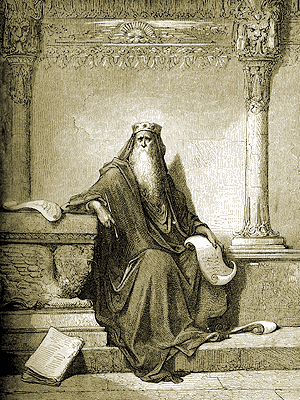
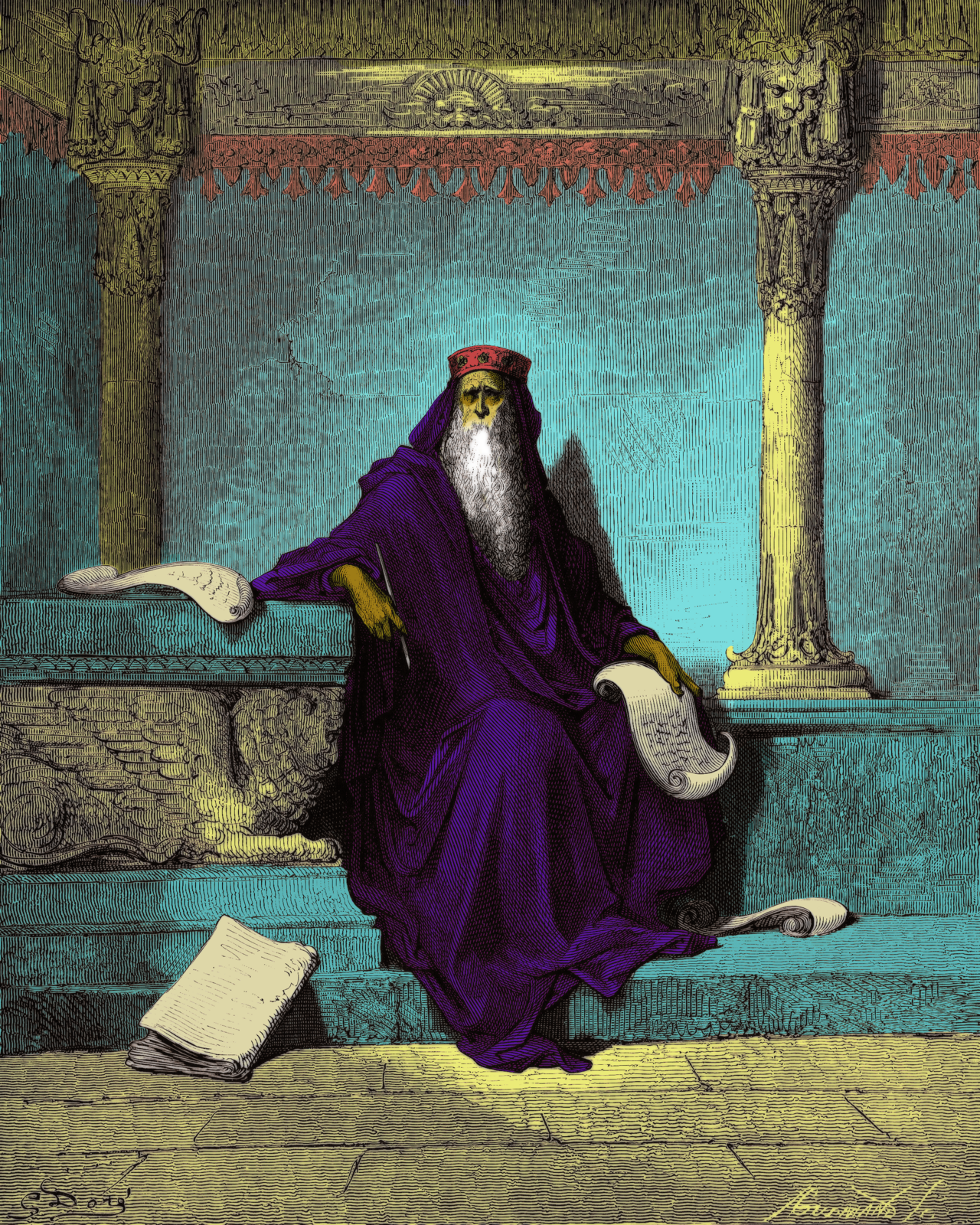
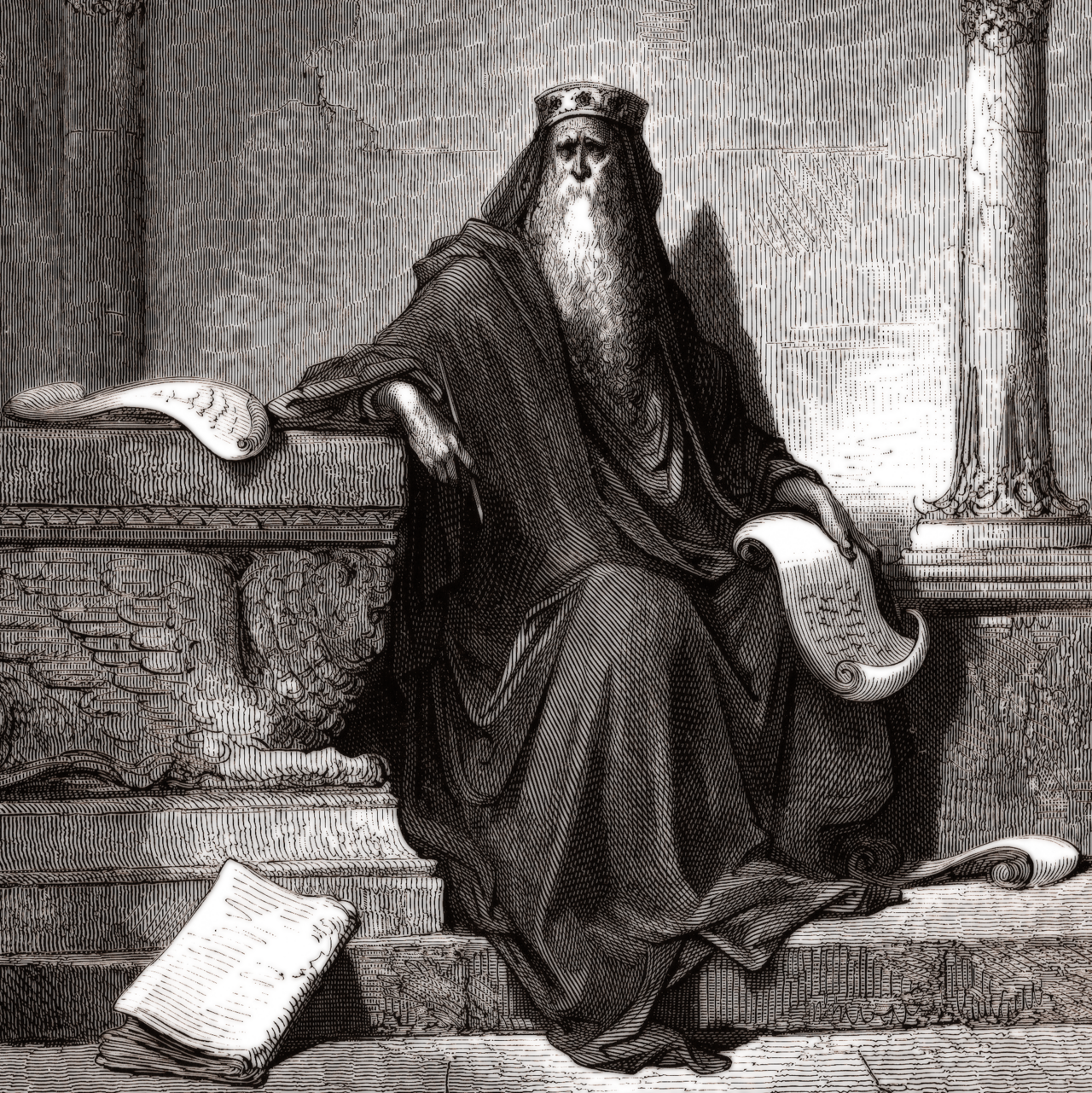
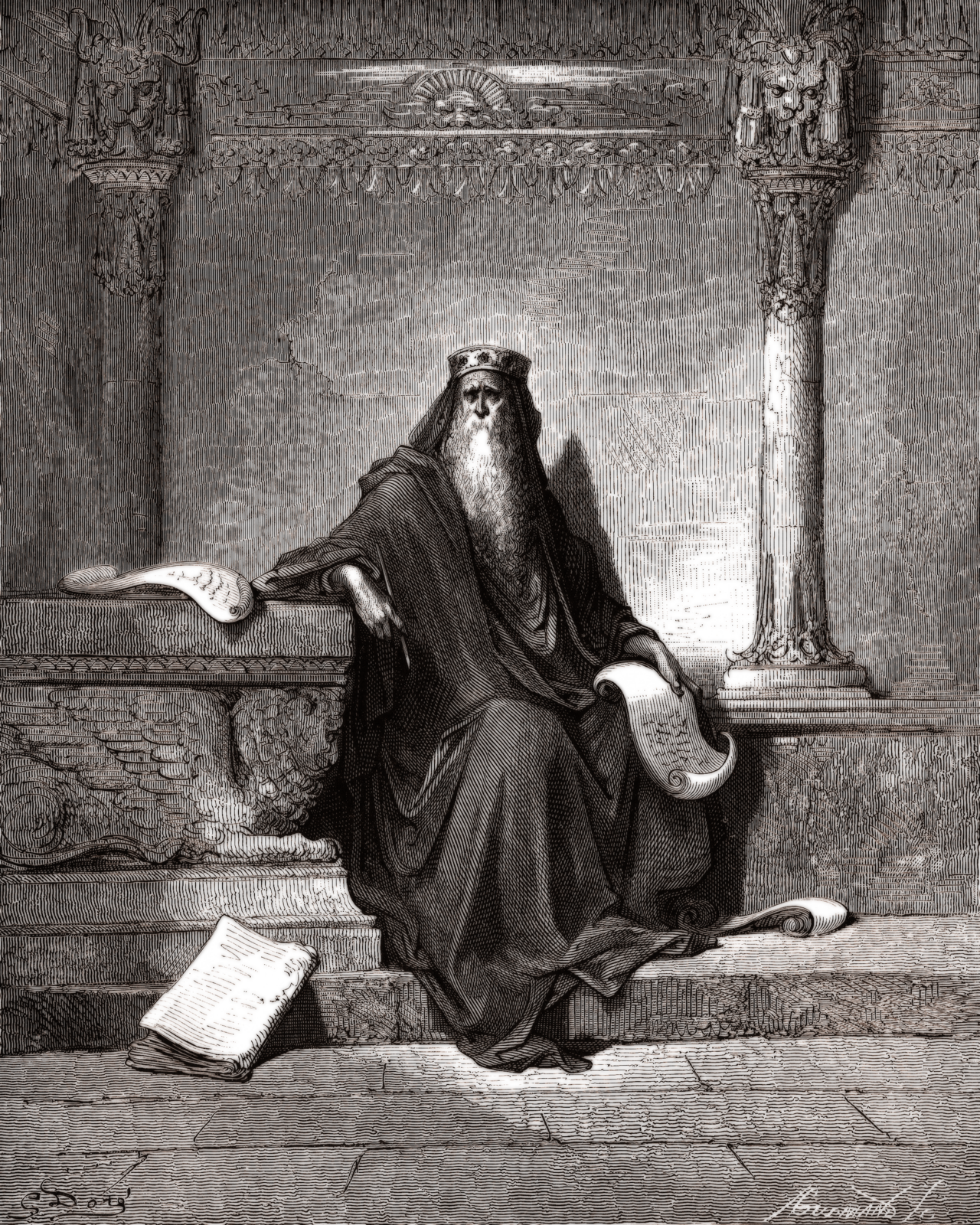
Solomon, also called Jedidiah, was the son of David and Bathsheba who succeeded his father as king of Israel and was renowned for his wisdom, wealth, and the construction of the First Temple in Jerusalem.
son of David (2SA 5:14)
Lineage: God › Adam › Seth › Enos › Cainan › Mahalaleel › Jared › Enoch › Methuselah › Lamech › Noah › Shem › Arphaxad › Cainan › Salah › Eber › Peleg › Reu › Serug › Nahor › Terah › Abraham › Isaac › Jacob › Judah › Pharez › Hezron › Ram › Amminadab › Nahshon › Salmon › Boaz › Obed › Jesse › David › Solomon
-
en
Solomon
peaceable; perfect; one who recompenses
-
en
Jedidiah
· Also called beloved of the Lord
-
en
Solomon
· Also called · H8010 G4672 · 2SA 5:14 peace, well-being
-
en
King Solomon
· Title · H4428, H8010 G935, none · 1KI 1:34 king Solomon
-
en
King of Israel
· Title · H4428, H3478 G935, G2474 · 2KI 23:13 king of Israel
-
en
Preacher
· Title · H6953 none · ECC 1:1 (as a title or name) the Teacher, one who calls together and instructs the assembly
-
he
שְׁלֹמֹה
shəlomoh · H8010 · 2SA 5:14 peace, well-being
-
he
יְדִידְיָהּ
yədiydəyah · H3041 · 2SA 12:25 beloved of y-h-v-h
- he שְׁלֹמֹה · H8010
- he יְדִידְיָה · H3041
-
he
מֶּלֶךְ שְׁלֹמֹֽה
melek shəlomoh · Title · H4428, H8010 · 1KI 1:34 king Solomon
-
he
מֶלֶךְ יִשְׂרָאֵ֔ל
melek yisərael · Title · H4428, H3478 · 2KI 23:13 king of Israel
-
he
קֹהֶלֶת
qohelet · Title · H6953 · ECC 1:1 (as a title or name) the Teacher, one who calls together and instructs the assembly
- el Σαλωμων Salōmōn · G4672 · 2SA 5:14
- el Ιδεδι Idedi · none · 2SA 12:25
- el Σολομών Solomṓn · G4672 · MAT 6:29
- el Σολομών, Σαλωμών · G4672G
-
el
βασιλεὺς Σαλωμων
basileùs Salōmōn · Title · G935, none · 1KI 1:34 king Solomon
-
el
βασιλεὺς Ισραηλ
basileùs Israēl · Title · G935, G2474 · 2KI 23:13 king of Israel
-
el
Ἐκκλησιαστοῦ
Ekklēsiastoû · Title · none · ECC 1:1 preacher
- bg Соломон
SDA Books (122)
Awaiting permission to publish-
Вести Към Младите Ellen Gould White · BG · 1 related paragraphs
-
Деянията на апостолите Ellen Gould White · BG · 2 related paragraphs
-
Желанието На Вековете Ellen Gould White · BG · 2 related paragraphs
-
Патриарси И Пророци Ellen Gould White · BG · 3 related paragraphs
-
По Стъпките На Великия Лекар Ellen Gould White · BG · 2 related paragraphs
-
Поглед Нагоре Ellen Gould White · BG · 3 related paragraphs
-
Притчи Христови Ellen Gould White · BG · 1 related paragraphs
-
Пророци И Царе Ellen Gould White · BG · 32 related paragraphs
-
Християнският Дом Ellen Gould White · BG · 1 related paragraphs
-
Христос в Своето светилище Ellen Gould White · BG · 1 related paragraphs
-
Beginning of the End Ellen Gould White · EN · 4 related paragraphs
-
Christ Triumphant Ellen Gould White · EN · 3 related paragraphs
-
Christ in His Sanctuary Ellen Gould White · EN · 1 related paragraphs
-
Christian Temperance and Bible Hygiene Ellen Gould White · EN · 1 related paragraphs
-
Christ’s Object Lessons Ellen Gould White · EN · 1 related paragraphs
-
Conflict and Courage Ellen Gould White · EN · 14 related paragraphs
-
Counsels to Parents, Teachers, and Students Ellen Gould White · EN · 2 related paragraphs
-
Daughters of God Ellen Gould White · EN · 1 related paragraphs
-
EGW SDA Bible Commentary, vol. 2 Ellen Gould White · EN · 112 related paragraphs
-
EGW SDA Bible Commentary, vol. 3 Ellen Gould White · EN · 87 related paragraphs
-
EGW SDA Bible Commentary, vol. 5 Ellen Gould White · EN · 45 related paragraphs
-
EGW SDA Bible Commentary, vol. 6 Ellen Gould White · EN · 6 related paragraphs
-
EGW SDA Bible Commentary, vol. 7 Ellen Gould White · EN · 1 related paragraphs
-
From Eternity Past Ellen Gould White · EN · 4 related paragraphs
-
From Heaven With Love Ellen Gould White · EN · 2 related paragraphs
-
From Splendor to Shadow Ellen Gould White · EN · 31 related paragraphs
-
From Trials to Triumph Ellen Gould White · EN · 3 related paragraphs
-
God’s Amazing Grace Ellen Gould White · EN · 1 related paragraphs
-
Gospel Workers (1915 ed.) Ellen Gould White · EN · 1 related paragraphs
-
Humble Hero Ellen Gould White · EN · 3 related paragraphs
-
In Heavenly Places Ellen Gould White · EN · 2 related paragraphs
-
Jesus, Name Above All Names Ellen Gould White · EN · 2 related paragraphs
-
Letters and Manuscripts — Volume 1 (1844 - 1868) Ellen Gould White · EN · 1 related paragraphs
-
Letters and Manuscripts — Volume 10 (1895) Ellen Gould White · EN · 5 related paragraphs
-
Letters and Manuscripts — Volume 11 (1896) Ellen Gould White · EN · 3 related paragraphs
-
Letters and Manuscripts — Volume 12 (1897) Ellen Gould White · EN · 11 related paragraphs
-
Letters and Manuscripts — Volume 13 (1898) Ellen Gould White · EN · 13 related paragraphs
-
Letters and Manuscripts — Volume 14 (1899) Ellen Gould White · EN · 3 related paragraphs
-
Letters and Manuscripts — Volume 15 (1900) Ellen Gould White · EN · 15 related paragraphs
-
Letters and Manuscripts — Volume 16 (1901) Ellen Gould White · EN · 1 related paragraphs
-
Letters and Manuscripts — Volume 17 (1902) Ellen Gould White · EN · 13 related paragraphs
-
Letters and Manuscripts — Volume 18 (1903) Ellen Gould White · EN · 6 related paragraphs
-
Letters and Manuscripts — Volume 19 (1904) Ellen Gould White · EN · 5 related paragraphs
-
Letters and Manuscripts — Volume 2 (1869 - 1875) Ellen Gould White · EN · 1 related paragraphs
-
Letters and Manuscripts — Volume 20 (1905) Ellen Gould White · EN · 7 related paragraphs
-
Letters and Manuscripts — Volume 21 (1906) Ellen Gould White · EN · 4 related paragraphs
-
Letters and Manuscripts — Volume 22 (1907) Ellen Gould White · EN · 2 related paragraphs
-
Letters and Manuscripts — Volume 23 (1908) Ellen Gould White · EN · 1 related paragraphs
-
Letters and Manuscripts — Volume 24 (1909) Ellen Gould White · EN · 4 related paragraphs
-
Letters and Manuscripts — Volume 25 (1910 - 1915) Ellen Gould White · EN · 4 related paragraphs
-
Letters and Manuscripts — Volume 4 (1883 - 1886) Ellen Gould White · EN · 6 related paragraphs
-
Letters and Manuscripts — Volume 5 (1887-1888) Ellen Gould White · EN · 2 related paragraphs
-
Letters and Manuscripts — Volume 6 (1889-1890) Ellen Gould White · EN · 6 related paragraphs
-
Letters and Manuscripts — Volume 7 (1891-1892) Ellen Gould White · EN · 4 related paragraphs
-
Letters and Manuscripts — Volume 8 (1893) Ellen Gould White · EN · 5 related paragraphs
-
Letters and Manuscripts — Volume 9 (1894) Ellen Gould White · EN · 11 related paragraphs
-
Letters to Young Lovers Ellen Gould White · EN · 1 related paragraphs
-
Lift Him Up Ellen Gould White · EN · 4 related paragraphs
-
Living by Principle Ellen Gould White · EN · 2 related paragraphs
-
Loma Linda Messages Ellen Gould White · EN · 1 related paragraphs
-
Manuscript Releases, vol. 12 [Nos. 921-999] Ellen Gould White · EN · 2 related paragraphs
-
Manuscript Releases, vol. 13 [Nos. 1000-1080] Ellen Gould White · EN · 3 related paragraphs
-
Manuscript Releases, vol. 16 [Nos. 1186-1235] Ellen Gould White · EN · 1 related paragraphs
-
Manuscript Releases, vol. 17 [Nos. 1236-1300] Ellen Gould White · EN · 1 related paragraphs
-
Manuscript Releases, vol. 18 [Nos. 1301-1359] Ellen Gould White · EN · 1 related paragraphs
-
Manuscript Releases, vol. 21 [Nos. 1501-1598] Ellen Gould White · EN · 4 related paragraphs
-
Manuscript Releases, vol. 3 [Nos. 162-209] Ellen Gould White · EN · 2 related paragraphs
-
Manuscript Releases, vol. 4 [Nos. 210-259] Ellen Gould White · EN · 1 related paragraphs
-
Manuscript Releases, vol. 9 [Nos. 664-770] Ellen Gould White · EN · 1 related paragraphs
-
Messages to Young People Ellen Gould White · EN · 1 related paragraphs
-
Mind, Character, and Personality, vol. 2 Ellen Gould White · EN · 1 related paragraphs
-
Notebook Leaflets from the Elmshaven Library, vol. 1 Ellen Gould White · EN · 1 related paragraphs
-
Our High Calling Ellen Gould White · EN · 1 related paragraphs
-
Patriarchs and Prophets Ellen Gould White · EN · 5 related paragraphs
-
Prayer Ellen Gould White · EN · 2 related paragraphs
-
Prophets and Kings Ellen Gould White · EN · 35 related paragraphs
-
Radiant Religion Ellen Gould White · EN · 1 related paragraphs
-
Reflecting Christ Ellen Gould White · EN · 2 related paragraphs
-
Royalty and Ruin Ellen Gould White · EN · 29 related paragraphs
-
SDA Bible Commentary, vol. 1 1SDABC Francis Nichol-GCSDA · EN · 100 bibliographic references from the official index
-
SDA Bible Commentary, vol. 2 2SDABC Francis Nichol-GCSDA · EN · 862 bibliographic references from the official index
-
SDA Bible Commentary, vol. 3 3SDABC Francis Nichol-GCSDA · EN · 1190 bibliographic references from the official index
-
SDA Bible Commentary, vol. 4 4SDABC Francis Nichol-GCSDA · EN · 154 bibliographic references from the official index
-
SDA Bible Commentary, vol. 5 5SDABC Francis Nichol-GCSDA · EN · 213 bibliographic references from the official index
-
SDA Bible Commentary, vol. 6 6SDABC Francis Nichol-GCSDA · EN · 56 bibliographic references from the official index
-
SDA Bible Commentary, vol. 7 7SDABC Francis Nichol-GCSDA · EN · 8 bibliographic references from the official index
-
Selected Messages Book 2 Ellen Gould White · EN · 1 related paragraphs
-
Sermons and Talks, vol. 1 Ellen Gould White · EN · 1 related paragraphs
-
Special Testimonies on Church Schools Ellen Gould White · EN · 1 related paragraphs
-
Steps to Christ Ellen Gould White · EN · 1 related paragraphs
-
Steps to Jesus Ellen Gould White · EN · 1 related paragraphs
-
Story of Redemption Ellen Gould White · EN · 2 related paragraphs
-
Testimonies for the Church, vol. 2 Ellen Gould White · EN · 1 related paragraphs
-
Testimonies for the Church, vol. 6 Ellen Gould White · EN · 1 related paragraphs
-
Testimonies for the Church, vol. 9 Ellen Gould White · EN · 1 related paragraphs
-
Testimonies on Sexual Behavior, Adultery, and Divorce Ellen Gould White · EN · 1 related paragraphs
-
Testimony Treasures, vol. 1 Ellen Gould White · EN · 1 related paragraphs
-
Testimony Treasures, vol. 3 Ellen Gould White · EN · 1 related paragraphs
-
The Acts of the Apostles Ellen Gould White · EN · 3 related paragraphs
-
The Attack Ellen Gould White · EN · 4 related paragraphs
-
The Desire of Ages Ellen Gould White · EN · 3 related paragraphs
-
The Ellen G. White Letters and Manuscripts: Volume 1 Ellen Gould White · EN · 4 related paragraphs
-
The Faith I Live By Ellen Gould White · EN · 3 related paragraphs
-
The Gospel Herald Ellen Gould White · EN · 1 related paragraphs
-
The Gospel Herald Ellen Gould White · EN · 1 related paragraphs
-
The Hero Ellen Gould White · EN · 3 related paragraphs
-
The Ministry of Healing Ellen Gould White · EN · 2 related paragraphs
-
The Ministry of Health and Healing Ellen Gould White · EN · 2 related paragraphs
-
The Mission Ellen Gould White · EN · 3 related paragraphs
-
The Paulson Collection of Ellen G. White Letters Ellen Gould White · EN · 1 related paragraphs
-
The Promise Ellen Gould White · EN · 29 related paragraphs
-
The Retirement Years Ellen Gould White · EN · 1 related paragraphs
-
The Review and Herald Ellen Gould White · EN · 7 related paragraphs
-
The Southern Missionary Ellen Gould White · EN · 1 related paragraphs
-
The Story of Redemption Ellen Gould White · EN · 3 related paragraphs
-
The Upward Look Ellen Gould White · EN · 3 related paragraphs
-
This Day With God Ellen Gould White · EN · 2 related paragraphs
-
Thoughts From the Mount of Blessing Ellen Gould White · EN · 1 related paragraphs
-
To Be Like Jesus Ellen Gould White · EN · 1 related paragraphs
-
Unlikely Leaders Ellen Gould White · EN · 3 related paragraphs
-
With God at Dawn Ellen Gould White · EN · 1 related paragraphs
-
Ye Shall Receive Power Ellen Gould White · EN · 1 related paragraphs
Age · ≈ 60
Chronological estimate · Estimate from the BibleData chronology. The age is not stated directly; see the source assumptions.
3031 − 2971 (AH) = 60
Source calculation and assumptions
The year of Solomon_1's birth is the year his reign began (2991) - his age when he became king (20) = 2971
The year of Solomon_1's death is the year his reign ended = 3031
Dates and sources (13)
Absolute years are conditional chronological estimates. A biblical passage may state an age or event, but does not by itself establish a BCE year. Different calendar systems are preserved separately.
-
Birth Theographic Matches the current date; this is not historical verificationTheographic signed year:
-1035· Calendar interpretation is unverified; the raw value is shown.Person mentions; these are not evidence for this date: 273
2Sam.5.142Sam.12.242Sam.12.251Kgs.1.101Kgs.1.111Kgs.1.121Kgs.1.131Kgs.1.171Kgs.1.191Kgs.1.211Kgs.1.261Kgs.1.301Kgs.1.331Kgs.1.341Kgs.1.371Kgs.1.381Kgs.1.391Kgs.1.431Kgs.1.461Kgs.1.471Kgs.1.501Kgs.1.511Kgs.1.521Kgs.1.531Kgs.2.11Kgs.2.121Kgs.2.131Kgs.2.171Kgs.2.191Kgs.2.221Kgs.2.231Kgs.2.251Kgs.2.271Kgs.2.291Kgs.2.411Kgs.2.451Kgs.2.461Kgs.3.11Kgs.3.31Kgs.3.41Kgs.3.51Kgs.3.61Kgs.3.101Kgs.3.151Kgs.4.11Kgs.4.71Kgs.4.111Kgs.4.151Kgs.4.211Kgs.4.221Kgs.4.251Kgs.4.261Kgs.4.271Kgs.4.291Kgs.4.301Kgs.4.341Kgs.5.11Kgs.5.21Kgs.5.71Kgs.5.81Kgs.5.101Kgs.5.111Kgs.5.121Kgs.5.131Kgs.5.151Kgs.5.161Kgs.5.181Kgs.6.11Kgs.6.21Kgs.6.111Kgs.6.141Kgs.6.211Kgs.7.11Kgs.7.81Kgs.7.131Kgs.7.141Kgs.7.401Kgs.7.451Kgs.7.471Kgs.7.481Kgs.7.511Kgs.8.11Kgs.8.21Kgs.8.51Kgs.8.121Kgs.8.221Kgs.8.541Kgs.8.631Kgs.8.651Kgs.9.11Kgs.9.21Kgs.9.101Kgs.9.111Kgs.9.121Kgs.9.151Kgs.9.161Kgs.9.171Kgs.9.191Kgs.9.211Kgs.9.221Kgs.9.231Kgs.9.241Kgs.9.251Kgs.9.261Kgs.9.271Kgs.9.281Kgs.10.11Kgs.10.21Kgs.10.31Kgs.10.41Kgs.10.101Kgs.10.131Kgs.10.141Kgs.10.161Kgs.10.211Kgs.10.231Kgs.10.241Kgs.10.261Kgs.10.281Kgs.11.11Kgs.11.21Kgs.11.41Kgs.11.51Kgs.11.61Kgs.11.71Kgs.11.91Kgs.11.111Kgs.11.141Kgs.11.251Kgs.11.261Kgs.11.271Kgs.11.281Kgs.11.311Kgs.11.401Kgs.11.411Kgs.11.421Kgs.11.431Kgs.12.21Kgs.12.61Kgs.12.211Kgs.12.231Kgs.14.211Kgs.14.262Kgs.21.72Kgs.23.132Kgs.24.132Kgs.25.161Chr.3.51Chr.3.101Chr.6.101Chr.6.321Chr.14.41Chr.18.81Chr.22.51Chr.22.61Chr.22.71Chr.22.91Chr.22.171Chr.23.11Chr.28.51Chr.28.61Chr.28.91Chr.28.111Chr.28.201Chr.29.11Chr.29.191Chr.29.221Chr.29.231Chr.29.241Chr.29.251Chr.29.282Chr.1.12Chr.1.22Chr.1.32Chr.1.52Chr.1.62Chr.1.72Chr.1.82Chr.1.112Chr.1.132Chr.1.142Chr.1.162Chr.2.12Chr.2.22Chr.2.32Chr.2.112Chr.2.172Chr.3.12Chr.3.32Chr.4.112Chr.4.162Chr.4.182Chr.4.192Chr.5.12Chr.5.22Chr.5.62Chr.6.12Chr.6.132Chr.7.12Chr.7.52Chr.7.72Chr.7.82Chr.7.102Chr.7.112Chr.7.122Chr.8.12Chr.8.22Chr.8.32Chr.8.62Chr.8.82Chr.8.92Chr.8.102Chr.8.112Chr.8.122Chr.8.162Chr.8.172Chr.8.182Chr.9.12Chr.9.22Chr.9.32Chr.9.92Chr.9.102Chr.9.122Chr.9.132Chr.9.142Chr.9.152Chr.9.202Chr.9.222Chr.9.232Chr.9.252Chr.9.282Chr.9.292Chr.9.302Chr.9.312Chr.10.22Chr.10.62Chr.11.32Chr.11.172Chr.12.92Chr.13.62Chr.13.72Chr.30.262Chr.33.72Chr.35.32Chr.35.4Ezra.2.55Ezra.2.58Neh.7.57Neh.7.60Neh.11.3Neh.12.45Neh.13.26Prov.1.1Prov.10.1Prov.25.1Song.1.1Song.1.5Song.3.7Song.3.9Song.3.11Song.8.11Song.8.12Jer.52.20Matt.1.6Matt.1.7Matt.6.29Matt.12.42Luke.11.31Luke.12.27John.10.23Acts.3.11Acts.5.12Acts.7.47Source record and calculation
solomon_2762·birthYeartheographic/People.csv· record 2748SHA-256:b2339a4b5ed2348b7bd3e7b2c5c7a328bfbd4f66584a99350863ba606f98f652 -
Birth BibleData Alternative estimateBibleData BCE year:
991→ ≈ 991 BCSource record and calculation
Birth_Solomon_1·bce_yearbibledata/BibleData-Event.csv· record 244The year of Solomon_1's birth is the year his reign began (2991) - his age when he became king (20) = 2971*EXTRA-BIBLICAL SOURCE: Eliezer Shulman's "The Sequence of Events in the Old Testament" (page 117) quotes the Seder Eliahu Rabbah (chapter 2) that says Solomon was 20 years old when he became king. [Ussher date p61]SHA-256:3b4354e7c4073a27bc8776735f273eac7dd5033231531dbaeedaf455c69a0ae7 -
Birth BibleData Alternative estimateAH with conditional Ussher anchor:
2971→ ≈ 1034 BCSource record and calculation
Birth_Solomon_1·event_year_ahbibledata/BibleData-Event.csv· record 244The year of Solomon_1's birth is the year his reign began (2991) - his age when he became king (20) = 2971*EXTRA-BIBLICAL SOURCE: Eliezer Shulman's "The Sequence of Events in the Old Testament" (page 117) quotes the Seder Eliahu Rabbah (chapter 2) that says Solomon was 20 years old when he became king. [Ussher date p61]SHA-256:3b4354e7c4073a27bc8776735f273eac7dd5033231531dbaeedaf455c69a0ae7 -
Birth BibleData Unverified estimate without an established conversionUssher AM:
2971· No established conversion to a BCE/CE year.Source record and calculation
Birth_Solomon_1·ussher_am_yearbibledata/BibleData-Event.csv· record 244The year of Solomon_1's birth is the year his reign began (2991) - his age when he became king (20) = 2971*EXTRA-BIBLICAL SOURCE: Eliezer Shulman's "The Sequence of Events in the Old Testament" (page 117) quotes the Seder Eliahu Rabbah (chapter 2) that says Solomon was 20 years old when he became king. [Ussher date p61]SHA-256:3b4354e7c4073a27bc8776735f273eac7dd5033231531dbaeedaf455c69a0ae7 -
Birth BibleData Alternative estimateUssher BCE year:
1033→ ≈ 1033 BCSource record and calculation
Birth_Solomon_1·ussher_bce_yearbibledata/BibleData-Event.csv· record 244The year of Solomon_1's birth is the year his reign began (2991) - his age when he became king (20) = 2971*EXTRA-BIBLICAL SOURCE: Eliezer Shulman's "The Sequence of Events in the Old Testament" (page 117) quotes the Seder Eliahu Rabbah (chapter 2) that says Solomon was 20 years old when he became king. [Ussher date p61]SHA-256:3b4354e7c4073a27bc8776735f273eac7dd5033231531dbaeedaf455c69a0ae7 -
Birth BibleData Alternative estimateAH with conditional Ussher anchor:
2971→ ≈ 1034 BCSource record and calculation
Life_of_Solomon_1·start_year_ahbibledata/BibleData-Epoch.csv· record 80The year of Solomon_1's birth is the year his reign began (2991) - his age when he became king (20) = 2971SHA-256:a3037d59192edc6b73cb685f45e25e23e88aa1422bb9a39b23c36f217ae8eb85 -
Death Theographic Matches the current date; this is not historical verificationTheographic signed year:
-975· Calendar interpretation is unverified; the raw value is shown.Person mentions; these are not evidence for this date: 273
2Sam.5.142Sam.12.242Sam.12.251Kgs.1.101Kgs.1.111Kgs.1.121Kgs.1.131Kgs.1.171Kgs.1.191Kgs.1.211Kgs.1.261Kgs.1.301Kgs.1.331Kgs.1.341Kgs.1.371Kgs.1.381Kgs.1.391Kgs.1.431Kgs.1.461Kgs.1.471Kgs.1.501Kgs.1.511Kgs.1.521Kgs.1.531Kgs.2.11Kgs.2.121Kgs.2.131Kgs.2.171Kgs.2.191Kgs.2.221Kgs.2.231Kgs.2.251Kgs.2.271Kgs.2.291Kgs.2.411Kgs.2.451Kgs.2.461Kgs.3.11Kgs.3.31Kgs.3.41Kgs.3.51Kgs.3.61Kgs.3.101Kgs.3.151Kgs.4.11Kgs.4.71Kgs.4.111Kgs.4.151Kgs.4.211Kgs.4.221Kgs.4.251Kgs.4.261Kgs.4.271Kgs.4.291Kgs.4.301Kgs.4.341Kgs.5.11Kgs.5.21Kgs.5.71Kgs.5.81Kgs.5.101Kgs.5.111Kgs.5.121Kgs.5.131Kgs.5.151Kgs.5.161Kgs.5.181Kgs.6.11Kgs.6.21Kgs.6.111Kgs.6.141Kgs.6.211Kgs.7.11Kgs.7.81Kgs.7.131Kgs.7.141Kgs.7.401Kgs.7.451Kgs.7.471Kgs.7.481Kgs.7.511Kgs.8.11Kgs.8.21Kgs.8.51Kgs.8.121Kgs.8.221Kgs.8.541Kgs.8.631Kgs.8.651Kgs.9.11Kgs.9.21Kgs.9.101Kgs.9.111Kgs.9.121Kgs.9.151Kgs.9.161Kgs.9.171Kgs.9.191Kgs.9.211Kgs.9.221Kgs.9.231Kgs.9.241Kgs.9.251Kgs.9.261Kgs.9.271Kgs.9.281Kgs.10.11Kgs.10.21Kgs.10.31Kgs.10.41Kgs.10.101Kgs.10.131Kgs.10.141Kgs.10.161Kgs.10.211Kgs.10.231Kgs.10.241Kgs.10.261Kgs.10.281Kgs.11.11Kgs.11.21Kgs.11.41Kgs.11.51Kgs.11.61Kgs.11.71Kgs.11.91Kgs.11.111Kgs.11.141Kgs.11.251Kgs.11.261Kgs.11.271Kgs.11.281Kgs.11.311Kgs.11.401Kgs.11.411Kgs.11.421Kgs.11.431Kgs.12.21Kgs.12.61Kgs.12.211Kgs.12.231Kgs.14.211Kgs.14.262Kgs.21.72Kgs.23.132Kgs.24.132Kgs.25.161Chr.3.51Chr.3.101Chr.6.101Chr.6.321Chr.14.41Chr.18.81Chr.22.51Chr.22.61Chr.22.71Chr.22.91Chr.22.171Chr.23.11Chr.28.51Chr.28.61Chr.28.91Chr.28.111Chr.28.201Chr.29.11Chr.29.191Chr.29.221Chr.29.231Chr.29.241Chr.29.251Chr.29.282Chr.1.12Chr.1.22Chr.1.32Chr.1.52Chr.1.62Chr.1.72Chr.1.82Chr.1.112Chr.1.132Chr.1.142Chr.1.162Chr.2.12Chr.2.22Chr.2.32Chr.2.112Chr.2.172Chr.3.12Chr.3.32Chr.4.112Chr.4.162Chr.4.182Chr.4.192Chr.5.12Chr.5.22Chr.5.62Chr.6.12Chr.6.132Chr.7.12Chr.7.52Chr.7.72Chr.7.82Chr.7.102Chr.7.112Chr.7.122Chr.8.12Chr.8.22Chr.8.32Chr.8.62Chr.8.82Chr.8.92Chr.8.102Chr.8.112Chr.8.122Chr.8.162Chr.8.172Chr.8.182Chr.9.12Chr.9.22Chr.9.32Chr.9.92Chr.9.102Chr.9.122Chr.9.132Chr.9.142Chr.9.152Chr.9.202Chr.9.222Chr.9.232Chr.9.252Chr.9.282Chr.9.292Chr.9.302Chr.9.312Chr.10.22Chr.10.62Chr.11.32Chr.11.172Chr.12.92Chr.13.62Chr.13.72Chr.30.262Chr.33.72Chr.35.32Chr.35.4Ezra.2.55Ezra.2.58Neh.7.57Neh.7.60Neh.11.3Neh.12.45Neh.13.26Prov.1.1Prov.10.1Prov.25.1Song.1.1Song.1.5Song.3.7Song.3.9Song.3.11Song.8.11Song.8.12Jer.52.20Matt.1.6Matt.1.7Matt.6.29Matt.12.42Luke.11.31Luke.12.27John.10.23Acts.3.11Acts.5.12Acts.7.47Source record and calculation
solomon_2762·deathYeartheographic/People.csv· record 2748SHA-256:b2339a4b5ed2348b7bd3e7b2c5c7a328bfbd4f66584a99350863ba606f98f652 -
Death BibleData Alternative estimateBibleData BCE year:
931→ ≈ 931 BCThe cited verse gives accession, reign or relative years; the death has a separate verse. Do not invent a new absolute date.
1KI 11:421KI 11:43Source record and calculation
Death_Solomon_1·bce_yearbibledata/BibleData-Event.csv· record 267The year of Solomon_1's death is the year his reign ended = 3031[Shulman date p83] [Ussher date p67]SHA-256:d02d122cc5bef9f18fdaf6f3e7362ad1a68b138c393956f98d28f4d4ac03bc3b -
Death BibleData Alternative estimateAH with conditional Ussher anchor:
3031→ ≈ 974 BCThe cited verse gives accession, reign or relative years; the death has a separate verse. Do not invent a new absolute date.
1KI 11:421KI 11:43Source record and calculation
Death_Solomon_1·event_year_ahbibledata/BibleData-Event.csv· record 267The year of Solomon_1's death is the year his reign ended = 3031[Shulman date p83] [Ussher date p67]SHA-256:d02d122cc5bef9f18fdaf6f3e7362ad1a68b138c393956f98d28f4d4ac03bc3b -
Death BibleData Unverified estimate without an established conversionShulman AM:
2964· No established conversion to a BCE/CE year.The cited verse gives accession, reign or relative years; the death has a separate verse. Do not invent a new absolute date.
1KI 11:421KI 11:43Source record and calculation
Death_Solomon_1·shulman_am_yearbibledata/BibleData-Event.csv· record 267The year of Solomon_1's death is the year his reign ended = 3031[Shulman date p83] [Ussher date p67]SHA-256:d02d122cc5bef9f18fdaf6f3e7362ad1a68b138c393956f98d28f4d4ac03bc3b -
Death BibleData Unverified estimate without an established conversionUssher AM:
3029· No established conversion to a BCE/CE year.The cited verse gives accession, reign or relative years; the death has a separate verse. Do not invent a new absolute date.
1KI 11:421KI 11:43Source record and calculation
Death_Solomon_1·ussher_am_yearbibledata/BibleData-Event.csv· record 267The year of Solomon_1's death is the year his reign ended = 3031[Shulman date p83] [Ussher date p67]SHA-256:d02d122cc5bef9f18fdaf6f3e7362ad1a68b138c393956f98d28f4d4ac03bc3b -
Death BibleData Alternative estimateUssher BCE year:
975→ ≈ 975 BCThe cited verse gives accession, reign or relative years; the death has a separate verse. Do not invent a new absolute date.
1KI 11:421KI 11:43Source record and calculation
Death_Solomon_1·ussher_bce_yearbibledata/BibleData-Event.csv· record 267The year of Solomon_1's death is the year his reign ended = 3031[Shulman date p83] [Ussher date p67]SHA-256:d02d122cc5bef9f18fdaf6f3e7362ad1a68b138c393956f98d28f4d4ac03bc3b -
Death BibleData Alternative estimateAH with conditional Ussher anchor:
3031→ ≈ 974 BCThe endpoint verse does not report death; use a separate reference while retaining the absolute year as a chronology estimate.
1KI 11:421KI 11:43Source record and calculation
Life_of_Solomon_1·end_year_ahbibledata/BibleData-Epoch.csv· record 80The year of Solomon_1's death is the year his reign ended = 3031SHA-256:a3037d59192edc6b73cb685f45e25e23e88aa1422bb9a39b23c36f217ae8eb85
- Father: David (≈ 70)
- Mother: Bathsheba
- Half-brother: Amnon (≈ 18)
- Half-brother: Daniel
- Half-sister: Tamar
- Half-brother: Absalom (≈ 24)
- Half-brother: Shephatiah
- Half-brother: Adonijah
- Half-brother: Ithream
- Brother: Nathan
- Brother: Shammua
- Half-brother: Eliphalet
- Half-brother: Elpalet
- Half-brother: Elishua
- Half-brother: Eliada
- Half-brother: Ibhar
- Half-brother: Jerimoth
- Half-brother: Japhia
- Half-brother: Elishama
- Half-brother: Nepheg
- Half-brother: Nogah
- Brother: Shobab
- Reign of Solomon · c. 1015 BC – 975 BC
- G-d's promise to Solomon* · c. 1003 BC
- Jerusalem · c. 976 BC
- King · The reign of Solomon · c. 1014 BC – 974 BC
Solomon, also known as Jedidiah, was the son of King David and Bathsheba, and the third king of Israel (2Sa 12:24; 1Ch 3:5). He was born in Jerusalem and named Solomon by his parents, but the prophet Nathan called him Jedidiah, which means "beloved of the Lord" (2Sa 12:25).
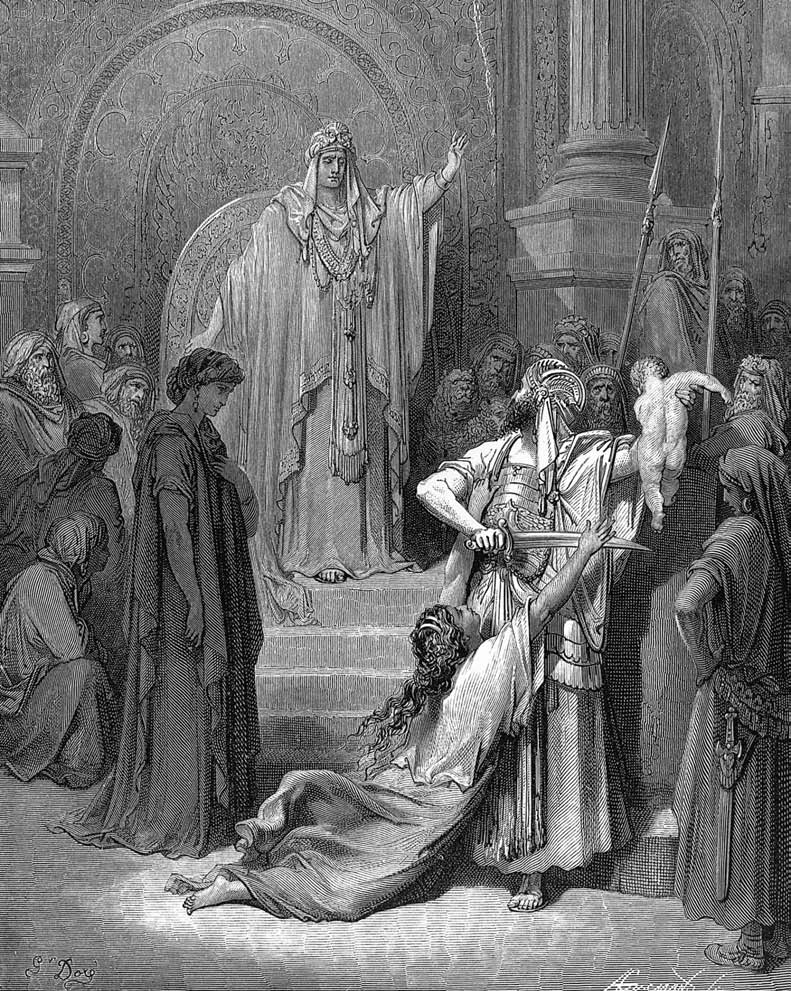
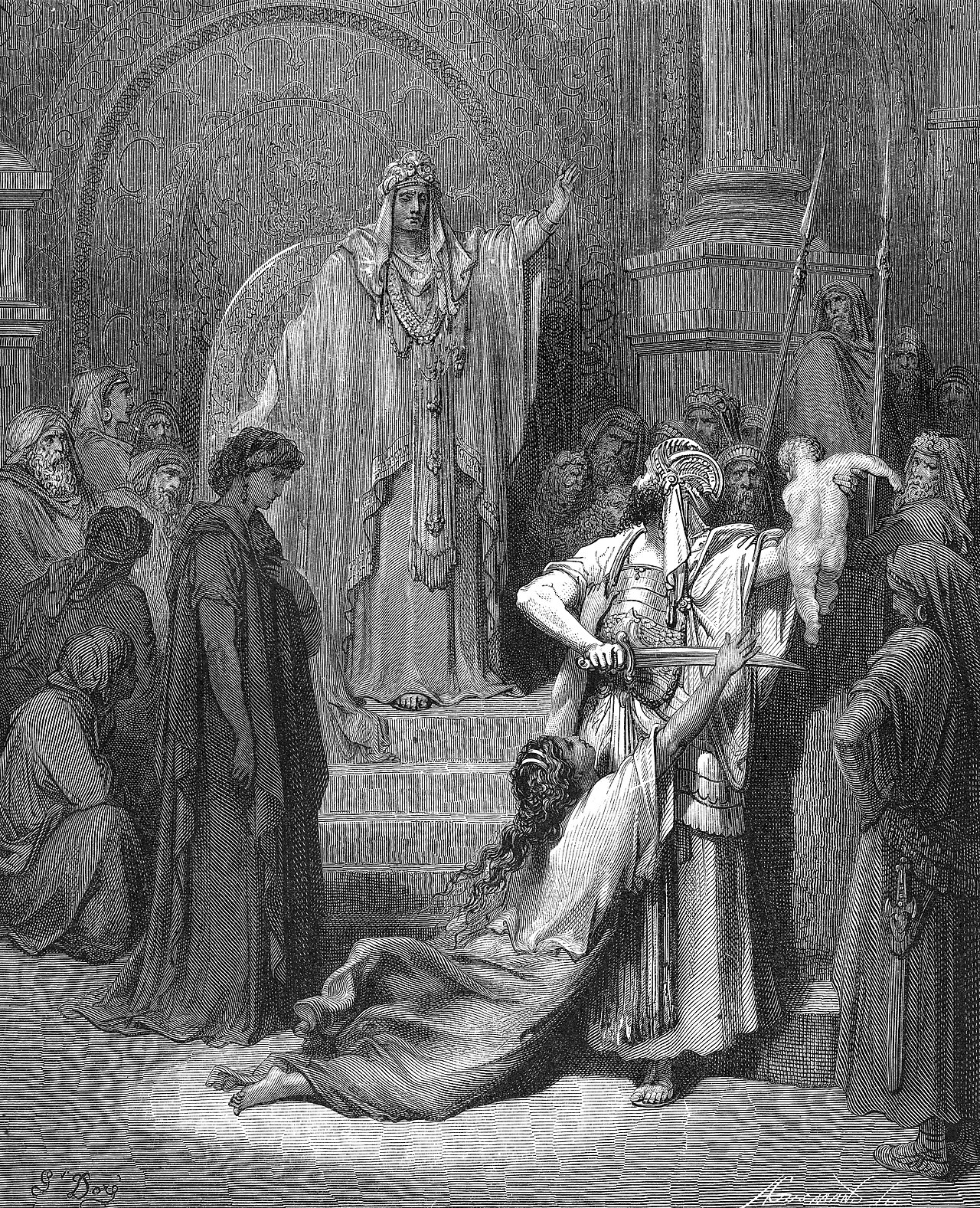
Solomon ascended to the throne after his father David's death, following a power struggle with his older brother Adonijah (1Kings 1-2). As king, Solomon prayed for wisdom to govern his people, and God granted him exceptional wisdom, understanding, and knowledge (1Ki 3:1-15; 2Ch 1:1-12). His wisdom was demonstrated through his fair judgments, such as the famous case of the two women claiming the same baby (1Ki 3:16-28).
During his reign, Solomon undertook ambitious construction projects, most notably the building of the First Temple in Jerusalem, which took seven years to complete (1Kings 6; 2Chronicles 3-4). He also built a palace for himself, fortified cities, and established a strong military force (1Kings 7; 1Ki.9.15-19; 10.26-29; 2Ch.8.1-6; 9.25-28).
Solomon's reign was marked by prosperity, wealth, and international recognition. He formed alliances with neighboring kingdoms, engaged in extensive trade, and received tribute from foreign rulers (1Kings 5; 2Ch.9.26-28; 10.1-29; 2Ch.8.17-18; 9.1-28). The Queen of Sheba visited Solomon to test his wisdom and left impressed by his knowledge and the splendor of his court (1Ki 10:1-13; 2Ch 9:1-12).
However, Solomon's later years were marked by a decline in his faithfulness to God. He married many foreign women and allowed their religious practices to influence him, leading to the worship of false gods (1Ki 11:1-8). As a result, God declared that the kingdom would be divided after Solomon's death (1Ki 11:9-13).
Solomon is traditionally credited with authoring several biblical books, including Proverbs, Ecclesiastes, and the Song of Solomon (Pro 1:1; Ecc 1:1; Sng 1:1). His wisdom and proverbs were widely celebrated and studied (1Ki 4:29-34; Pro.1.1; 10.1; 25.1).
After a reign of forty years, Solomon died and was succeeded by his son Rehoboam (1Ki 11:41-43; 2Ch 9:29-31). As prophesied, the kingdom was divided into the northern kingdom of Israel and the southern kingdom of Judah shortly after his death (1Kings 12; 2Chronicles 10).
Peaceful, (Heb. Shelomoh), David’s second son by Bathsheba, i.e., the first after their legal marriage (2 Sam. 12). He was probably born about B.C. 1035 (1 Chr. 22:5; 29:1). He succeeded his father on the throne in early manhood, probably about sixteen or eighteen years of age. Nathan, to whom his education was intrusted, called him Jedidiah, i.e., “beloved of the Lord” (2 Sam. 12:24, 25). He was the first king of Israel “born in the purple.” His father chose him as his successor, passing over the claims of his elder sons: “Assuredly Solomon my son shall reign after me.” His history is recorded in 1 Kings 1-11 and 2 Chr. 1-9. His elevation to the throne took place before his father’s death, and was hastened on mainly by Nathan and Bathsheba, in consequence of the rebellion of Adonijah (1 Kings 1:5-40). During his long reign of forty years the Hebrew monarchy gained its highest splendour. This period has well been called the “Augustan age” of the Jewish annals. The first half of his reign was, however, by far the brighter and more prosperous; the latter half was clouded by the idolatries into which he fell, mainly from his heathen intermarriages (1 Kings 11:1-8; 14:21, 31).
Before his death David gave parting instructions to his son (1 Kings 2:1-9; 1 Chr. 22:7-16; 28). As soon as he had settled himself in his kingdom, and arranged the affairs of his extensive empire, he entered into an alliance with Egypt by the marriage of the daughter of Pharaoh (1 Kings 3:1), of whom, however, nothing further is recorded. He surrounded himself with all the luxuries and the external grandeur of an Eastern monarch, and his government prospered. He entered into an alliance with Hiram, king of Tyre, who in many ways greatly assisted him in his numerous undertakings.
For some years before his death David was engaged in the active work of collecting materials (1 Chr. 29:6-9; 2 Chr. 2:3-7) for building a temple in Jerusalem as a permanent abode for the ark of the covenant. He was not permitted to build the house of God (1 Chr. 22:8); that honour was reserved to his son Solomon.
After the completion of the temple, Solomon engaged in the erection of many other buildings of importance in Jerusalem and in other parts of his kingdom. For the long space of thirteen years he was engaged in the erection of a royal palace on Ophel (1 Kings 7:1-12). It was 100 cubits long, 50 broad, and 30 high. Its lofty roof was supported by forty-five cedar pillars, so that the hall was like a forest of cedar wood, and hence probably it received the name of “The House of the Forest of Lebanon.” In front of this “house” was another building, which was called the Porch of Pillars, and in front of this again was the “Hall of Judgment,” or Throne-room (1 Kings 7:7; 10:18-20; 2 Chr. 9:17-19), “the King’s Gate,” where he administered justice and gave audience to his people. This palace was a building of great magnificence and beauty. A portion of it was set apart as the residence of the queen consort, the daughter of Pharaoh. From the palace there was a private staircase of red and scented sandal wood which led up to the temple.
Solomon also constructed great works for the purpose of securing a plentiful supply of water for the city (Eccl. 2:4-6). He then built Millo (LXX., “Acra”) for the defence of the city, completing a line of ramparts around it (1 Kings 9:15, 24; 11:27). He erected also many other fortifications for the defence of his kingdom at various points where it was exposed to the assault of enemies (1 Kings 9:15-19; 2 Chr. 8:2-6). Among his great undertakings must also be mentioned the building of Tadmor (q.v.) in the wilderness as a commercial depot, as well as a military outpost.
During his reign Palestine enjoyed great commercial prosperity. Extensive traffic was carried on by land with Tyre and Egypt and Arabia, and by sea with Spain and India and the coasts of Africa, by which Solomon accumulated vast stores of wealth and of the produce of all nations (1 Kings 9:26-28; 10:11, 12; 2 Chr. 8:17, 18; 9:21). This was the “golden age” of Israel. The royal magnificence and splendour of Solomon’s court were unrivalled. He had seven hundred wives and three hundred concubines, an evidence at once of his pride, his wealth, and his sensuality. The maintenance of his household involved immense expenditure. The provision required for one day was “thirty measures of fine flour, and threescore measures of meal, ten fat oxen, and twenty oxen out of the pastures, and an hundred sheep, beside harts, and roebucks, and fallow-deer, and fatted fowl” (1 Kings 4:22, 23).
Solomon’s reign was not only a period of great material prosperity, but was equally remarkable for its intellectual activity. He was the leader of his people also in this uprising amongst them of new intellectual life. “He spake three thousand proverbs: and his songs were a thousand and five. And he spake of trees, from the cedar tree that is in Lebanon even unto the hyssop that springeth out of the wall: he spake also of beasts, and of fowl, and of creeping things, and of fishes” (1 Kings 4:32, 33).
His fame was spread abroad through all lands, and men came from far and near “to hear the wisdom of Solomon.” Among others thus attracted to Jerusalem was “the queen of the south” (Matt. 12:42), the queen of Sheba, a country in Arabia Felix. “Deep, indeed, must have been her yearning, and great his fame, which induced a secluded Arabian queen to break through the immemorial custom of her dreamy land, and to put forth the energy required for braving the burdens and perils of so long a journey across a wilderness. Yet this she undertook, and carried it out with safety.” (1 Kings 10:1-13; 2 Chr. 9:1-12.) She was filled with amazement by all she saw and heard: “there was no more spirit in her.” After an interchange of presents she returned to her native land.
But that golden age of Jewish history passed away. The bright day of Solomon’s glory ended in clouds and darkness. His decline and fall from his high estate is a sad record. Chief among the causes of his decline were his polygamy and his great wealth. “As he grew older he spent more of his time among his favourites. The idle king living among these idle women, for 1,000 women, with all their idle and mischievous attendants, filled the palaces and pleasure-houses which he had built (1 Kings 11:3), learned first to tolerate and then to imitate their heathenish ways. He did not, indeed, cease to believe in the God of Israel with his mind. He did not cease to offer the usual sacrifices in the temple at the great feasts. But his heart was not right with God; his worship became merely formal; his soul, left empty by the dying out of true religious fervour, sought to be filled with any religious excitement which offered itself. Now for the first time a worship was publicly set up amongst the people of the Lord which was not simply irregular or forbidden, like that of Gideon (Judg. 8:27), or the Danites (Judg. 18:30, 31), but was downright idolatrous.” (1 Kings 11:7; 2 Kings 23:13.)
This brought upon him the divine displeasure. His enemies prevailed against him (1 Kings 11:14-22, 23-25, 26-40), and one judgment after another fell upon the land. And now the end of all came, and he died, after a reign of forty years, and was buried in the city of David, and “with him was buried the short-lived glory and unity of Israel.” “He leaves behind him but one weak and worthless son, to dismember his kingdom and disgrace his name.”
“The kingdom of Solomon,” says Rawlinson, “is one of the most striking facts in the Biblical history. A petty nation, which for hundreds of years has with difficulty maintained a separate existence in the midst of warlike tribes, each of which has in turn exercised dominion over it and oppressed it, is suddenly raised by the genius of a soldier-monarch to glory and greatness. An empire is established which extends from the Euphrates to the borders of Egypt, a distance of 450 miles; and this empire, rapidly constructed, enters almost immediately on a period of peace which lasts for half a century. Wealth, grandeur, architectural magnificence, artistic excellence, commercial enterprise, a position of dignity among the great nations of the earth, are enjoyed during this space, at the end of which there is a sudden collapse. The ruling nation is split in twain, the subject-races fall off, the pre-eminence lately gained being wholly lost, the scene of struggle, strife, oppression, recovery, inglorious submission, and desperate effort, re-commences.”, Historical Illustrations.
Sources: BibleData (CC BY 4.0, Solomon_1) · STEPBible TIPNR (CC BY 4.0, Solomon@2Sa.5.14-Act) · Theographic Bible Metadata (CC BY-SA 4.0, solomon_2762)