Absalom
Absalom is David’s third son born at Hebron, by Maacah, daughter of Talmai, king of Geshur. His royal descent on both sides belongs to the recorded family background. His later importance arises from the combination of a violent household conflict, return from exile and rebellion against his father. These stages connect the family of the king with a wider struggle over rule in Israel. 2 Sam 3:2-3 2 Sam 15:1-14
The mediation that brought him back illustrates the limits of a political settlement within an unresolved family conflict. Joab used an unnamed wise woman from Tekoa to obtain David’s consent to Absalom’s return, but the king initially refused to see him. Two years later, Absalom had Joab’s barley field burned to compel a response. A meeting with David then followed. The sequence distinguishes restored residence in Jerusalem from restored access to the king; the later rebellion shows that admission itself did not establish a durable peace. 2 Sam 14:1-24 2 Sam 14:28-33 2 Sam 15:1-14 The political mediation
The earlier rupture began with Amnon’s sexual assault on Tamar, Absalom’s sister. Jonadab, son of David’s brother Shimeah, had advised Amnon how to gain private access to her. Tamar’s protest, torn clothing and desolate residence in Absalom’s house are part of the account, alongside David’s anger and Absalom’s hatred of Amnon. After two full years, Absalom ordered his servants to kill Amnon at the sheep-shearing gathering at Baal-hazor. His flight to Geshur and three-year residence there followed. These notices report violence and its aftermath, rather than authorize revenge. 2 Sam 13:1-39
After his return and reception, Absalom cultivated support at the city gate by hearing grievances and presenting himself as a prospective judge. The account summarizes his success as winning the hearts of the people. He went to Hebron under the stated purpose of fulfilling a vow and arranged announcements of his kingship. Ahithophel, David’s counsellor, joined the conspiracy, and David fled Jerusalem. Absalom entered Jerusalem and, on Ahithophel’s advice, publicly took his father’s concubines. The political claim therefore involved both support among petitioners and an openly displayed breach within the royal household. 2 Sam 15:1-14 2 Sam 16:15-23
The competing counsel of Ahithophel and Hushai shaped the next military decision. David had instructed Hushai to counter the former counsellor’s advice. Absalom preferred Hushai’s plan for a larger mobilization over an immediate pursuit; the passage interprets that choice within God’s purpose to defeat the rebellion. Zadok and Abiathar received intelligence through Hushai, while their sons Ahimaaz and Jonathan carried the warning to David. Absalom then crossed the Jordan and appointed Amasa in Joab’s place as commander of his forces. 2 Sam 15:30-37 2 Sam 17:1-25
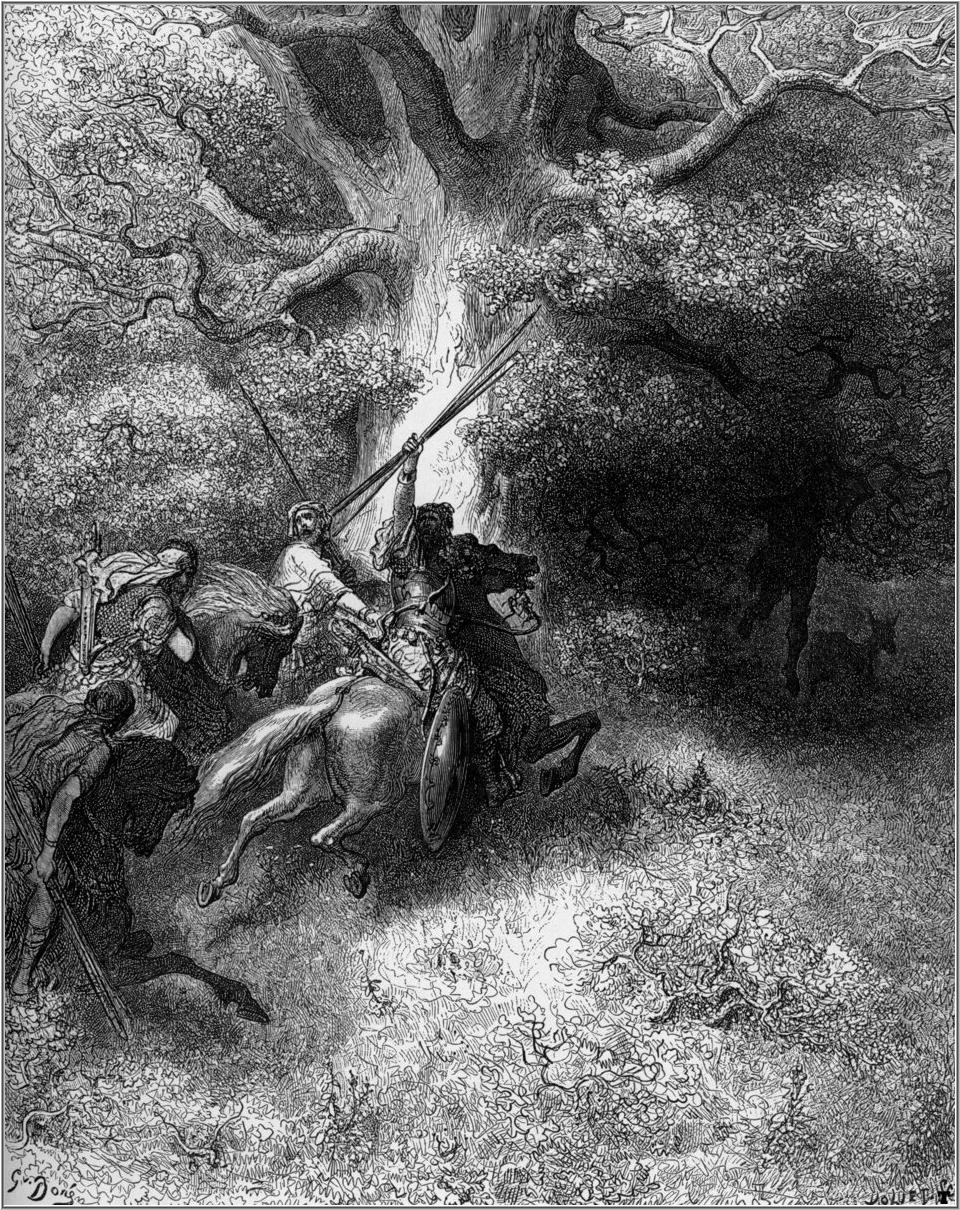
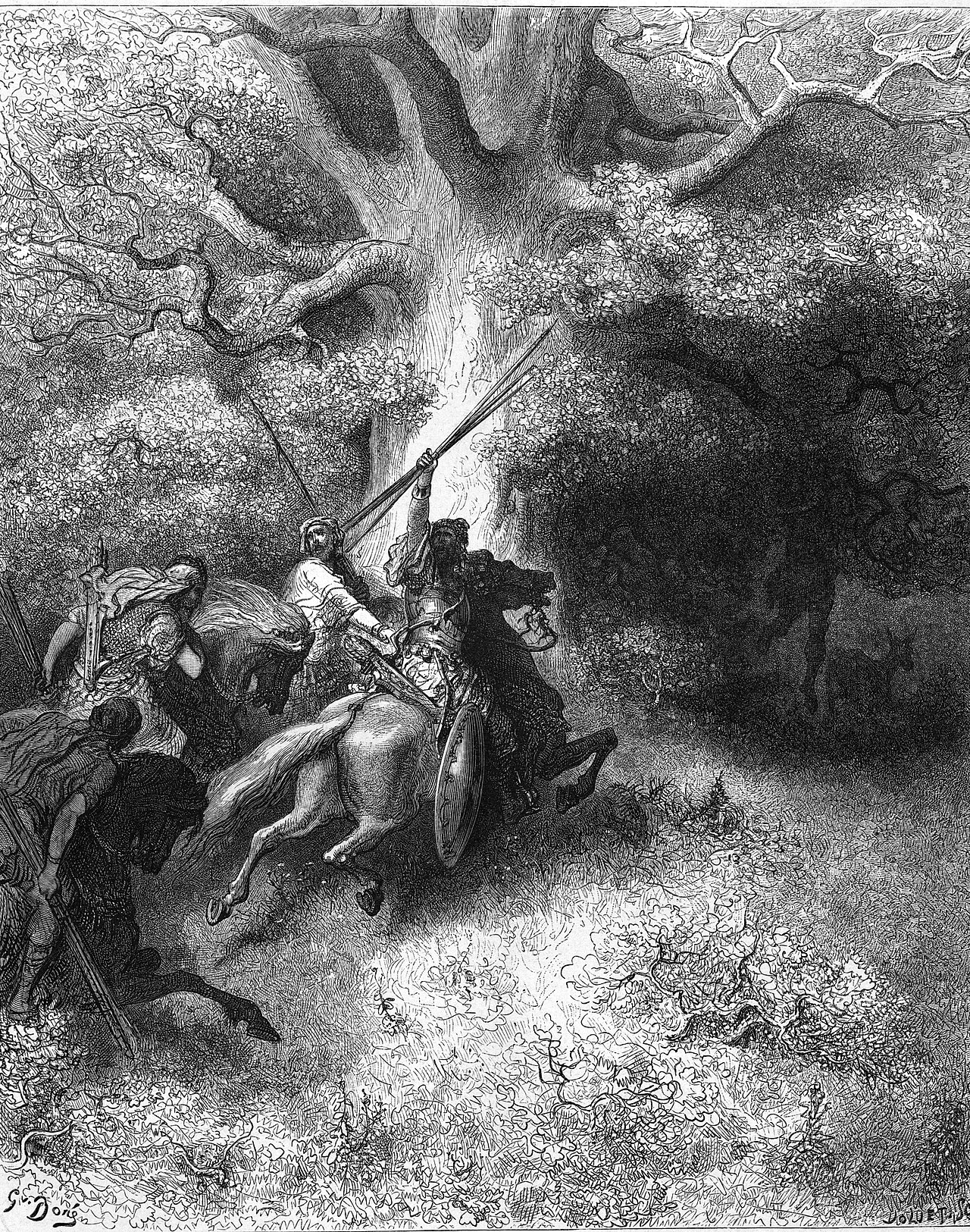
The battle in the forest of Ephraim ended the revolt. David charged Joab, Abishai and Ittai to spare his son. Absalom’s head was caught in an oak as his mule passed beneath it; Joab struck him, and ten armour-bearers killed him. His body was placed in a pit beneath a heap of stones. Ahimaaz, son of Zadok, and Cushi brought separate reports to the king, whose mourning and subsequent confrontation with Joab form the immediate aftermath. The account distinguishes victory in battle from the father’s reception of his son’s death. 2 Sam 18:1-33 2 Sam 19:1-8
The family and memorial notices require their own distinctions. Absalom is praised for his appearance, and the annual cutting of his heavy hair is recorded. Three sons and a daughter named Tamar are mentioned; she is distinct from his sister Tamar. A separate retrospective notice describes the pillar he erected in the king’s dale, with his declaration that he had no son to preserve his name. The two notices do not give the sons’ deaths or a chronology resolving their relationship. The pillar is also distinct from the burial pit described after the battle. 2 Sam 14:25-27 2 Sam 18:17-18