Isaac
Isaac is the son of Abraham and Sarah, husband of Rebekah, and father of Esau and Jacob. His place in the patriarchal history joins a promised family line with residence, cultivation and pastoral property in Canaan. The accounts associate him particularly with Beer-lahai-roi, Gerar, Beersheba and Hebron. His stated ages include forty at marriage, sixty at the twins’ birth and 180 at death. Gen 25:19-28 Gen 35:27-29 Gen 25:5-11 Gen 26:1-35
The marriage commission connects the household’s future with continuing residence in the promised land. Abraham insists that Isaac should remain there, yet releases the servant from his oath if the prospective bride refuses to come. Rebekah’s own answer therefore matters within an account that also emphasizes prayer and divine guidance. A Wife for Isaac, 18 May 2022 Gen 24:1-9 Gen 24:50-67
The birth notice presents Isaac as the promised son of Sarah, born when Abraham is one hundred and circumcised on the eighth day. Sarah’s words connect his arrival with laughter; the feast at weaning is followed by a dispute about inheritance involving Hagar and Ishmael. The departure of Hagar and her son distinguishes the covenant line through Isaac while retaining a promise concerning the other son. These notices describe both the expectation surrounding his birth and the division within his father’s household. Gen 17:15-21 Gen 21:1-14
The offering episode places him with Abraham in the land of Moriah. Isaac carries the wood and asks about the animal for sacrifice; his father binds him and places him on the altar. The divine prohibition stops the intended killing, and a ram is offered in his place. The renewed promise concerns descendants and blessing for the nations. The account’s decisive outcome is the provision of a substitute and the preservation of the promised son. Gen 22:1-19
The marriage to Rebekah is arranged through an unnamed senior servant of Abraham. Rebekah is the daughter of Bethuel, whose parents are Milcah and Nahor, Abraham’s brother. Laban participates with Bethuel in the agreement, and Rebekah agrees to leave. Her arrival leads to marriage and Isaac’s comfort after Sarah’s death. Isaac later prays for Rebekah during her childlessness; she conceives the twins and then receives a word concerning two peoples and the younger’s precedence. The family also records contrasting preferences for Esau and Jacob. Gen 24:15-29 Gen 24:50-67 Gen 25:19-28
Inheritance and burial connect Isaac’s household with the preceding generation. Abraham assigns his property to Isaac, while giving gifts to other sons during his lifetime. Isaac and Ishmael bury their father at Machpelah, in the field associated with Ephron, son of Zohar, near Mamre. The subsequent notice places Isaac at Beer-lahai-roi. Gen 25:5-11
A famine brings Isaac into dealings with Abimelech, the Philistine king at Gerar. The covenant assurance directs him to remain in the land rather than go to Egypt, repeating promises made to Abraham. His claim that Rebekah is his sister is challenged when Abimelech recognizes the marriage; the king then orders protection for the couple. The same chapter describes a hundredfold harvest, substantial flocks and servants, and hostility to his growing wealth. Gen 26:1-35
Water access is a major issue in that settlement. After Isaac leaves Gerar, his servants reopen wells associated with Abraham and dig others. Disputes with local herdsmen are preserved through the names Esek and Sitnah; Rehoboth marks a well for which no dispute is reported. At Beersheba, Isaac builds an altar, invokes the Lord and establishes his tent after another assurance of protection. Abimelech arrives with Ahuzzath and the military commander Phichol. Their sworn agreement and shared meal address nonaggression, followed by a report of water in the newly dug well. Gen 26:1-35
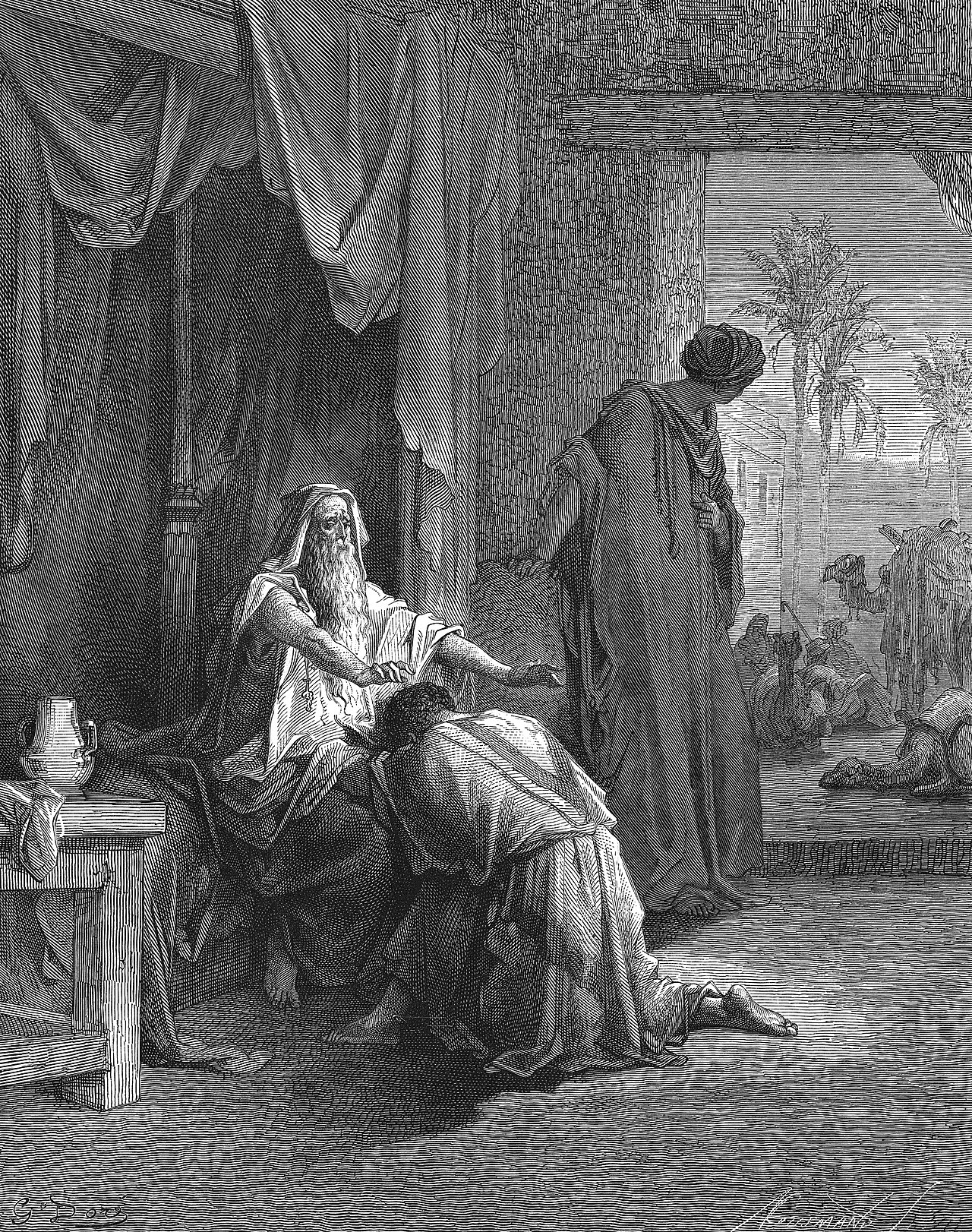
The final blessing narratives expose tensions within the family. Esau’s marriages to Judith, daughter of Beeri, and Basemath, daughter of Elon, cause grief to Isaac and Rebekah. In old age and with failing sight, Isaac intends to bless Esau, but Rebekah and Jacob arrange the deception by which Jacob receives the blessing. The discovery produces a second, distinct address to Esau. Isaac subsequently sends Jacob to Paddan-aram for marriage among their kin and explicitly invokes Abraham’s blessing over him. Gen 26:1-35 Gen 27:1-4 Gen 27:5-46 Gen 28:1-5
Isaac’s death and burial reunite Esau and Jacob in burying their father. The notice locates his final residence at Mamre, identified with Hebron, and gives his lifespan as 180 years. Jacob’s later burial instructions place Isaac and Rebekah in the family cave at Machpelah. The New Testament then gives these earlier family events a theological role: Hebrews interprets the offering and return through faith in resurrection and describes Isaac’s blessings as concerning the future. Romans and Galatians use him in arguments about divine promise and inheritance. Gen 35:27-29 Gen 49:29-32 Heb 11:17-20 Rom 9:6-13 Gal 4:28-31