Jacob
Jacob, also named Israel, is the younger twin son of Isaac and Rebekah, brother of Esau, and a patriarch whose household connects Canaan, Paddan-aram and Egypt. His biography concerns disputed inheritance, pastoral work, marriage, covenant worship and the family from which the Israelite people develop. Isaac is sixty at the twins’ birth; Jacob’s own lifespan is given as 147 years. Gen 25:21-34 Gen 47:27-31
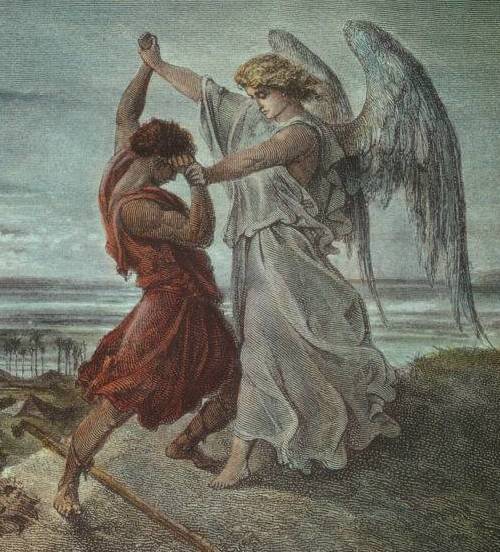
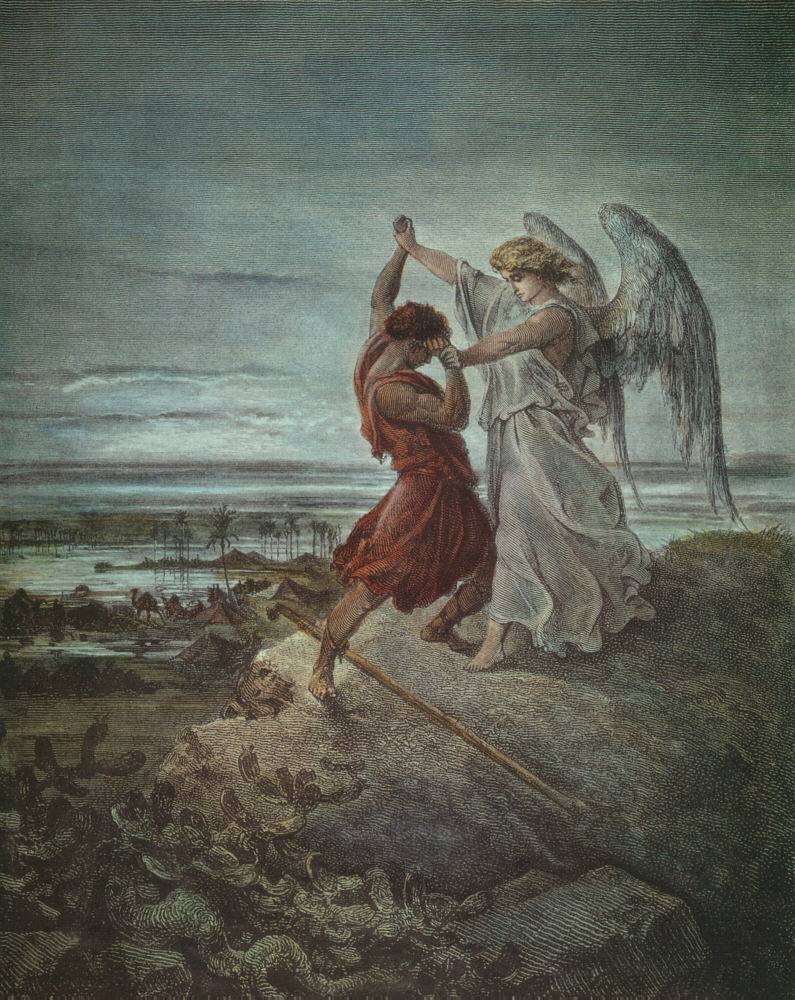
The night of wrestling before his meeting with Esau places the search for blessing beside an acknowledgment of dependence on God. Jacob’s prayer appeals to promised protection, and his request for a blessing accompanies the change of his name. The change is interpreted as a mark of grace rather than success through deception. Wrestling With God, 29 May 2022 Gen 32:1-12 Gen 32:22-32
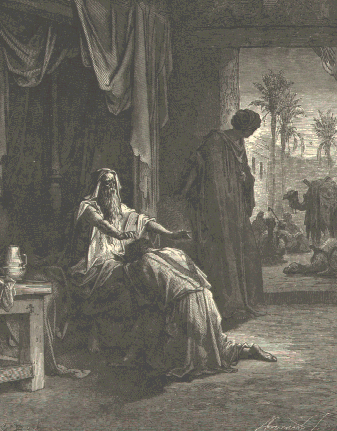
The early household is divided by parental preference: Isaac favors Esau, while Rebekah favors Jacob. Jacob obtains Esau’s birthright through an exchange for food. The later deception over the paternal blessing is a separate act, arranged with Rebekah: he presents himself as Esau before Isaac. The blessing concerns provision and authority within the family. Esau’s announced intention to kill him makes departure urgent, while Isaac’s instructions also give the journey a marriage purpose among Rebekah’s kin, the house of Bethuel and Laban. Gen 25:21-34 Gen 27:5-29 Gen 27:30-46 Gen 28:1-5
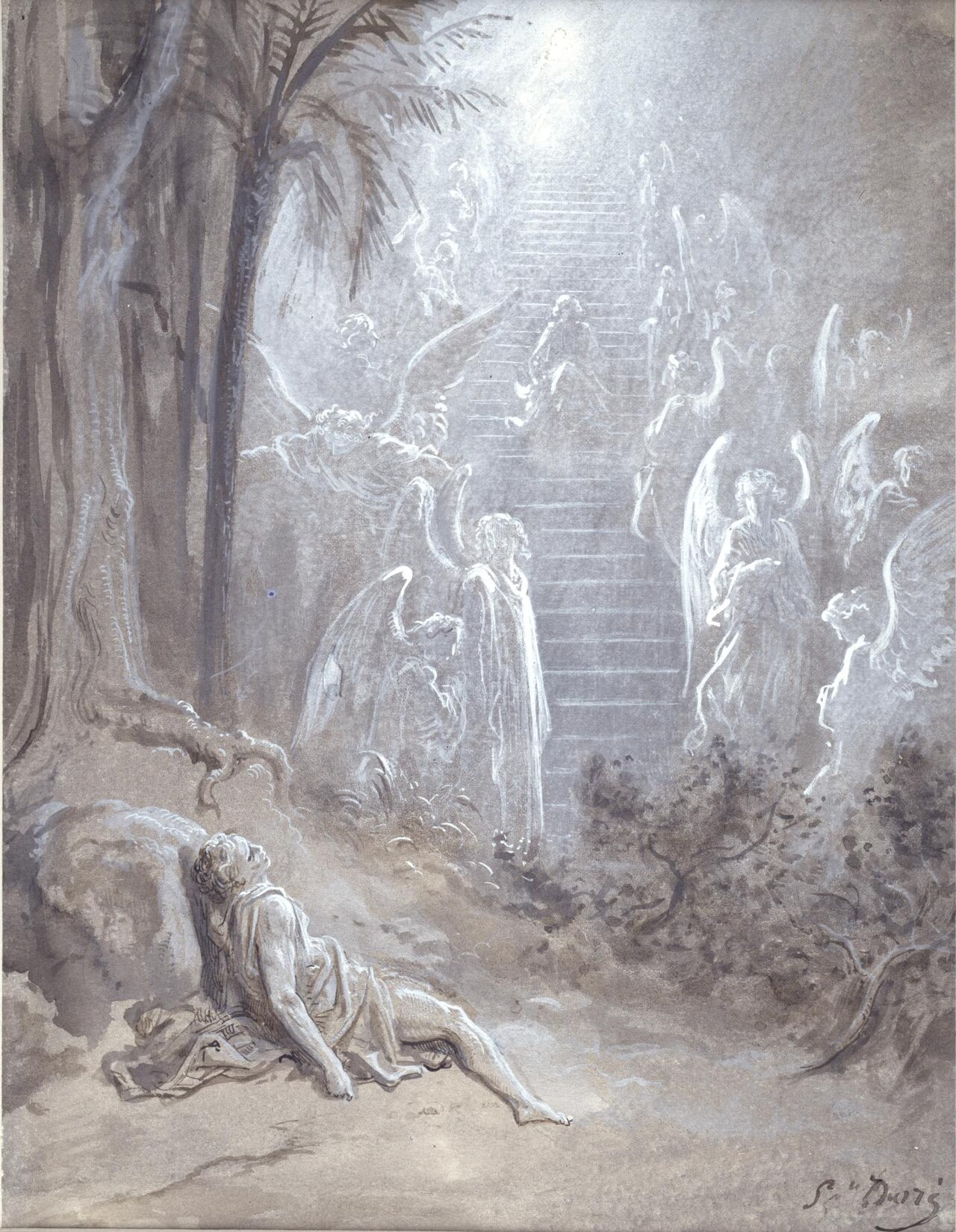
On the route from Beersheba toward Haran, the vision at Bethel, formerly called Luz, renews the promises associated with Abraham and Isaac. The ladder and angels accompany assurances of land, descendants, blessing for other families and divine protection through the journey and return. Jacob sets up an anointed stone and makes a vow involving worship, provision and a tenth of what he receives. The place becomes a recurring center of his covenant worship. Gen 28:10-22
The residence with Laban establishes both a family and a labor relationship. After meeting Rachel at the well, Jacob serves seven years for Rachel but is given Leah at the wedding. Rachel becomes his wife after Leah’s wedding week, with another seven years of service required. The family list distinguishes four maternal lines: Leah’s sons Reuben, Simeon, Levi, Judah, Issachar and Zebulun; Rachel’s sons Joseph and Benjamin; Bilhah’s sons Dan and Naphtali; and Zilpah’s sons Gad and Asher. Dinah is identified separately as Leah’s daughter. Gen 29:1-30 Gen 35:1-29 Gen 34:1-31
The return toward Canaan follows conflict over wages and livestock. Jacob’s own account distinguishes fourteen years for Laban’s daughters and six for the flock. Rachel and Leah support departure, questioning their remaining inheritance in their father’s household. In Gilead, Laban’s pursuit includes a search for household images taken by Rachel without Jacob’s knowledge. The final agreement uses a stone heap and pillar as witnesses against harmful crossing and mistreatment of the daughters. These notices describe negotiated labor, property and family boundaries. Gen 31:1-55
The journey also brings encounters remembered through place-names. Angels meet Jacob at Mahanaim. Before Esau’s approach he divides the household, prays and prepares to meet his brother. At the Jabbok, the wrestling leaves him with an injured hip and the name Israel; Peniel is named through his statement about seeing God and surviving. The brothers’ meeting records an embrace and the presentation of the household, followed by their separate routes. Jacob builds a house at Succoth and acquires land near Shechem from Hamor’s sons. Gen 32:1-12 Gen 32:22-32 Gen 33:1-20
Settlement near Shechem exposes a serious failure within and around the household. Shechem, son of Hamor, assaults Dinah; marriage and shared settlement are then proposed. Simeon and Levi use the agreed circumcision to attack the men, kill Hamor and Shechem, and retrieve Dinah. Plunder and captivity extend the violence beyond the initial offender. Jacob objects to the danger created for his household, and his final words later condemn the brothers’ fierce anger. The family history preserves both the assault and the destructive retaliation. Gen 34:1-31 Gen 49:1-33
The subsequent move to Bethel is explicitly accompanied by removal of foreign gods from the household and renewed altar worship. Deborah, Rebekah’s nurse, dies and is buried there. The covenant notice repeats the name Israel and the promises of descendants, kings and land. On the road toward Ephrath, identified as Bethlehem, Rachel dies while bearing Benjamin; Jacob marks her grave with a pillar. Reuben’s intercourse with Bilhah is also recorded. Jacob eventually reaches Isaac at Hebron, and he and Esau bury their father. Gen 35:1-29
The later household crisis centers on Joseph. Jacob’s preference for him contributes to his brothers’ hostility; the bloodied garment leads Jacob to believe that his son has been killed. During famine he sends sons to Egypt, initially retaining Benjamin. The detention of Simeon and the demand for Benjamin provoke his fear of further loss, until Judah undertakes responsibility for the younger brother. The news that Joseph lives and governs Egypt changes the situation. An assurance received at Beersheba precedes the family’s migration, and Judah goes ahead toward Joseph in Goshen. Gen 37:1-11 Gen 37:29-36 Gen 42:1-4 Gen 42:36-38 Gen 43:1-14 Gen 45:25-28 Gen 46:1-7 Gen 46:28-34
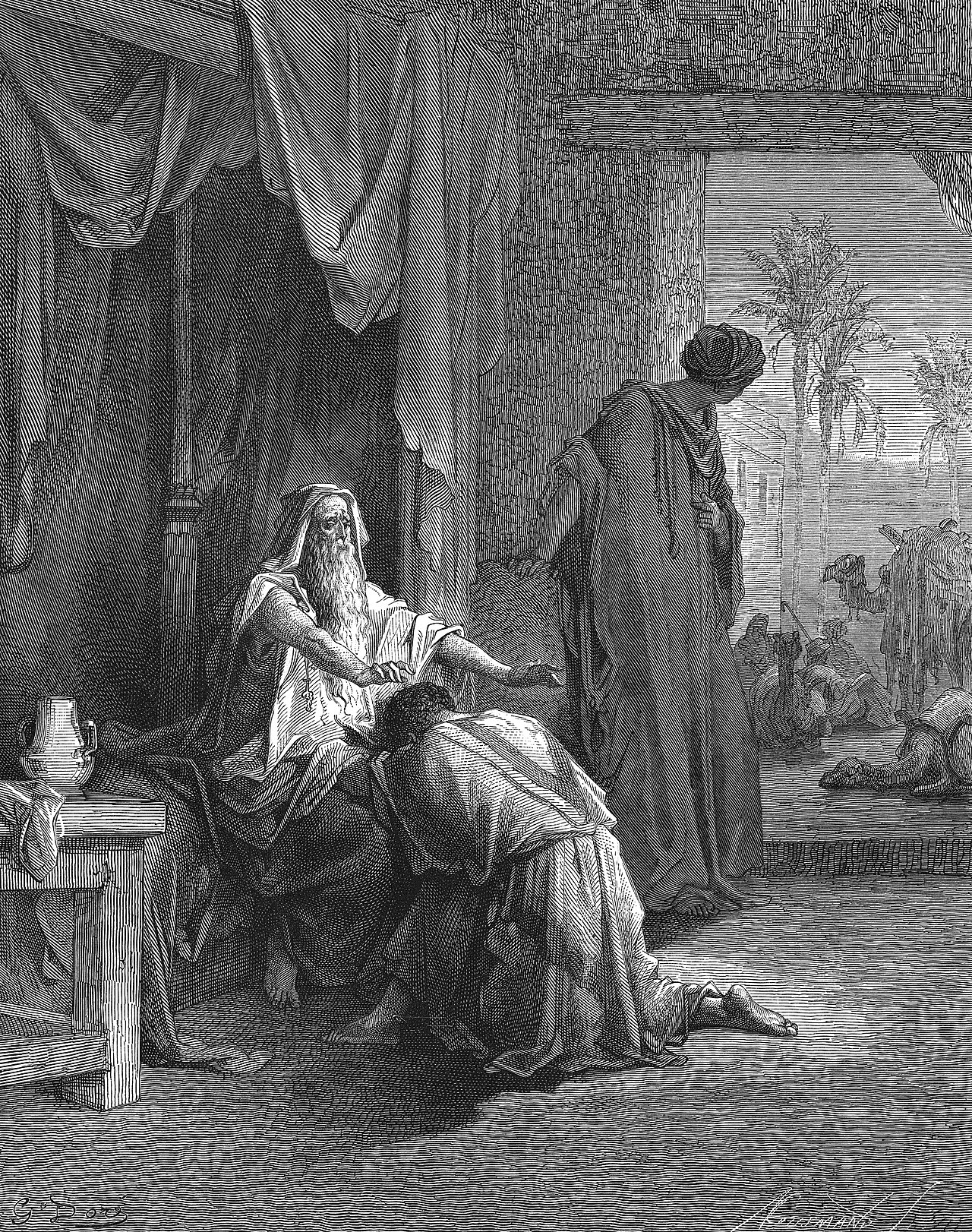
In Egypt, Jacob blesses the unnamed Pharaoh and describes himself as a pilgrim of 130 years. The family receives land and food under Joseph’s administration. His final seventeen years include the burial request and the blessing of Ephraim and Manasseh: Ephraim and Manasseh are placed alongside his own sons for inheritance, and the younger Ephraim receives the preferred blessing despite Joseph’s objection. The blessing invokes the God who has sustained him and anticipates a return to the ancestral land. Gen 47:7-12 Gen 47:27-31 Gen 48:1-22
His final addresses to the sons combine remembered conduct with statements about their descendants. Reuben’s offense and the anger of Simeon and Levi are judged, while Judah receives the royal imagery of lion and scepter. The other sons receive distinct blessings rather than one undifferentiated promise. Jacob requests burial at Machpelah, where Abraham and Sarah, Isaac and Rebekah, and Leah have been buried. After his death, Joseph arranges embalming and the funeral journey to Canaan, fulfilling that request in the field acquired from Ephron. Gen 49:1-33 Gen 50:1-14
Later biblical interpretation preserves the connection between this personal history and faith. Hosea recalls both taking a brother by the heel and struggling with an angel, including weeping and supplication. Hebrews places Jacob with Abraham and Isaac as heirs who lived as strangers, and characterizes his blessing of Joseph’s sons at the end of life as an act of faith. These are later interpretations of the patriarch’s recorded conduct and hope. Hos 12:2-4 Heb 11:9-10 Heb 11:20-21