Jabbok
Jabbok is first named as the ford over which Jacob, on his way to meet Esau, brought his two wives, his two womenservants and his eleven sons by night: he “passed over the ford Jabbok”, and then, left alone, wrestled with a man until the breaking of the day. BG1940 reads „премина брода на Явок“ and notes that the 1940 printing had „Яков“ there by a misprint. Ellen G. White, in Patriarchs and Prophets, chapter 18, writes that when they reached the river Jabbok, Jacob “sent his family across the ford of the river, while he alone remained behind”, and later speaks of “his night of anguish beside the Jabbok”. Smith places the meeting of Jacob and Esau on its south bank. Gen 32:22-24.
In the conquest the Jabbok marks the northern limit of the kingdom of Sihon: Israel possessed his land from the Arnon “unto Jabbok, even unto the children of Ammon: for the border of the children of Ammon was strong” (Israel defeats Sihon at Jahaz). Ellen G. White, in chapter 39 of the same book, describes the Amorites as holding “undisputed sway over all the land from the Arnon as far north as the Jabbok”. Moses recalls that Israel did not come near the land of the children of Ammon “nor unto any place of the river Jabbok”, and that the Reubenites and Gadites received a border reaching “unto the river Jabbok, which is the border of the children of Ammon”; the list of conquered kings has Sihon ruling from Aroer to the same river. Where KJV calls it a river in these verses, BG1940 has „потока Явок“, a brook. Num 21:24; Deut 2:37; Deut 3:16; Josh 12:2.
The same line returns in the days of the judges, when the king of the children of Ammon demands back the land “from Arnon even unto Jabbok, and unto Jordan”, and Jephthah answers that Israel had taken from the Amorites “all the coasts of the Amorites, from Arnon even unto Jabbok” (Jephthah answers the Ammonite king’s territorial claim). Judg 11:13; Judg 11:21-22.
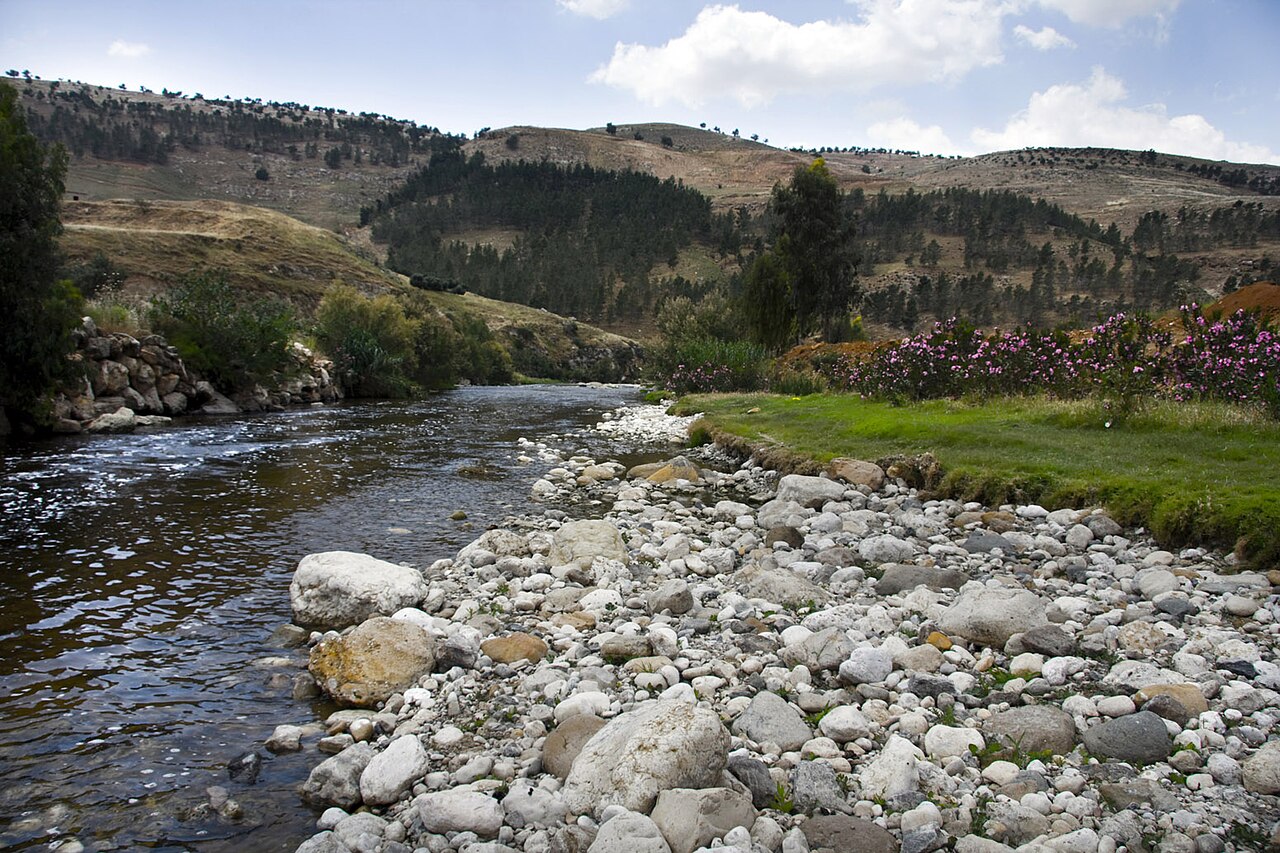
Easton describes the Jabbok as one of the streams east of the Jordan, falling into it about midway between the Sea of Galilee and the Dead Sea; it rises on the eastern side of the mountains of Gilead, runs about 65 miles in a deep ravine, and was the boundary between the Ammonites and Og king of Bashan; he gives its modern name as the Zerka, “blue river”. Smith, who calls it Wady Zurka, adds that toward its western part it became the boundary between the kingdoms of Sihon and Og, and Nave lists it as the northern boundary of the Ammonites and of the Amorites. Easton renders the name “a pouring out, or a wrestling”, Smith “emptying”, and Hitchcock “evacuation; dissipation; wrestling”. Num 21:24; Josh 12:2; Judg 11:22.