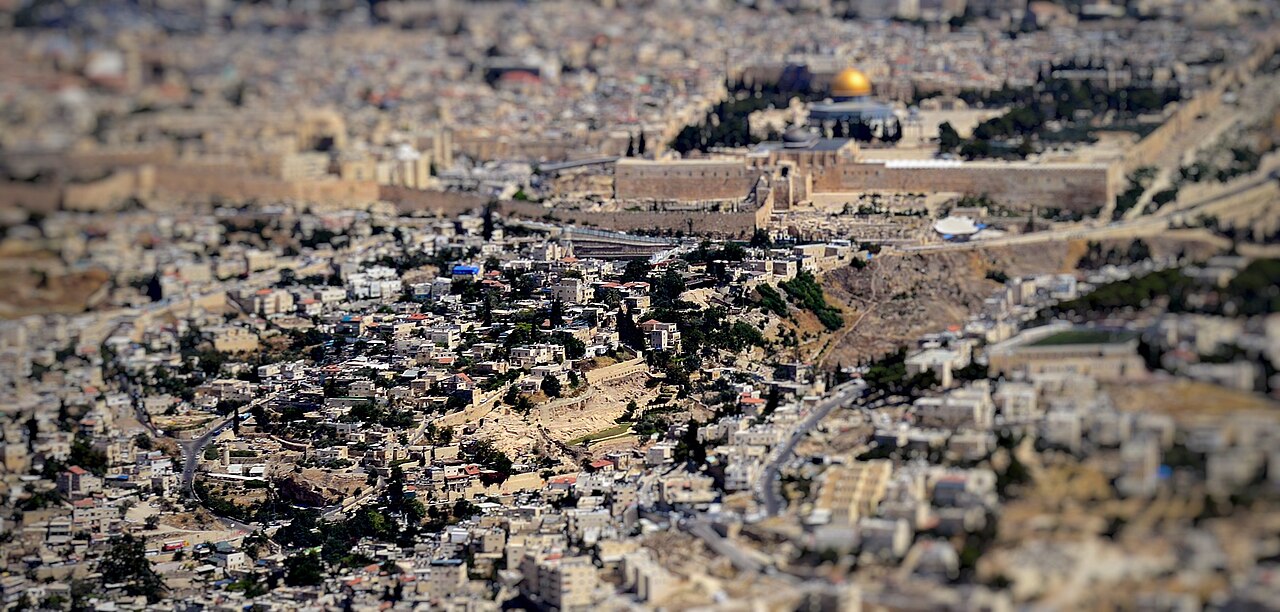
City of David
The City of David is the fortified royal quarter associated with David's capture of the Jebusite stronghold in Jerusalem. This account calls the stronghold Zion, and its new name follows the king's residence there. The designation identifies the fort and its royal surroundings within the wider city; it also appears in notices of the ark, royal burials, defensive works and later wall repairs. 2 Sam 5:6-10; 1 Chr 11:4-9.
The capture and establishment of the royal residence involved David, his men and the Jebusites. Chronicles names Joab, son of Zeruiah, as the first to ascend against the inhabitants and as the commander appointed afterwards. David built around the stronghold from Millo, while Joab repaired the rest of the city. The accounts connect the king's growing strength with the LORD's presence. 2 Sam 5:6-10; 1 Chr 11:4-9.
The quarter became both a seat of kingship and a centre of worship. David built houses there and prepared a tent for the ark of God. He assigned its carrying to the Levites and gathered Israel for its transfer to the prepared place. The religious significance of this dwelling lay in the divine presence represented by the ark, alongside the royal residence and public assembly. 1 Chr 15:1-3; 2 Sam 6:17; A Day in Your Courts Is Better Than a Thousand, March 10, 2024.
Before the ark was brought into the royal tent, it remained for three months in the house of Obed-edom the Gittite. David brought it from that household with rejoicing and sacrifices, and it was set in the tent he had prepared. The parallel account names Chenaniah with the singers and describes the Levites, elders and commanders joining the procession. Michal, daughter of Saul, watched from a window as David danced and despised him in her heart. The royal household and the public celebration thus met in the same setting. 2 Sam 6:9-17; 1 Chr 15:25-29.
Under Solomon, the daughter of Pharaoh, king of Egypt, initially came to live in the City of David while the royal house, temple and surrounding wall were being built. She was later moved to the house built for her. Chronicles gives the king's reason: his wife should not dwell in David's house because the places where the LORD's ark had come were holy. The notice distinguishes the earlier residence from the subsequent dwelling. 1 Kgs 3:1; 1 Kgs 9:24; 2 Chr 8:11.
The City of David is again called Zion when Solomon gathers the leaders of Israel in Jerusalem for the transfer of the ark into the temple sanctuary. Priests and Levites carry the ark, the tabernacle of the congregation and the sacred vessels. The ark contains the stone tablets that Moses had placed there at Horeb, recalling the covenant made after the departure from Egypt. The cloud filling the temple is described as the LORD's glory. The ark's movement marks a change from the royal tent to the temple's inner sanctuary. 1 Kgs 8:1-11.
The district was also the burial place of the royal line. David was buried there after his reign in Hebron and Jerusalem; Solomon followed him. The notices continue with Rehoboam, whose mother was Naamah the Ammonitess, then Abijam, Asa and Jehoshaphat. Chronicles adds that Asa's tomb had been prepared for him in the quarter and that aromatic substances accompanied the funeral. 1 Kgs 2:10-12; 1 Kgs 11:43; 1 Kgs 14:31; 1 Kgs 15:8; 1 Kgs 15:24; 1 Kgs 22:50; 2 Chr 16:14.
Later notices place the burials of the Judah kings Jehoram, Ahaziah, Amaziah, Azariah, Jotham and Ahaz in the City of David. The burial and succession formulas identify the place across successive generations; they also name Hezekiah as the successor of Ahaz. The transport of Ahaziah's body to Jerusalem and the return of Amaziah's body are specifically recorded. 2 Kgs 8:24; 2 Kgs 9:28; 2 Kgs 14:20; 2 Kgs 15:7; 2 Kgs 15:38; 2 Kgs 16:20.
Burial in the quarter did not always mean burial among the kings. Chronicles says that Jehoram was buried in the City of David but outside the royal sepulchres, and makes the same distinction for Joash. Conversely, the priest Jehoiada received burial among the kings there at the age of 130, because of the good he had done for Israel, God and the temple. Joash's death and burial preserve the contrasting royal-tomb exclusion. 2 Chr 21:20; 2 Chr 24:15-16; 2 Chr 24:25.
Hezekiah's defensive and water works included rebuilding the broken wall, raising towers, constructing an outer wall and repairing Millo within the City of David. Chronicles also records his stopping the upper watercourse of Gihon and bringing the water down to the quarter's western side. These notices connect its fortifications with the capital's water supply. 2 Chr 32:5; 2 Chr 32:30.
After his return to the kingdom, Manasseh undertook further fortification: an outer wall of the City of David extended west of Gihon, in the valley, towards the Fish Gate and around Ophel. It was raised to a great height, and commanders were stationed in Judah's fortified cities. This is a later royal notice of the quarter's defensive setting. 2 Chr 33:14.
In the wall-repair record, Shallun, son of Col-hozeh and ruler of a district of Mizpah, repairs the Fountain Gate, the wall of the pool of Siloah by the royal garden, and the approach to the stairs descending from the City of David. Nehemiah, son of Azbuk and ruler of half the district of Beth-zur, works opposite David's sepulchres and towards the pool and the house of the mighty men. The later thanksgiving procession at the wall dedication ascends those stairs above David's house and proceeds towards the Water Gate. Neh 3:15-16; Neh 12:37.
The book of Isaiah uses the quarter's broken walls and water arrangements in a warning about reliance on defensive preparations. The inhabitants see the breaches, gather water, demolish houses in Jerusalem to strengthen the wall, and make a reservoir between two walls; the warning says they have neglected their Maker. The same book addresses Ariel, a poetic name for Jerusalem, as the city where David dwelt. These prophetic descriptions connect the royal residence with the city’s walls and water. Isa 22:8-11; Isa 29:1-4. Classical poetic-city designation.