Gath
Gath was one of the five principal Philistine city centres, named alongside Gaza, Ashdod, Ashkelon and Ekron. In the earlier description of the land, it is also one of the places where Anakim remained. Its best-known individual connection is with Goliath, expressly described as a warrior from Gath. Neither that designation nor the city's later history supplies a dated biography of the giant. Josh 11:21-22 Josh 13:2-3 1 Sam 6:17-18 1 Sam 17:4-7
Gath twice appears as a refuge for David during his flight from Saul, but the two visits have different circumstances. In the first, he goes to Achish, the king, whose servants recognize his military renown. David becomes afraid and feigns madness; Achish rejects the man presented to him. The insecurity of this refuge is reflected in the contrast between the flight from one danger and the fear arising in the new place. The heading preserved with Ps 56:1 associates David with being seized by the Philistines in Gath. The next narrative notice places David in the cave of Adullam. 1 Sam 21:10-15 1 Sam 22:1
The later move is a household migration. David comes with six hundred men and their families to Achish, son of Maoch; his own household includes Ahinoam and Abigail. When Saul learns of the move to Gath, he stops pursuing him. At David's request for a residence away from the royal city, Achish grants him a separate settlement, Ziklag. The stated year and four months applies to his residence in the Philistine country, not to an uninterrupted stay within Gath itself. 1 Sam 27:1-12
This arrangement involves a strained political relationship. David attacks the Geshurites, Gezrites and Amalekites, while reporting to Achish that his attacks concern the southern country of the tribe of Judah, the Jerahmeelites and the Kenites. The report is distinguished from the actual targets by the narrative itself. Later the commanders reject his participation in their campaign against Israel, despite Achish's defense of him. The personal protection given by one ruler does not amount to the acceptance of all the Philistine leadership. 1 Sam 27:1-12 1 Sam 29:1-11
An earlier encounter between Gath and Israel belongs to the account of the captured ark. After the affliction of Ashdod, the Philistine rulers arrange its transfer to Gath. A severe calamity strikes the population, and the ark is sent onward to Ekron. The order of the places is important: Gath is one stage in the ark's movement through several cities. The account names the affliction but gives no basis for a certain modern medical diagnosis. A later notice from the time of Samuel describes the restoration of cities and their territory to Israel in the region from Ekron to Gath; it should not be expanded into a separate assertion that Gath itself was then conquered. 1 Sam 5:1-12 1 Sam 7:13-14
The conflict with Goliath is a different military episode. David's victory over the giant is followed by a Philistine retreat, with the wounded falling along the route toward Gath and Ekron. The notice describes the pursuit's reach rather than the capture of Gath. When David later reigns as king, Chronicles expressly records his taking of Gath and its dependent towns. The parallel summary in 2 Samuel uses the designation Metheg-ammah; the explicit city-and-towns statement is in Chronicles. 1 Sam 17:49-53 1 Chr 18:1 2 Sam 8:1
People described as Gittites also appear within David's following. At the flight from the capital during Absalom's rebellion, six hundred men who had followed the king from Gath pass before him. Ittai the Gittite refuses the offer to return and commits himself to accompanying David in life or death. He is addressed as a foreigner and an exile, and later receives command of a third of the army. The narrative distinguishes this named supporter from a general statement about all inhabitants of the city. 2 Sam 15:13-23 2 Sam 18:1-5
The epithet Gittite is also attached to Obed-edom, in whose house the ark remains for three months during its transfer. The household is blessed, and David resumes the movement of the ark. This is a household episode distinct from the earlier affliction in Gath. The epithet alone does not locate Obed-edom's house inside the Philistine city or prove that it was his birthplace. 2 Sam 6:10-12
The later fighting with men associated with Gath preserves several individual names. Ishbi-benob threatens David and is killed by Abishai; Saph is killed by Sibbecai. Another combatant is Lahmi, the brother of Goliath, whom Chronicles names as killed by Elhanan, son of Jair. In 2 Samuel, Elhanan’s father is named Jaare-oregim. Finally, at Gath an unnamed man with six digits on each hand and foot is killed by Jonathan, son of Shimea, David's brother. The notices associate these opponents with the giant family in Gath, while locating particular fights separately; they do not put every encounter inside the city. 2 Sam 21:15-22 1 Chr 20:5-8
Under Solomon, Gath remains a royal centre in the account of Shimei. Two of his servants escape there to Achish, son of Maachah. Shimei leaves Jerusalem, retrieves them and returns, thereby breaking the condition imposed on him. This journey leads to his condemnation. The passage's naming of Achish and Maachah should be retained without turning the similar names into proof that they are the very same king and father named in the earlier refuge accounts. 1 Kgs 2:36-46
The city's later military history includes different royal actions. Rehoboam fortifies the defensive towns, including Gath, and provides them with commanders, supplies and weapons. Subsequently Hazael captures Gath before turning toward Jerusalem. Still later Uzziah breaks down the wall of Gath, alongside the walls of Jabneh and Ashdod. Fortification, capture and destruction of a wall are distinct notices and should not be collapsed into one event or an unsupported exact year. 2 Chr 11:5-12 2 Kgs 12:17-18 2 Chr 26:1-6
Gath has a literary and prophetic role as well as a military one. David's lament for Saul and his son Jonathan calls for their defeat not to be announced in Gath or Ashkelon, lest the enemy rejoice. The prophetic comparison in the book of Amos directs its hearers to Gath among other kingdoms when challenging their complacency. The book of Micah uses the injunction not to announce the calamity in Gath within a lament concerning the threatened land. These texts have different settings and purposes; they are not interchangeable reports of one dated destruction of the city. 2 Sam 1:17-27 Amos 6:1-3 Mic 1:8-16
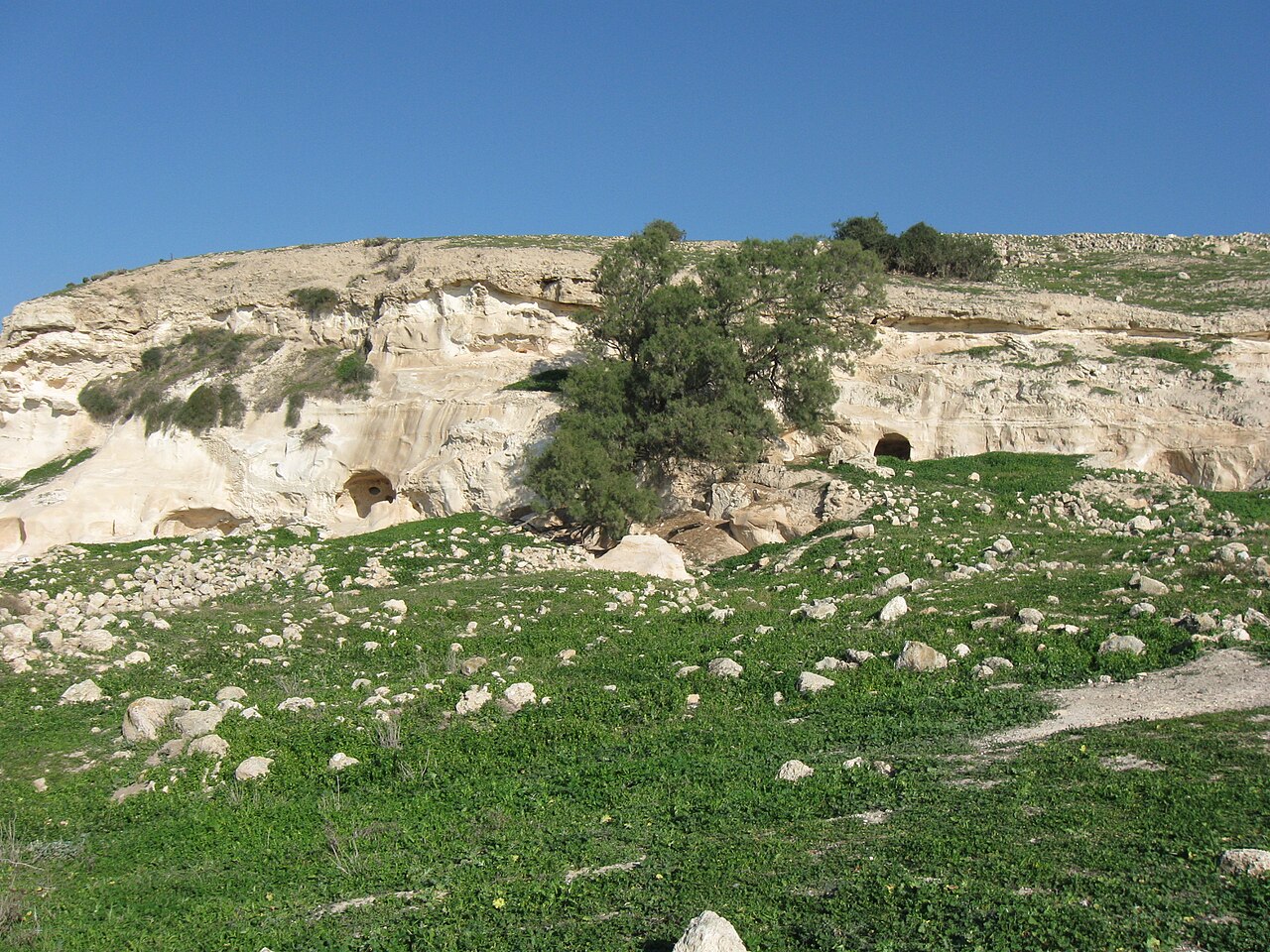
The principal archaeological site identified with Gath is Tell es-Safi. Excavations reported by Bar-Ilan University have exposed a city gate, temples, public buildings and residential areas, among remains from multiple periods. The site has evidence extending from the Early Bronze Age through later history. These finds provide material evidence for the city's scale and changing settlement, while a particular building cannot be assigned to Goliath or David merely because they are associated with Gath in the biblical accounts.