Great Sea
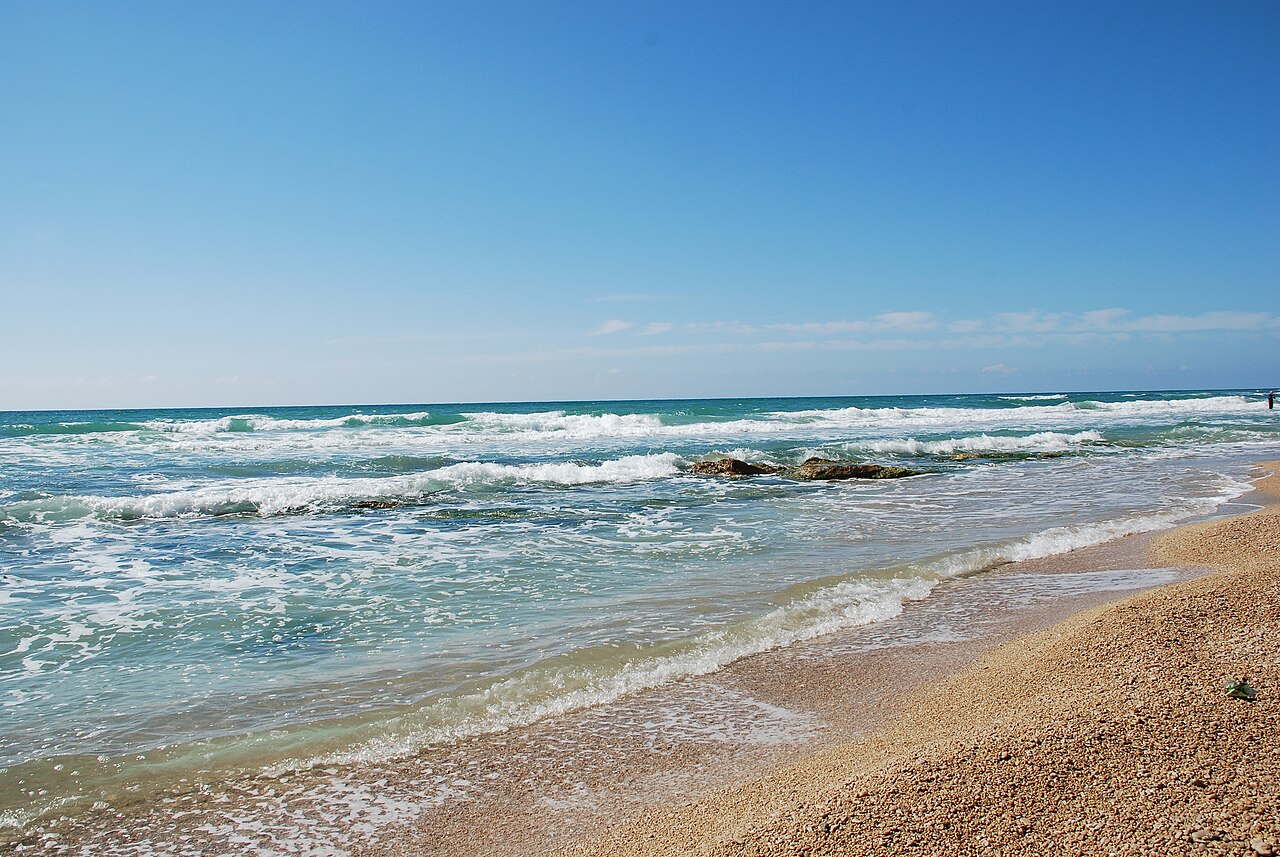
The Great Sea is the Mediterranean Sea along the western side of Canaan. It forms the western boundary in the land descriptions, while the directional name Western Sea expresses the same position. In the east–west contrast of the prophetic language, it is distinguished from the eastern Salt Sea. These coastal and directional names recur across legal, tribal and prophetic notices. Num 34:6 Deut 11:24 Joel 2:20 Classical names and references
The sea also marks the western end of the land shown to Moses in his final view before death. He ascends Mount Nebo, to the top of Pisgah, facing Jericho. The Lord shows him the land and recalls the promise made to Abraham, Isaac and Jacob, while telling him that he will not cross into it. The scene presents the promised inheritance, including its western sea limit, as a revelation granted to the leader at the end of his service. Deut 34:1-4 The final view and the promise
The boundary directions given through Moses join the southern line to the sea at the brook of Egypt; the northern line starts from the sea toward Mount Hor. Another description uses the name Sea of the Philistines, placing it opposite the Red Sea within the promised limits. The wider inland boundary is the Euphrates. After the death of Moses, Joshua, son of Nun, receives the charge to lead the entry into the land, whose extent is described through Lebanon, the Euphrates and the land of the Hittites to the Great Sea toward sunset. His later address to Israel again sets the inherited territory toward the western sea. Num 34:5-7 Exod 23:31 Josh 1:1-4 Josh 23:4
The tribal descriptions apply the sea boundary to particular inheritances. The western limit of the tribe of Judah is the Great Sea and its coast; the coastal notice includes Ashdod and Gaza and reaches the brook of Egypt. Farther north, the border of the tribe of Ephraim runs westward from Tappuah to the brook Kanah and ends at the sea. The neighboring boundary of the tribe of Manasseh also follows this watercourse and reaches the sea. The sea is consequently a shared western reference in different tribal descriptions. Josh 15:12 Josh 15:47 Josh 16:8 Josh 17:9
The sea served a practical transport function during the construction of the temple under Solomon, the successor of David. Hiram, king of Tyre, agreed to supply cedar and fir timber from Lebanon. His servants would convey it by sea in floats and release it at the appointed destination, in exchange for provisions for his household. Solomon supplied wheat and pure oil year by year. The account also recognizes the timber-working skill of workers from Sidon. The parallel notice specifies Joppa as the maritime destination, from which the timber was to be carried up to Jerusalem. 1 Kgs 5:1-12 2 Chr 2:16
A later timber arrangement belongs to the returned community of Israel. It arranges the maritime delivery by providing food, drink and oil to workers from Sidon and Tyre, so that cedar trees from Lebanon will be brought to the sea at Joppa. The permission is attributed to Cyrus, king of Persia. This notice records procurement and a named sea destination within the preparations for the restored temple. Ezra 3:7
In Ezekiel’s sanctuary vision with the life-giving river, the Great Sea provides a comparison for abundant fish. The waters flow eastward into the Salt Sea, where the vision places fishermen from En-gedi to En-eglaim. Their fish are described as numerous and varied like those of the Great Sea. The western sea supplies the comparison within a vision whose waters come from the sanctuary. Ezek 47:8-10
The same prophetic land description retains the Great Sea as the western boundary, extending toward Hamath. In the allocation for the tribe of Gad, the southern line runs from Tamar through Meribah of Kadesh and along the brook of Egypt toward the sea. Another prophetic picture, in the book of Zechariah, describes living waters flowing from Jerusalem, divided between the eastern Salt Sea and the western sea in both summer and winter. These are visionary descriptions of restoration, retaining recognizable geographical directions. Ezek 47:20 Ezek 48:28 Zech 14:8
The expression Great Sea also occurs in Daniel’s first dream and visions, dated within the account to the first year of Belshazzar, king of Babylon. Four winds strive upon the sea and four different beasts arise from it. The interpretation identifies the four beasts as four kings. The sea and winds function in the prophetic imagery of political powers arising through conflict, alongside the term’s geographical uses elsewhere. Dan 7:1-3 Dan 7:17 The symbolic waters and winds