Daniel
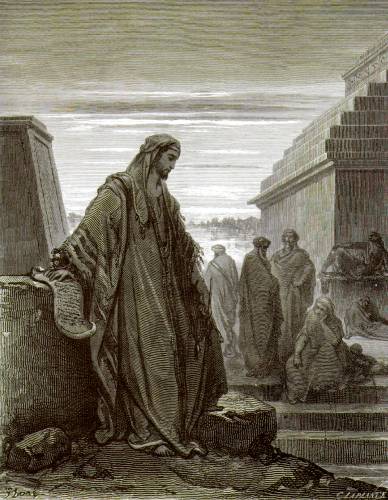
Daniel, also given the court name Belteshazzar, was a Judean captive trained for service in the court of Babylon. He became an administrator, interpreter of royal dreams and recipient of prophetic visions. The accounts place the beginning of his captivity in the third year of Jehoiakim of Judah and extend his recorded experience into the third year of Cyrus of Persia. They identify his companions and offices without naming his parents or giving a birth date. Dan 1:1-21; Dan 10:1-21.
Divine rule connects the court accounts with Daniel’s visions: human dominion is judged, while the Son of Man receives an everlasting kingdom. Understood messianically, this is Christ’s rule, extending beyond the empires represented in the visions. That interpretation concerns the meaning of the prophetic figures rather than an additional episode in Daniel’s court biography. Dan 2:1-49; Dan 7:1-28. Christ: The Center of Daniel, 29 December 2019.
Nebuchadnezzar’s attack on Jerusalem forms the opening setting. Temple vessels were carried away, and the official Ashpenaz was charged with selecting suitable young men for royal service and the learning and language of Chaldea. Daniel’s colleagues were Hananiah, Mishael and Azariah, renamed respectively Shadrach, Meshach and Abed-nego. The royal training programme prescribed three years. Daniel’s refusal of the royal food and wine led to a ten-day trial of pulse and water under the overseer called Melzar in the KJV. Their favourable condition and knowledge are attributed to divine favour; Daniel’s particular gift concerned visions and dreams. Dan 1:1-21.
The dream and its interpretation are dated to Nebuchadnezzar’s second regnal year. The king’s demand that the court specialists disclose the dream as well as its meaning resulted in a threat to the wise men, including Daniel and his companions. Daniel learned of the decree from Arioch, the captain responsible for the executions, and requested time from the king. He then sought divine mercy with Hananiah, Mishael and Azariah. The secret was revealed in a night vision. Before the king, Daniel credited the revelation to the God of heaven rather than superior personal knowledge. Dan 2:1-49.
The dream’s image represented successive kingdoms, beginning with Nebuchadnezzar as its golden head. Silver, bronze, iron and mixed iron and clay followed, while a stone cut without hands shattered the image and became a mountain filling the earth. Daniel’s explanation culminated in a kingdom established by the God of heaven that would not pass to another people or be destroyed. His promotion included authority over the province of Babylon and its wise men; at his request Shadrach, Meshach and Abed-nego received provincial responsibilities. Dan 2:1-49.
The three companions’ separate confrontation at Dura illustrates the religious pressures of that service. Nebuchadnezzar required worship of a golden image on pain of death in a furnace. Shadrach, Meshach and Abed-nego refused even if deliverance were not granted. They survived the furnace, and the king saw a fourth figure and acknowledged divine intervention. Their promotion followed. These were the colleagues whose training, prayer and appointments Daniel shared. Dan 3:1-30.
A later royal dream concerned a great tree cut down while its stump remained. Daniel identified the tree with Nebuchadnezzar and warned that the king would lose his place among people until he acknowledged the Most High’s rule. His counsel linked repentance with righteousness and mercy to the poor. Twelve months later the king’s boast about Babylon was followed by loss of royal authority and life among animals for the announced seven times. Restoration of understanding and rule ended the account with the king’s acknowledgment of divine sovereignty. Dan 4:1-37.
At Belshazzar’s feast, vessels taken from the temple in Jerusalem were used in drinking and praise of manufactured gods. Writing appeared on the palace wall, and an unnamed queen recalled Daniel’s ability in the earlier reign. Daniel declined to make his explanation conditional on rewards, recalled Nebuchadnezzar’s humiliation and accused Belshazzar of knowing its lesson but disregarding it. The words were interpreted as the numbering and ending of the kingdom, the king’s failure when weighed and the transfer of dominion to the powers of Media and Persia. Daniel received purple clothing, a gold chain and proclaimed royal authority; Belshazzar was killed that night, and Darius the Mede received the kingdom. Dan 5:1-31.
Under Darius, Daniel was one of three senior officials supervising 120 provincial rulers, and the king intended to put him over the whole realm. Rivals found no administrative fault and instead obtained a thirty-day restriction on petitions to any god or person except the king. Daniel continued his established practice of prayer three times daily toward Jerusalem. The decree led to his confinement in a sealed lions’ den despite Darius’s attempt to deliver him. Daniel survived and reported that an angel had shut the lions’ mouths. The king subsequently ordered the accusers and their families into the den and issued a proclamation honouring Daniel’s God. The account attributes Daniel’s protection to divine help while identifying the executions as the king’s command. Dan 6:1-28.
The vision accounts return to earlier points in this career. The vision of four beasts belongs to Belshazzar’s first year. Four kingdoms and a persecuting horn are followed by a heavenly court: the Ancient of Days sits, books are opened and one like a son of man receives lasting dominion. The explanation connects the judgment with the removal of the persecuting power and the holy people’s possession of the kingdom. Judgment thus precedes the establishment of that final dominion and resolves the conflict described in the vision. Dan 7:1-28. The Court was Seated, 18 February 2020.
The ram-and-goat vision, dated to Belshazzar’s third year, places its visionary setting at Shushan in Elam beside the Ulai. Gabriel explains the ram as the kings of Media and Persia, and the goat as the king of Greece. A further oppressive power attacks the host, truth and sanctuary. The promise concerning 2,300 evenings and mornings culminates in the sanctuary’s cleansing. Daniel’s sickness and subsequent return to royal business distinguish the effect of the vision on him from the future events symbolized in it. Dan 8:1-27.
The connection between that sanctuary promise and the heavenly judgment is a theological interpretation of the related visions. The sanctuary’s cleansing is understood as judgment in heaven in favour of God’s people, corresponding to the court scene before the final kingdom. The later account of Christ entering heaven itself through His sacrifice supplies the broader biblical setting for this understanding. Dan 7:1-28; Dan 8:1-27; Heb 9:23-28. The Cleansing of the Sanctuary, 26 February 2020.
In Darius’s first year, Daniel considered Jeremiah’s seventy-year prophecy concerning the desolation of Jerusalem. He confessed the sins of his people, appealed to the covenant and the law of Moses, and sought restoration on the ground of mercy. The message from Gabriel followed during this prayer. Gabriel announced seventy weeks concerning the people and holy city, including the coming and cutting off of Messiah, covenant, righteousness and subsequent desolation. Prayer for the immediate condition of the city thus opened into a revelation with a wider prophetic horizon. Darius is identified here as a Mede and son of Ahasuerus. Dan 9:1-27.
The final extended message is set in Cyrus’s third year beside the Hiddekel, called Tigris in BG1940. After three weeks of mourning and restricted food, Daniel saw a radiant figure, lost strength and was repeatedly strengthened to receive the revelation. The account describes conflict involving the princes of Persia and Greece, with Michael assisting and standing as the people’s prince. The accompanying men did not see the vision and fled in fear. The narrative keeps Daniel’s reception of the message distinct from the political and heavenly conflicts it discloses. Dan 10:1-21.
The continuation develops succession and conflict among rulers, including the powers of Persia and Greece, and repeated struggles between northern and southern kings. Diplomacy, deception and warfare become connected with opposition to the holy covenant and sanctuary. The wise instruct others but also experience persecution. The final ruler reaches his end without help. Dan 11:1-45.
Its conclusion places Michael’s protective action beside an unparalleled time of trouble and the deliverance of those recorded in the book. People sleeping in the dust awake to everlasting life or shame, and those who turn others to righteousness shine like stars. Daniel is instructed to seal the words until the time of the end. His own final assurance is that he will rest and stand in his allotted portion at the end of the days. The promised resurrection and inheritance close the record without a narrated death or identified grave. Dan 12:1-13.
Other biblical references use Daniel’s name in relation to righteousness, wisdom and prophecy. In Ezek 14:12-20, Daniel appears with Noah and Job in a hypothetical example of personal righteousness amid judgment; Ezek 28:1-5 invokes his wisdom in a rebuke of royal pride. These comparisons do not place the three figures together in a historical scene. Jesus explicitly called Daniel a prophet when referring to the desolating abomination and the need for understanding and flight from danger. The citation places Daniel’s message within the Gospel discussion of tribulation and deliverance. Matt 24:1-22.