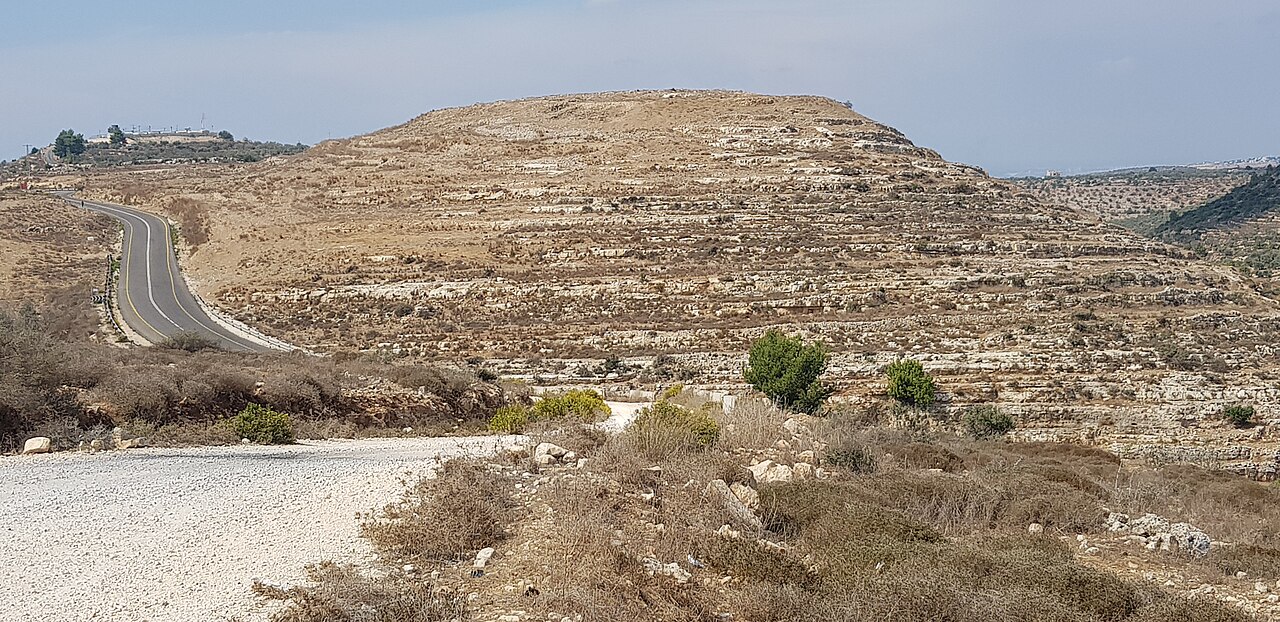
Gaash
Joshua is buried, after his death, in the border of his inheritance in Timnath-serah, in mount Ephraim, “on the north side of the hill of Gaash” (BG1940: „на север от хълма Гаас“). Judges repeats the burial, calling the town Timnath-heres (BG1940: Тамнат-арес) and the place “the hill Gaash”. Josh 24:29-30; Judg 2:8-9.
Among the mighty men of David, Hiddai is “of the brooks of Gaash” in 2 Sam 23:30, and the parallel list names Hurai of the brooks of Gaash in 1 Chr 11:32 (the person record gathers both names); BG1940 reads „от долината на Гаас“ and „от долините Гаас“. Smith thinks the brooks or valley of Gaash were probably at the foot of the hill. 2 Sam 23:30; 1 Chr 11:32.
Easton places the hill in the territory of Ephraim and refers to Timnath-serah; Nave describes Gaash as a foothill of Mount Ephraim, and Hitchcock renders the name “tempest; commotion”. Josh 24:30; Judg 2:9.