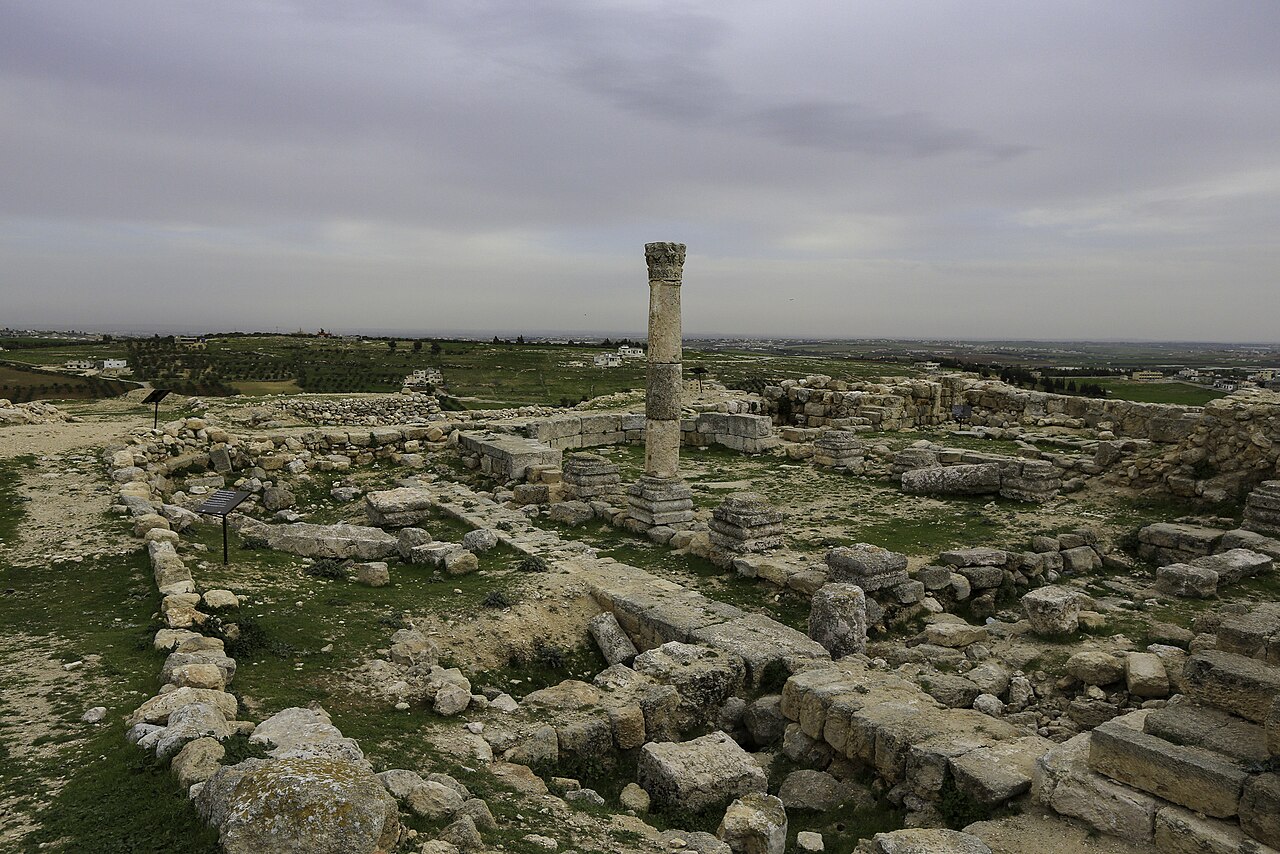
Heshbon
Heshbon was the royal city of Sihon, king of the Amorites, east of the Jordan. Its early political history is tied to territory taken by Sihon from the former king of Moab. The later account of Israel’s advance distinguishes that earlier conquest from the defeat of Sihon and the occupation of his cities. Num 21:21-26
The dispute over access to the country preceded the fighting. Moses sent a peaceful request for passage, while Sihon refused and assembled his forces. The battle took place at Jahaz; the subsequent occupation included Heshbon and its dependent towns. This sequence places the city’s acquisition within the conflict with the Amorites, rather than an attack upon the existing territory of Moab. The distinction is also central to the later territorial argument recalled in the lesson of 21 May 1996. Num 21:21-26 Patriarchs and Prophets, chapter 39.
The eastern inheritance distribution and its city lists associate Heshbon with more than one tribal context. The descendants of Reuben are said to have built Heshbon and Elealeh, and the city appears in their inheritance list. A separate account of the cities assigned to the descendants of Merari lists Heshbon and Jazer among the cities provided from Gad. These are the affiliations stated in the respective texts; they do not by themselves date a transfer from one tribe to the other. Num 32:37 Josh 13:15-17 Josh 21:34 Josh 21:38-39 1 Chr 6:77-81
Heshbon’s earlier history became part of the diplomatic reply by Jephthah to the Ammonite king. The king demanded the return of disputed land. Jephthah answered that Israel had acquired the country from Sihon, and referred to Heshbon and its towns as an established possession. His reference to three hundred years belongs to that retrospective diplomatic argument; it is not a supplied calendar year for the city’s foundation. Judg 11:12-13 Judg 11:19-23 Judg 11:26-27
Later poetry and prophecy preserve another aspect of the city. The pools of Heshbon, beside the gate of Bath-rabbim, provide a comparison in the Song of Songs. The prophecies concerning Moab place Heshbon alongside Elealeh, describe its fields, and connect their mourning with the vineyards of Sibmah and Jazer. These passages attest the city’s place in the regional landscape and prophetic language, without supplying a dated account of every change of government. Song 7:4 Isa 15:4 Isa 16:8-9
Modern investigation concerns the archaeological sites proposed for biblical Heshbon. Tell Hisban preserves the traditional association with the city’s name, but the first excavations there did not uncover the evidence needed to identify the site securely as Sihon’s capital. Nearby Tell Jalul has consequently been considered as another possible location, and its water installations have been compared with the pools in the Song of Songs. Those comparisons remain proposals: the later remains at Hisban and the pools at Jalul do not by themselves identify the precise royal city or the poetic water feature. Song 7:4 Andrews University research account.