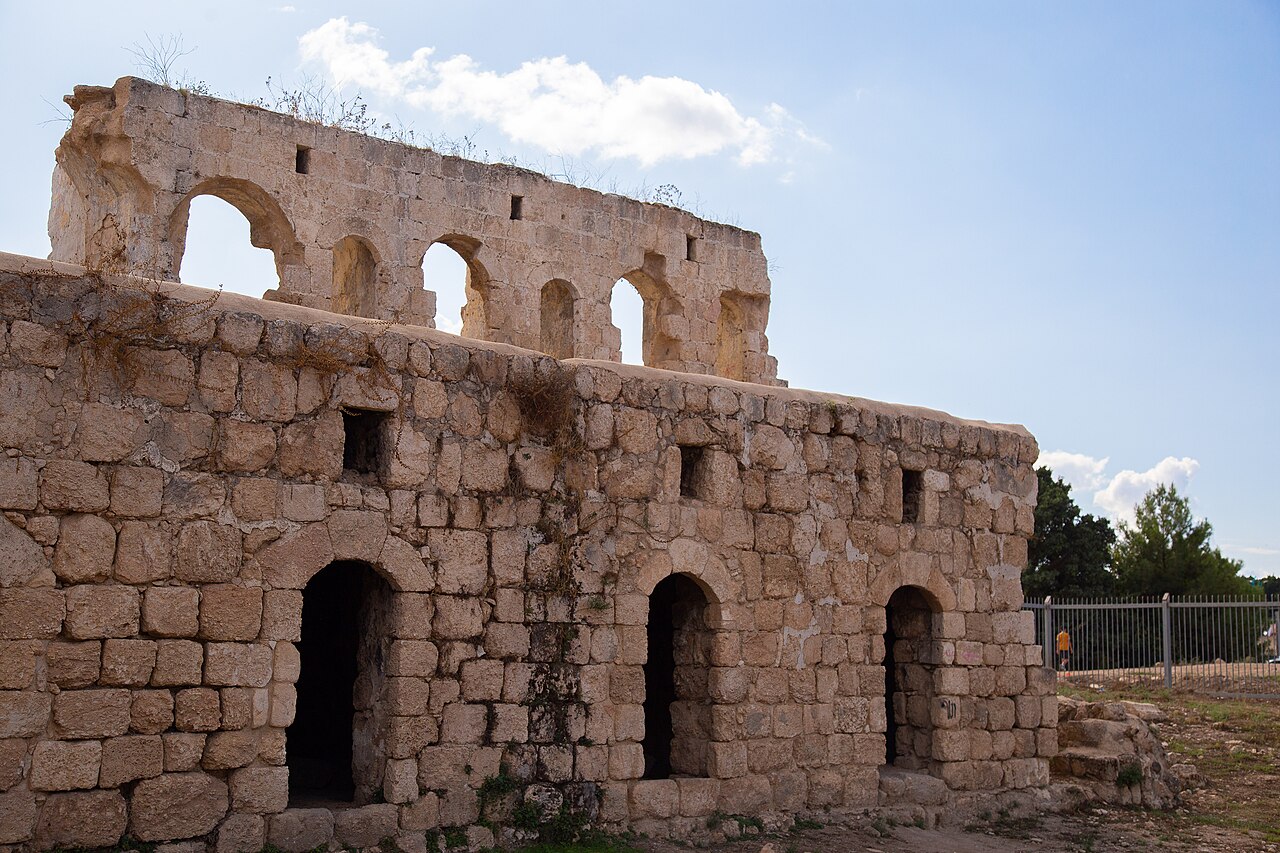
Lod
Lod, called Lydda in the New Testament, was a town near Joppa. The two names connect the city's Old Testament records with the setting of Peter's ministry in Acts. Smith's Bible Dictionary identifies Lydda as the Greek form of Lod. (Acts 9:38)
Believers were already living at Lydda when Peter visited them. There he found Æneas, who had been confined to bed with palsy for eight years. In the healing, Peter declared that Jesus Christ made him whole and told him to rise and make his bed; Æneas rose immediately. The inhabitants of Lydda and Saron saw him and turned to the Lord. This wider response to the healing is emphasized in The Acts of the Apostles, chapter 14, and in the 2018 study of the passage. (Acts 9:32–35)
Lydda was also the place from which Peter was summoned to Joppa after the death of the disciple Tabitha, also called Dorcas. Because the towns were close, the disciples sent two men to ask him to come without delay. He went with them, and her restoration to life took place at Joppa. Lydda's role in this second episode was the location of the apostle when the messengers reached him. (Acts 9:36–42)
The earlier record of Lod appears in the genealogy of the tribe of Benjamin. Elpaal's sons are named as Eber, Misham and Shamed; Shamed is credited with building Ono and Lod with its dependent towns. (1 Chr 8:1; 1 Chr 8:11–12)
The returnee lists name Lod together with Hadid and Ono. The combined total is 725 in Ezra 2:33 and 721 in Nehemiah 7:37; neither verse assigns a separate number to Lod. In the account of settlement, Lod and Ono also occur among the places inhabited by the children of Benjamin, with the valley of craftsmen. (Neh 11:31–35)