Berea
Location and identification. Berea is the New Testament name of ancient Beroea, identified with modern Veria in northern Greece. The city lies at the foot of Mount Vermio beside the River Tripotamos, in the historical region of Macedonia. Acts records Paul's mission to Berea and identifies Sopater as a Berean who accompanied Paul on a later journey to Asia. Acts 17:10–15; Acts 20:4; Greek National Tourism Organisation — Veria.
The meaning of “more noble”. Acts 17:11 characterizes how the hearers received and assessed the preaching. The Greek εὐγενέστεροι is a comparative form of εὐγενής. In this context it describes openness and willingness to investigate; it does not establish that all the hearers belonged to aristocratic families. Welcoming the message was accompanied by daily examination of Scripture. The commendation concerns this approach, rather than agreement alone. Acts 17:11; “Thessalonica and Berea”, 28 August 2018.
Position in the apostolic mission. Acts 17:10–15 is the principal biblical account of Berea. It places the city between the ministry of Paul and Silas in Thessalonica and Paul's subsequent presence in Athens. In Thessalonica, opponents brought Jason and other believers before the local authorities after failing to find Paul and Silas. The charge was framed politically, alleging violations of Caesar’s decrees and the proclamation of another king, Jesus. This is the accusation recorded in Acts 17:6–7. The departure for Berea by night follows that disorder. The preceding passage also establishes the content of Paul's preaching: he argues from Scripture for the Messiah's suffering and resurrection and identifies Jesus Christ as that Messiah. Acts provides this sequence without assigning a calendar date or a length of stay in Berea. Acts 17:1–15.
Religious and social setting. The reference to a synagogue attests a Jewish community in which the apostolic preaching began. Acts 17:11 characterizes the hearers by their readiness to receive the message and their daily examination of its claims against Scripture. This is an assessment of their particular response rather than a description of every inhabitant. The believers included Greek women of standing and a substantial number of men. These details indicate participation from different social backgrounds without supplying the community's size or the organization of a local church. Acts 17:10–15.
Interruption of the mission. The agitation is attributed to opponents of the preaching who came from Thessalonica. The passage distinguishes their opposition from the support of the local believers. Paul was sent towards the sea and escorted to Athens, while Silas and Timothy remained in Berea. Timothy is not named among those sought in Thessalonica in Acts 17:5–9; his presence in Berea is explicit in Acts 17:14–15. The distinction does not establish whether he was present during the Thessalonian disturbance. Paul’s escorts received instructions for Silas and Timothy to join him. The account names no port and does not describe the means of travel to Athens. Acts 17:10–15. Sabbath School lesson — comparison of the passages.
Later biblical evidence. Acts 20:4 identifies Sopater as a Berean and includes him among Paul's companions on a later journey. BG1940 also supplies the patronymic identifying his father, Pyrrhus, which KJV omits. The same list names Aristarchus and Secundus from Thessalonica, Gaius from Derbe, Timothy, and Tychicus and Trophimus from Asia. Berea is thereby documented among the places associated with individually named apostolic colleagues. The verse establishes his connection with Berea and the apostolic circle. It does not state when he became a believer, so participation in the city's initial mission cannot be treated as explicitly documented. Acts 20:1–6.
Archaeological setting. Evidence from ancient Veria includes funerary stelae and honorary altars preserved in its archaeological museum. These record inhabitants and the city's public commemoration of individuals. The museum also holds finds from other settlements in Imathia, so an object's relevance depends on its particular provenance and date. This material provides the setting of the ancient city; the individual events of Paul's ministry are documented in Acts. Archaeological Museum of Veria — official catalogue; Acts 17:10–15.
Road connections. Beroea had links to the Via Egnatia through branches of Macedonia's road network. The Greek Ministry of Culture identifies Roman itineraries and surviving milestones as evidence of these connections. Acts establishes movement from Thessalonica to Berea without specifying the road taken. Ministry of Culture — historical and archaeological account; Acts 17:10–15.
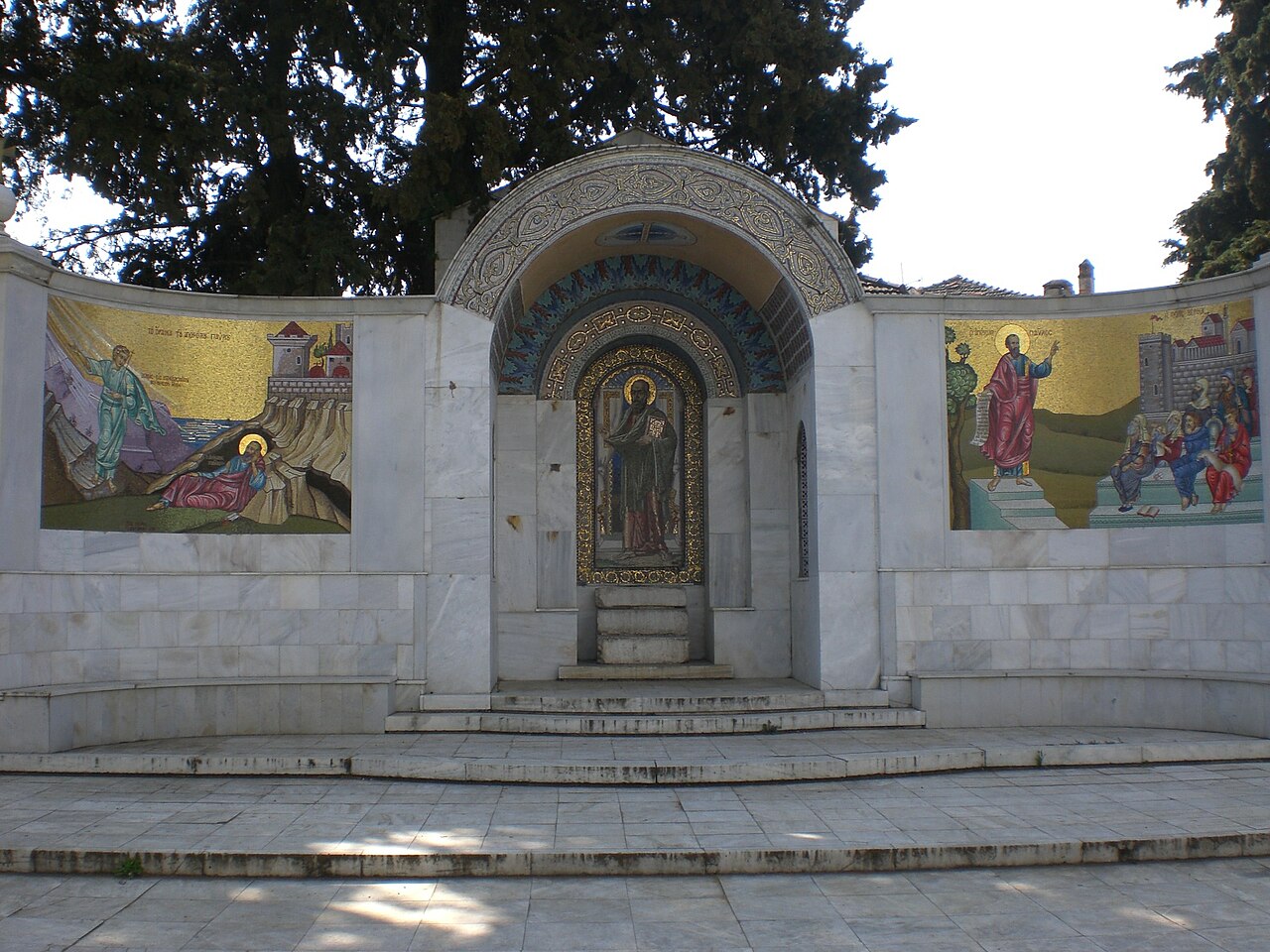
Later commemoration of Paul. The modern monument to Paul's preaching was erected in the 1960s at a site associated with it by local tradition. The surviving synagogue in the Barbouta district dates to 1850. These belong to the city's later history and do not establish the location of the synagogue mentioned in Acts. Ministry of Culture — Paul's monument; Greek National Tourism Organisation — the synagogue; Acts 17:10–15.