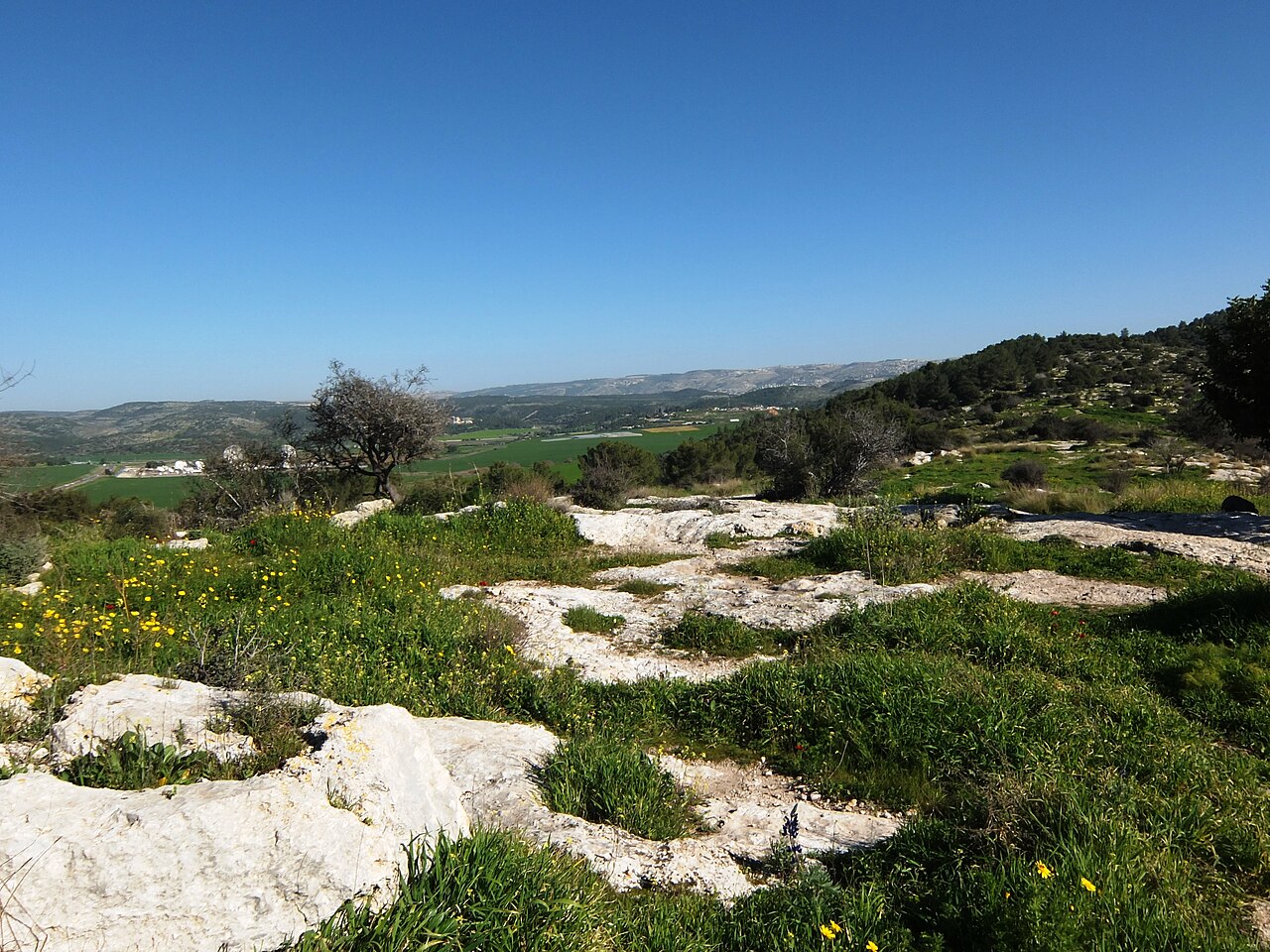
Socoh
Socoh is the third name in Joshua 15:35, “Jarmuth, and Adullam, Socoh, and Azekah”, among the cities of Judah's lowland, with Jarmuth, Adullam and Azekah; BG1940 reads „Ярмут, Одолам, Сохо, Азика“. It is a different town from the Socoh of the hill country, which Smith places about 10 miles south-west of Hebron. KJV gives the lowland town several spellings, Shochoh, Sochoh, Shoco and Shocho, which Easton and Nave treat as forms of one name, while Smith accepts Shochoh, Shoco and Shocho as forms of Socoh but holds Sochoh to be only probably the same town; Easton, under Socho, renders it “a fence; hedge”, and Hitchcock gives “tents; tabernacles”. Josh 15:35; Josh 15:48.
The Philistines gathered their armies to battle “at Shochoh, which belongeth to Judah”, and pitched between Shochoh and Azekah, in Ephes-dammim; BG1940 has „в Сокхот Юдин“ and „между Сокхот и Азика“. This is the camp at the opening of David's fight with Goliath. Easton says that the town lay on the northern side of the valley of Elah and has been identified with Khurbet Shuweikeh, about 14 miles south-west of Jerusalem; Smith gives esh-Shuweikeh and says that in the time of Eusebius it bore the name Socchoth. 1 Sam 17:1-2.
Among the officers of Solomon, the son of Hesed in Aruboth had Sochoh and all the land of Hepher (BG1940 „Сохо“); Smith, under Sochoh, takes this Sochoh to be “probably, though not certainly” the lowland Socoh, while Nave counts it with it. Rehoboam built Shoco with Beth-zur and Adullam among the cities for defence in Judah. Later the Philistines took Shocho with its villages among the cities of the low country, together with Beth-shemesh, Ajalon (Aijalon), Gederoth, Timnah and Gimzo, and dwelt there; BG1940 spells the town „Сокхо“ in that verse. 1 Kgs 4:7; 1 Kgs 4:10; 2 Chr 11:5-7; 2 Chr 28:18.