Agag
Agag is the king of the Amalekites whom Saul takes alive while he utterly destroys the people with the edge of the sword. Saul and the people spare Agag together with the best of the sheep, the oxen, the fatlings and the lambs, destroying only what is vile and refuse; this sparing closes Saul’s campaign against the Amalekites. 1 Sam 15:8-9.
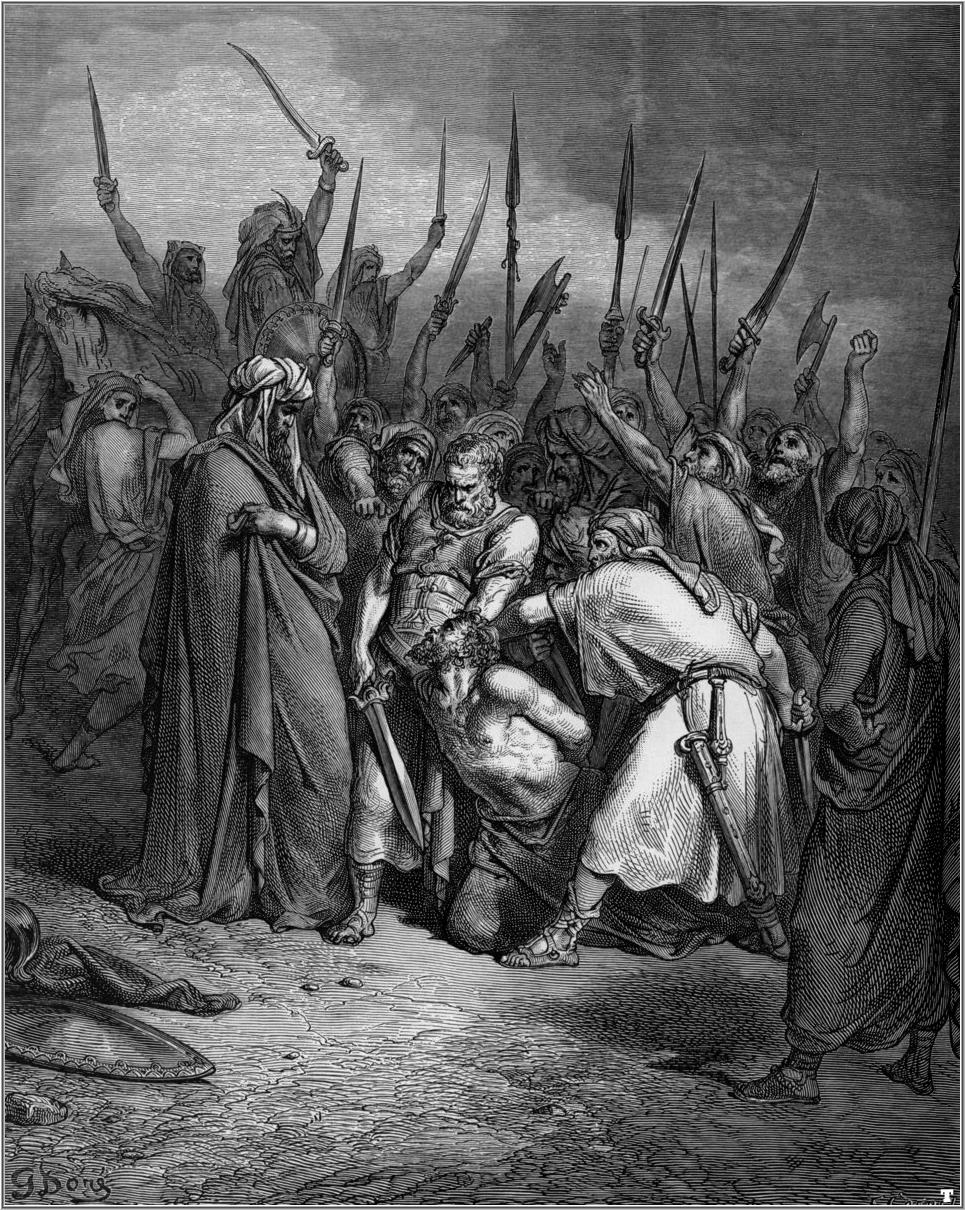
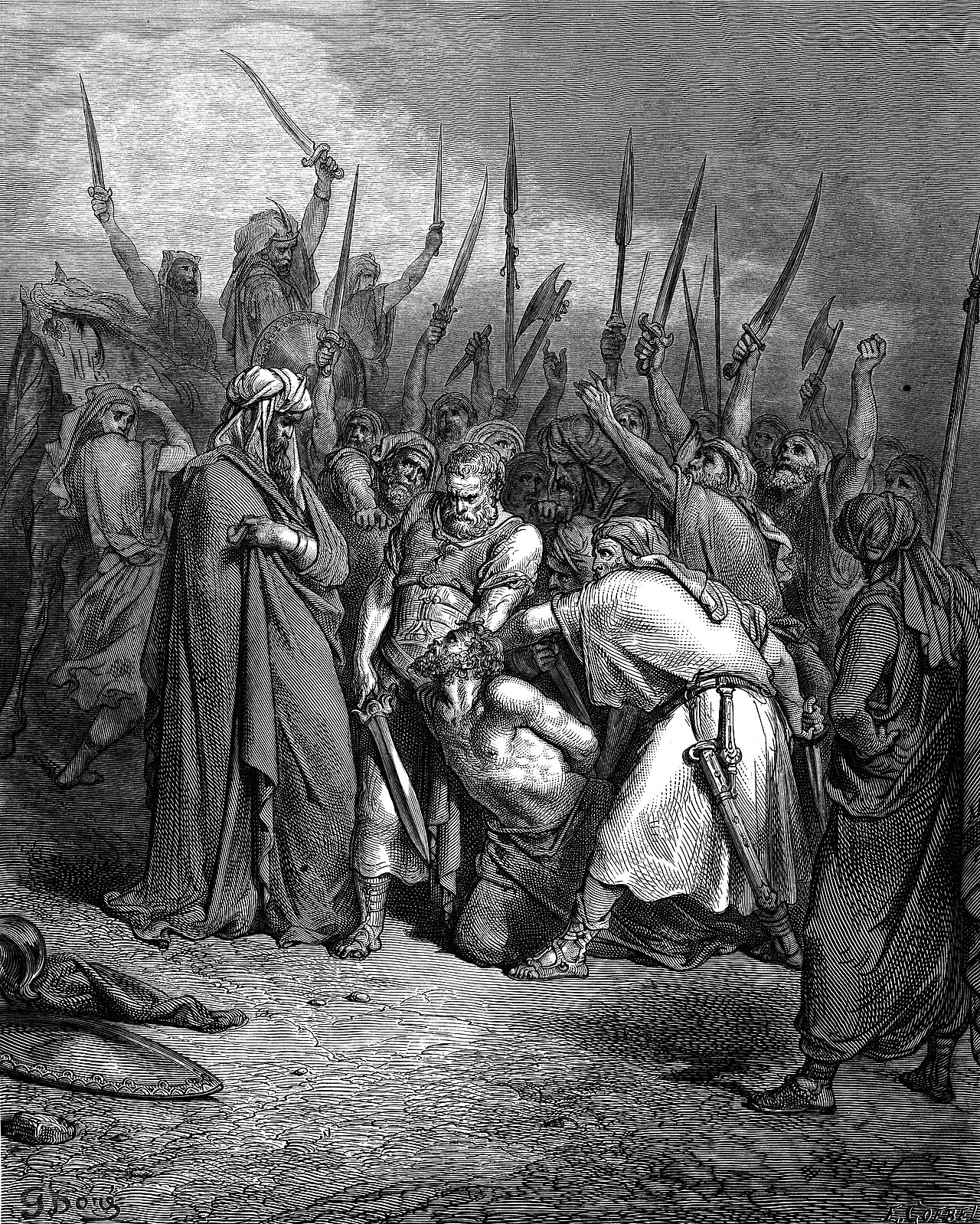
Answering Samuel, Saul insists that he has obeyed, “and have brought Agag the king of Amalek”. Samuel then has Agag brought to him; Agag comes “delicately” and says, “Surely the bitterness of death is past.” With the words “As thy sword hath made women childless, so shall thy mother be childless among women,” Samuel hews Agag in pieces before the LORD in Gilgal, as part of the announcement of Saul’s rejection. BG1940 renders “delicately” as весело, cheerfully, and makes Agag’s words a thought he tells himself. 1 Sam 15:20; 1 Sam 15:32; 1 Sam 15:33.
Ellen G. White in Patriarchs and Prophets, chapter 61 calls him “the fierce and warlike king of the Amalekites”, says that Saul spared him to heighten the honour of his triumphal return “by the presence of a royal captive”, and judges that above all who had fallen by Israel’s sword “Agag was the most guilty and merciless”. 1 Sam 15:9; 1 Sam 15:33.
Easton holds that Agag was “the usual title of the Amalekite kings, as ‘Pharaoh’ was of the Egyptian”, and Smith that it was possibly such a title; both count an earlier Agag, named by Balaam, as a different king. White likewise writes that Agag “was the name given to the kings of the Amalekites” in Patriarchs and Prophets, chapter 40. Num 24:7; 1 Sam 15:8.
The record also cites the verses of the book of Esther about Haman, the son of Hammedatha, who is called “the Agagite” when Ahasuerus promotes him and gives him his ring, when Esther pleads against his device, in the counter-letters and in the account of the lot cast to destroy the Jews; two further cited verses name Haman without the title. The text does not trace Haman’s descent: Easton thinks “Agagite” probably equivalent to Amalekite, and Smith reports that the Jews consider Haman a descendant of Agag the Amalekite. Easton’s Agagite entry. Esth 3:1; Esth 3:10; Esth 7:9; Esth 8:3; Esth 8:5; Esth 9:10; Esth 9:24.