Gilgal
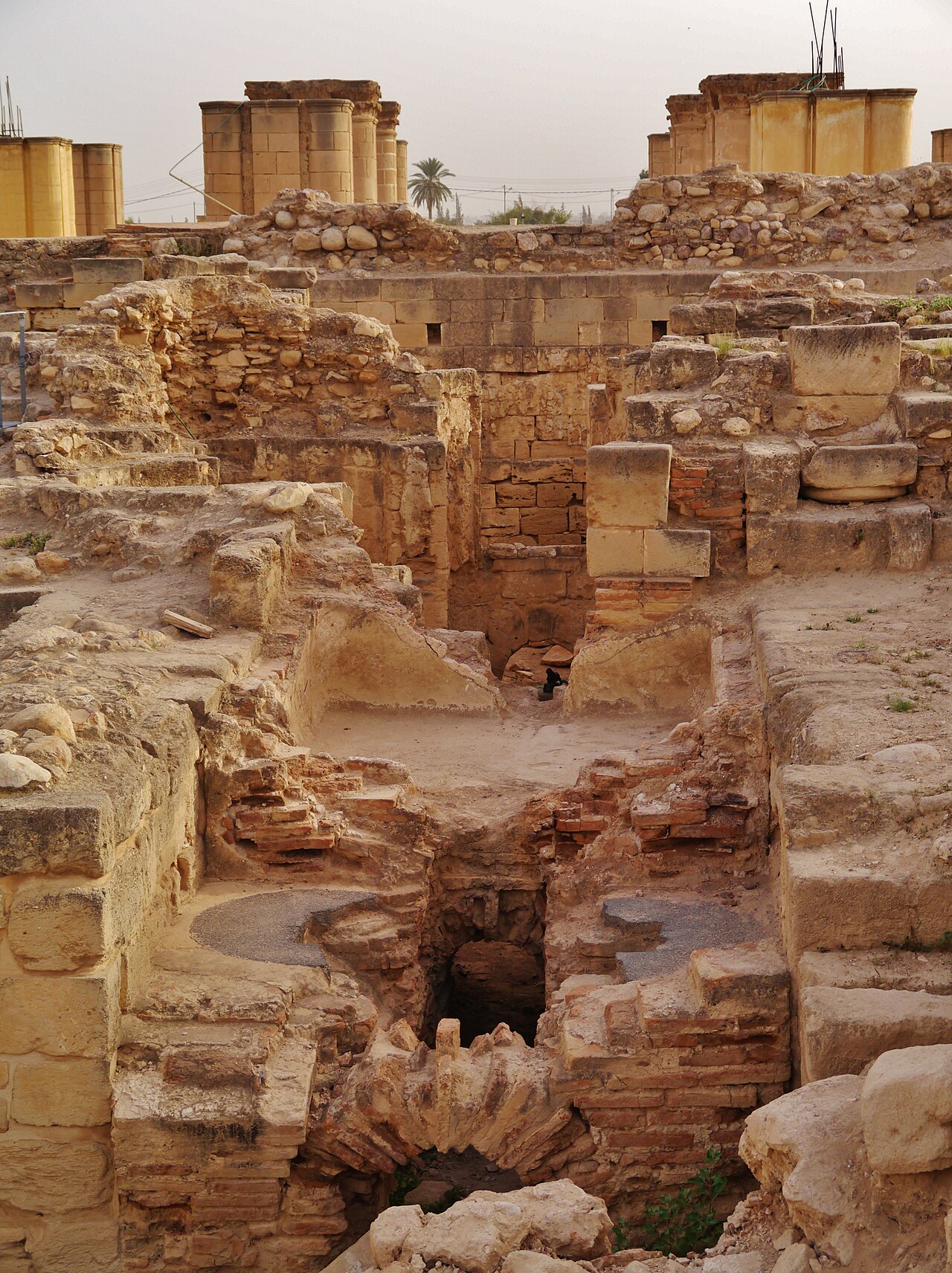
Gilgal is the first camp of Israel west of the Jordan. On the tenth day of the first month the people come up out of the river and encamp in Gilgal, in the east border of Jericho, and there Joshua pitches the twelve stones taken out of the Jordan. Ellen G. White, Patriarchs and Prophets, chapter 59, recalls Gilgal as the place of Israel's first encampment in the Promised Land, where the pillar of twelve stones commemorated the passage of the Jordan, where the captain of the LORD's host revealed Himself, and from which the people marched to the overthrow of Jericho and the conquest of Ai. Josh 4:19-20.
There Joshua circumcises the generation born in the wilderness at the hill of the foreskins, and the LORD says, “This day have I rolled away the reproach of Egypt from off you. Wherefore the name of the place is called Gilgal unto this day”; BG1940 explains the name in the margin as „Търкаляне“ (rolling). Encamped in Gilgal, the children of Israel keep the passover on the fourteenth day of the month at even in the plains of Jericho, eat of the old corn of the land, and the manna ceases. Ellen G. White, Patriarchs and Prophets, chapter 44, sees in the restored rite the sign that the years of rejection were ended, and explains the name as “a rolling away,” or “rolling off”. The lesson “Covenant First”, 9 November 2025, notes that the rite left most of the fighting force vulnerable on the verge of the campaign, because the battle belonged to the LORD. These are the events of the circumcision and Passover at Gilgal. Josh 5:2-3; Josh 5:8-12.
Gilgal remains the camp of the conquest. The men of Gibeon come to Joshua “unto the camp at Gilgal” claiming to be from a far country and obtain a league; the lesson “Conflicting Values”, 8 October 2025, says that Joshua should have inquired for the will of the LORD and so avoided the deception. When the five kings besiege Gibeon, its men send to the camp at Gilgal, and Joshua goes up from Gilgal all night to defeat the kings, returning there afterwards and again at the end of the southern campaign; it is in Gilgal that the children of Judah come to Joshua and Caleb the son of Jephunneh asks for his inheritance. Ellen G. White, Patriarchs and Prophets, chapter 47, places there the Gibeonite deputation and the call for help, and calls Joshua the man who for hours lay prostrate in prayer in the camp of Gilgal; chapter 48 says that Gilgal had been the headquarters of the nation and the seat of the tabernacle until the tabernacle was removed to Shiloh. Josh 9:6; Josh 10:6-7; Josh 10:9; Josh 10:15; Josh 10:43; Josh 14:6.
The record also cites other verses whose Gilgal is discussed. Deuteronomy describes the mountains of blessing and curse as “over against Gilgal, beside the plains of Moreh”; Easton connects the oaks of Moreh with a Gilgal near Shiloh and names Deuteronomy 11:30 under the Gilgal of Elijah and Elisha, while others read it as the Jordan Gilgal, and the page does not decide. Judah's northern border looks “toward Gilgal” before the going up to Adummim, and the parallel border of Benjamin names Geliloth there (BG1940: Галилот); Smith takes both to mean the Gilgal near Jericho. An angel of the LORD comes up from Gilgal to Bochim, and Ehud turns again “from the quarries that were by Gilgal” before he slays Eglon (BG1940: „пограничните камъни“, with the margin „изваяните идоли“), in the deliverance by Ehud. Deut 11:30; Josh 15:7; Josh 18:17; Judg 2:1; Judg 3:19-21.
Samuel goes in circuit year by year to Beth-el, Gilgal and Mizpeh to judge Israel. He tells Saul to go down before him to Gilgal and wait seven days; later all the people go to Gilgal and make Saul king before the LORD there with peace offerings. In the war with the Philistines the people gather after Saul to Gilgal and wait in trembling; when Samuel does not come within the seven days, Saul offers the burnt offering, and Samuel, having rebuked him, goes up from Gilgal to Gibeah of Benjamin. After the war with Amalek Saul goes down to Gilgal, Saul says that the people took of the spoil to sacrifice there, and Samuel hews Agag in pieces before the LORD in Gilgal. Ellen G. White writes of these scenes in Patriarchs and Prophets, chapter 60, quoting Samuel's instruction and Saul's excuse, and in chapter 61, which calls Saul's act his sin of presumption and sacrilege at Gilgal; Easton places these Samuel and Saul scenes at a Gilgal near Shiloh, while Smith says that Samuel judged and Saul was made king at the Jordan Gilgal. The events are Samuel's private anointing of Saul, the rescue of Jabesh-gilead with the renewal of the kingdom, Samuel's rebuke over the offering and Saul's rejection and Agag's death. 1 Sam 7:16; 1 Sam 10:8; 1 Sam 11:14-15; 1 Sam 13:4; 1 Sam 13:7-8; 1 Sam 13:12; 1 Sam 13:15; 1 Sam 15:12; 1 Sam 15:21; 1 Sam 15:33.
When David returns after Absalom's revolt, Judah comes to Gilgal to meet the king and conduct him over the Jordan, and the king goes on to Gilgal with Chimham. After the exile singers come for the dedication of the wall “from the house of Gilgal” (BG1940: Вет-галгал), among the villages they had built around Jerusalem. 2 Sam 19:15; 2 Sam 19:40; Neh 12:29.
The prophets name Gilgal as a place of false worship. Hosea warns Judah not to come to Gilgal nor go up to Beth-aven, says “All their wickedness is in Gilgal: for there I hated them”, and that they sacrifice bullocks in Gilgal; Amos mocks, “at Gilgal multiply transgression”, and warns that “Gilgal shall surely go into captivity”; Easton, under the Gilgal near Shiloh, says that it later became the scene of idolatrous worship. Micah, by contrast, calls the people to remember what Balak consulted and what Balaam the son of Beor answered him from Shittim unto Gilgal, that they may know the righteousness of the LORD; Ellen G. White, Prophets and Kings, chapter 27, quotes this appeal. Hos 4:15; Hos 9:15; Hos 12:11; Amos 4:4; Amos 5:5; Mic 6:5.