Deborah
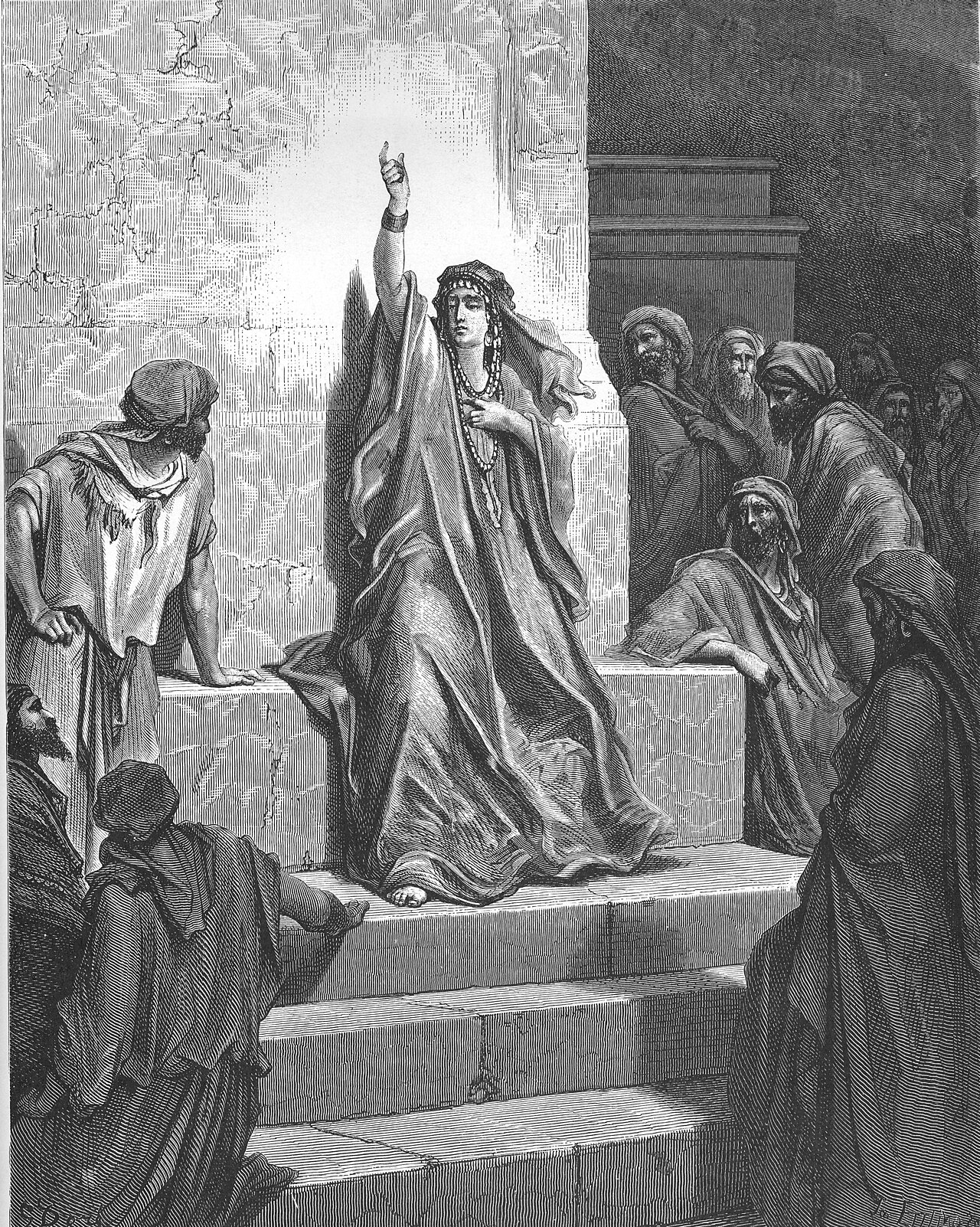
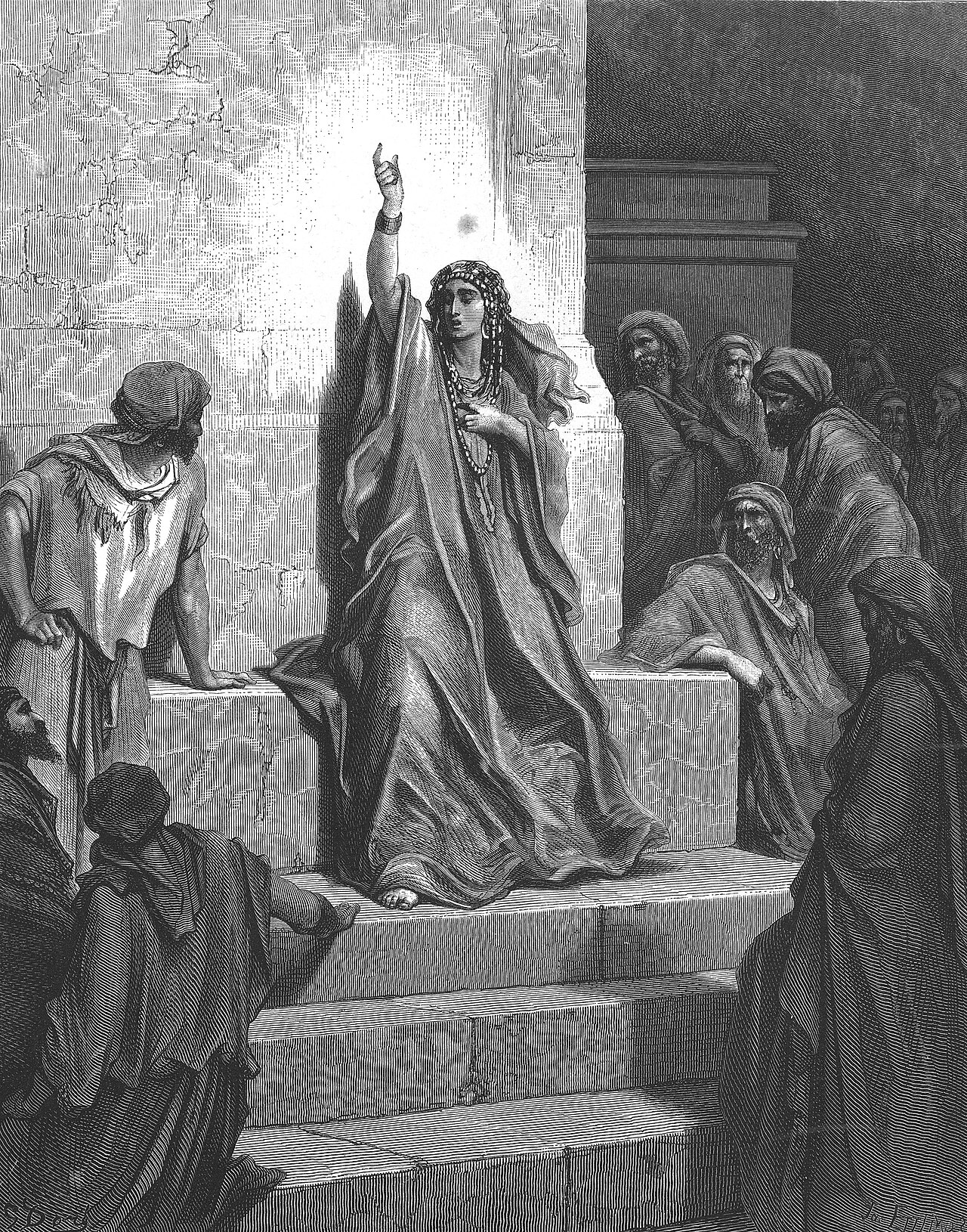
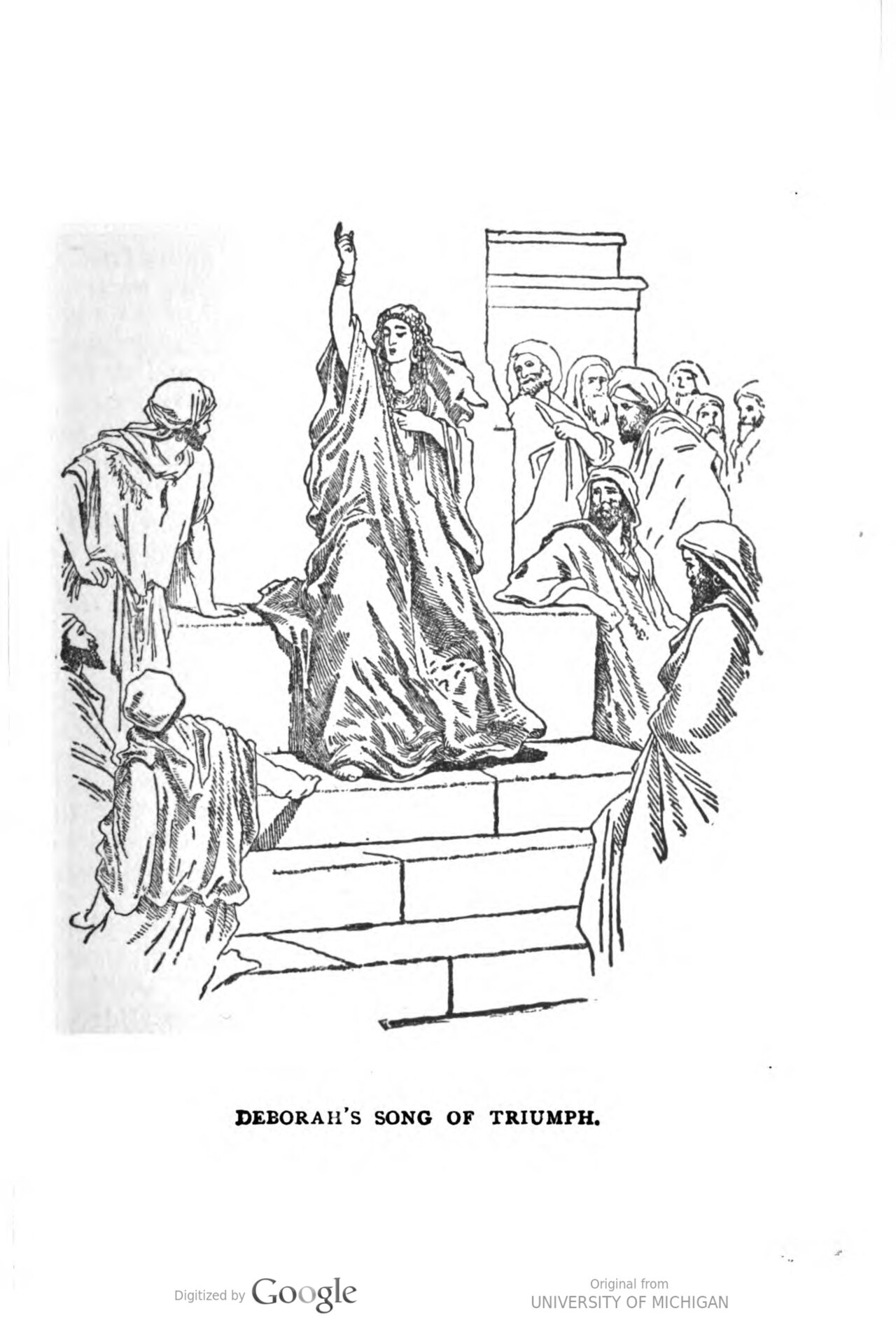
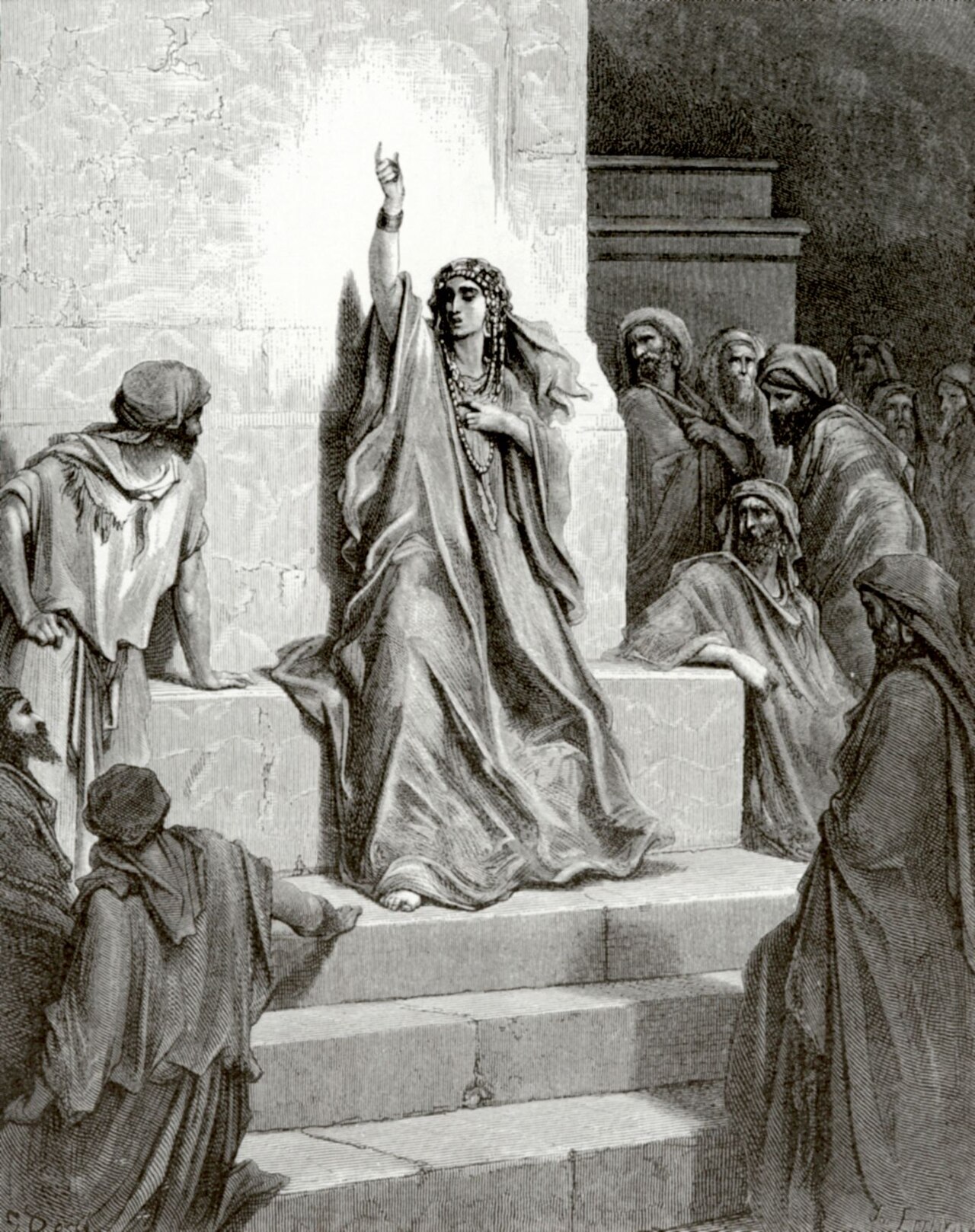
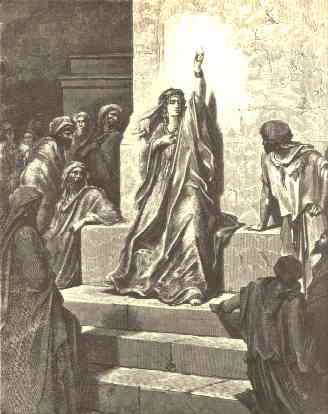
Deborah, a prophetess, the wife of Lapidoth, judges Israel at the time when the LORD has sold the children of Israel into the hand of Jabin. She dwells under the palm tree of Deborah between Ramah and Beth-el in mount Ephraim, and the children of Israel come up to her for judgment. Easton writes “wife” (woman?) of Lapidoth; Smith holds that Lapidoth was probably her husband, and not Barak as some say, that she was probably a woman of Ephraim, and that the palm tree, palms being rare in Palestine, was a well-known and solitary landmark. Judg 4:2; Judg 4:4-5.
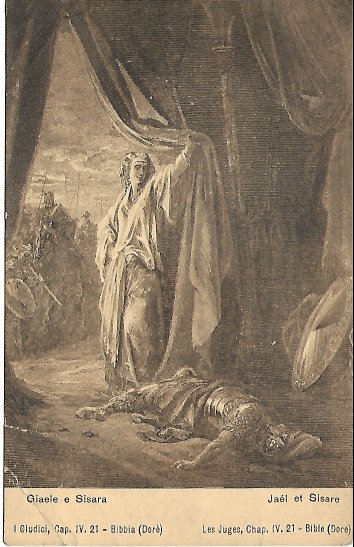
She sends and calls Barak the son of Abinoam out of Kedesh-naphtali and asks whether the LORD God of Israel has not commanded him to draw toward mount Tabor with ten thousand men of Naphtali and Zebulun, promising that Sisera will be delivered into his hand at the river Kishon. When Barak will go only if she goes with him, she says that she will surely go, but that the journey shall not be for his honour, for the LORD shall sell Sisera into the hand of a woman; she arises, goes with Barak to Kedesh and goes up with him. On the day of battle it is her word that sends him down: “Up; for this is the day in which the LORD hath delivered Sisera into thine hand: is not the LORD gone out before thee?” This is the deliverance by Barak and Deborah. Smith remarks that she was not so much a judge as one gifted with prophetic command, and Easton that she gave the signal for the attack. Judg 4:6-10; Judg 4:14.
Deborah and Barak sing on that day. In the song the villages cease in Israel until Deborah arises, “a mother in Israel”, where BG1940 reads управниците, the rulers, for KJV’s “[the inhabitants of] the villages”; she is called to awake and utter a song; and the princes of Issachar are with Deborah. Easton calls Judges 5 the grand triumphal ode, the “song of Deborah”, and Smith says that her title of prophetess includes the notion of inspired poetry, a claim the ode well vindicates. Judg 5:1; Judg 5:7; Judg 5:12; Judg 5:15.
Ellen G. White, Patriarchs and Prophets, chapter 53, places her among the judges of the time: “Othniel, Shamgar, and Ehud, Deborah and Barak, were raised up as deliverers of their people.” She is a different woman from Deborah, Rebekah’s nurse, who was buried beneath Beth-el under an oak; the three dictionaries keep the nurse and the prophetess under separate numbers. Judg 4:4; Gen 35:8.