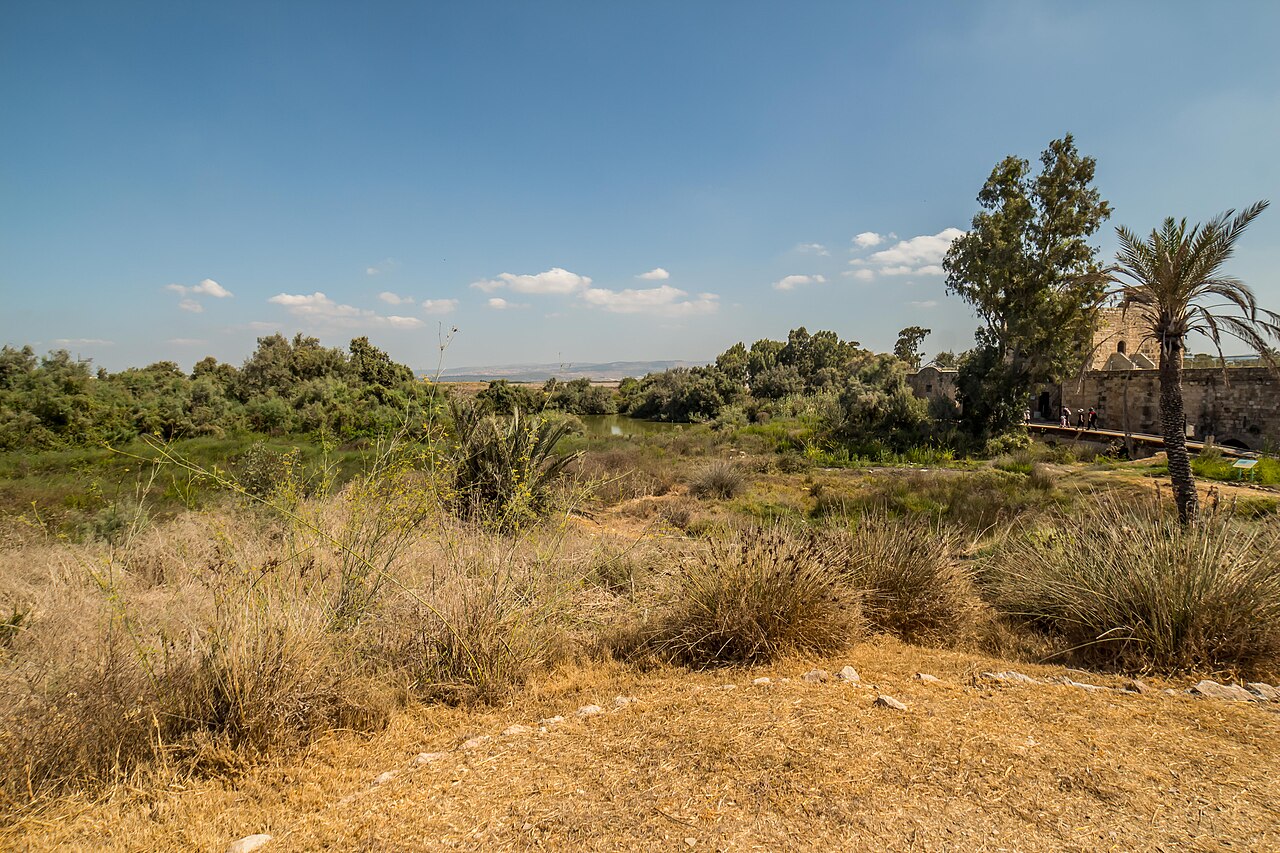
Aphek
This Aphek is a city of the tribe of Asher. Asher’s lot ends its list with “Ummah also, and Aphek, and Rehob: twenty and two cities with their villages” (Ummah, Rehob); BG1940 spells the town there “Афен”. Among the inhabitants whom Asher does not drive out are those of Accho, Zidon, Ahlab, Achzib, Helbah, Aphik and Rehob, so that the Asherites dwell among the Canaanites; KJV has the form Aphik in this verse, BG1940 “Афек”. Smith takes Aphik to be the same city, from which the Canaanites were not ejected, and Nave lists Aphik under this Aphek. Josh 19:24; Josh 19:30; Judg 1:31-32.
The record also cites the Aphek at the end of the northern land that yet remained: “and Mearah that is beside the Sidonians, unto Aphek, to the borders of the Amorites” (Mearah, Amorites). Smith thinks this probably the same place as the Aphek of Asher, on the extreme north “border of the Amorites”, and identifies it with the Aphaca of classical times, the modern Afka. Easton, under Aphik, puts Joshua 13:4 and 19:30 together as one city of Asher, the scene of the licentious worship of the Syrian Aphrodite, whose temple ruins are still seen at Afka on the north-west slopes of Lebanon, near the source of the river Adonis, 12 miles east of Gebal. Whether the Aphek of Joshua 13:4 is this city is not settled here. Josh 13:4.