Harod
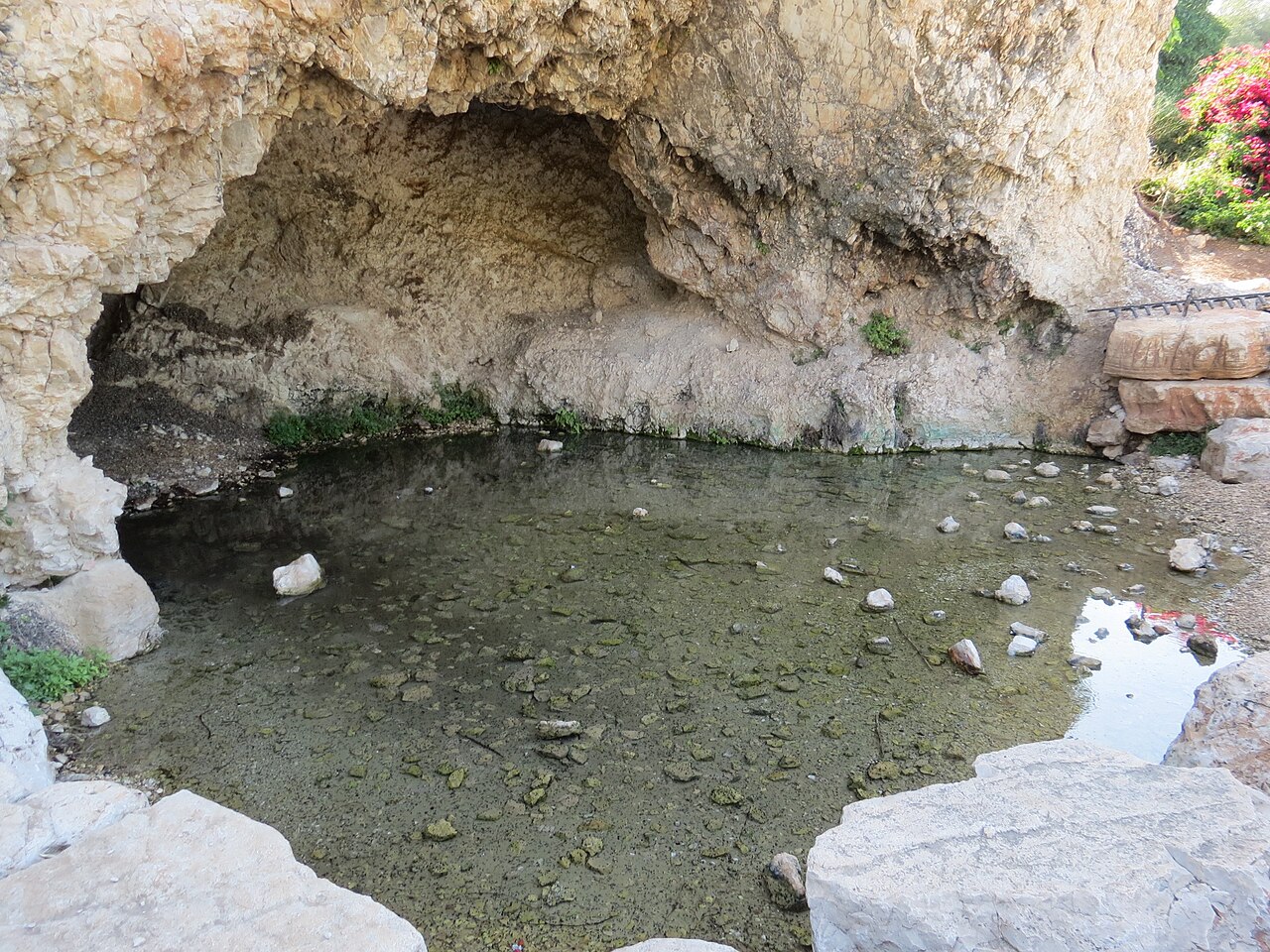
Jerubbaal, who is Gideon, rises up early with all the people that are with him and pitches beside the well of Harod, while the host of the Midianites lies on the north side of them, by the hill of Moreh, in the valley; this is the starting point of the rout of the Midianite camp by Gideon’s three hundred. BG1940 calls the place извора Арод, the spring of Harod. Judg 7:1.
Easton and Smith both look for it in the spring now called ‘Ain Jalud. Easton describes ‘Ain Jalud (“Goliath’s Fountain”) as lying south of Jezreel and nearly opposite Shunem, and Smith finds it very suitable as the largest spring in the neighbourhood. Easton explains the name as “palpitation” and Smith as “fear”. Both connect the place with the trial that follows, when the LORD bids Gideon bring the people down unto the water and keeps the three hundred men who lapped, putting their hand to their mouth. Judg 7:4-7.
Two of David’s mighty men bear the title Harodite: Shammah the Harodite and Elika the Harodite (BG1940: ародецът); in Chronicles the first appears as Shammoth the Harorite (BG1940: Самот арорецът). Easton calls Harodite an epithet applied to two of David’s heroes, and Smith derives the designation from a place named Harod; neither the verses nor the dictionaries say whether that place is this spring. 2 Sam 23:25; 1 Chr 11:27.