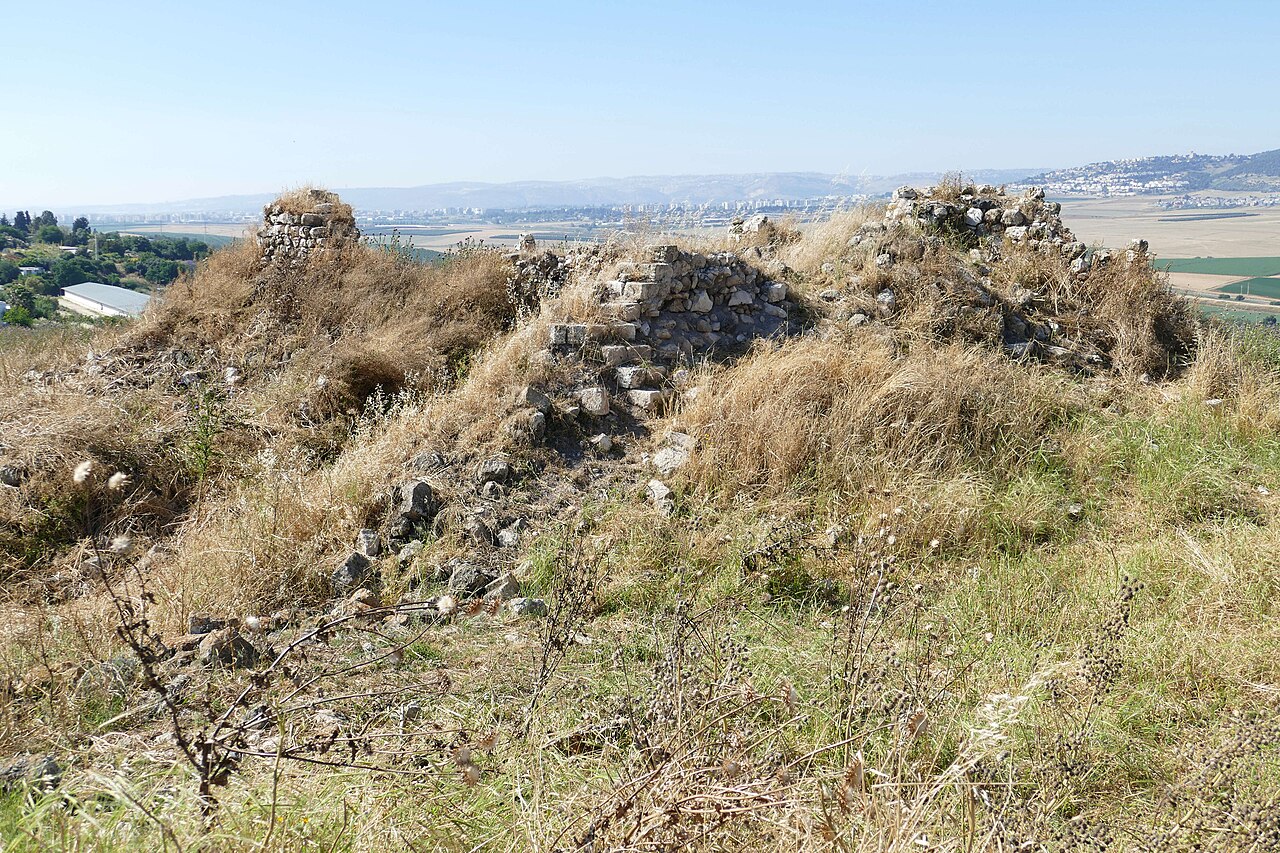
Jezreel
Jezreel is a town listed among the cities of Issachar and later associated with the royal household of Ahab. Naboth’s vineyard stood there beside the king’s palace. The town appears in accounts of military movements, royal administration, prophetic warnings and the fall of Ahab’s dynasty. Josh 19:17-18; 1 Kgs 21:1.
The name also enters the prophetic language of Hosea. His son by Gomer, daughter of Diblaim, is named Jezreel, and the accompanying oracle announces judgment on the house of Jehu and the end of Israel’s kingdom. It speaks of breaking Israel’s bow in the Valley of Jezreel. The names of Lo-ruhamah and Lo-ammi continue the message of rejection. Yet the same prophecy also announces a future gathering of the people, and the later imagery of grain, wine, oil and sowing leads to renewed mercy and acknowledgement of God. Judgment and restoration thus give the name a meaning beyond its use as the designation of a town. Hos 1:2-11; Hos 2:21-23. A Promise of Restoration, April 2, 2013.
In the account of the final campaign against Saul, Israel camps by the spring at Jezreel. David is with the forces of the Philistines, but their commanders object to his participation. Achish defends him and then sends him away at their insistence. David and his men depart early, while the Philistines advance to Jezreel. The town is therefore part of the geographical setting of a campaign from which David has been dismissed. 1 Sam 29:1-11.
Jezreel also appears in the notices of royal government. Abner, son of Ner, makes Saul’s son Ish-bosheth king over Jezreel and other territories. Under Solomon, the town is included in the district entrusted to Baana, son of Ahilud. These notices place it within the territorial and administrative arrangements of successive royal governments. 2 Sam 2:8-10; 1 Kgs 4:12.
Under Ahab, Jezreel is the destination of the king’s return from Mount Carmel after the rain begins. Elijah has announced the coming rain, prayed on the mountain and repeatedly sent his unnamed servant to look towards the sea. When the sky grows dark with clouds and wind, Ahab rides to Jezreel. Strengthened by the hand of the LORD, Elijah runs ahead of him to the town’s entrance. The royal journey connects Jezreel with the close of the episode of the returning rain. 1 Kgs 18:41-46.
The seizure of Naboth’s vineyard reveals the relationship between the royal residence and inherited land in Jezreel. Ahab offers another vineyard or payment for the property beside his house, but Naboth refuses to surrender his ancestral inheritance. Jezebel writes to the city’s elders and nobles in Ahab’s name and seals the letters with his seal. Her instructions arrange a fast and false testimony accusing Naboth of blaspheming God and the king. He is taken outside the city and stoned; Ahab then goes down to take possession of the vineyard. The account joins the seizure of property to a killing arranged through the city’s authorities. 1 Kgs 21:1-16.
Elijah confronts Ahab in the vineyard and announces judgment on his royal house. The warning also names Jezebel and foretells her death at Jezreel. When Ahab tears his clothes, puts on sackcloth, fasts and humbles himself, the LORD announces that the disaster upon his house will come in his son’s days. The prophetic encounter therefore connects the local wrong done to Naboth with the later fate of the dynasty, while preserving the distinction between Ahab’s response and the judgment on his household. 1 Kgs 21:17-29.
In the next royal generation, Joram, son of Ahab and king of Israel, returns to Jezreel to recover from wounds received in the campaign at Ramoth-gilead against Hazael, king of Syria. Ahaziah, son of Jehoram and king of Judah, comes to visit him. The parallel notices distinguish the wounded northern king from the visiting southern king and place their meeting in the town before Jehu’s arrival. 2 Kgs 8:28-29; 2 Chr 22:5-6.
Jehu, son of Jehoshaphat and grandson of Nimshi, approaches Jezreel in his conspiracy against Joram. A watchman sees his company, and the messengers sent out do not return. Joram and Ahaziah ride out to meet him at Naboth’s property. Jehu kills Joram with an arrow and tells Bidkar to cast his body onto that land, recalling the LORD’s pronouncement heard when they rode behind Ahab. Ahaziah escapes from the encounter and later dies at Megiddo. The account locates Joram’s death at the former vineyard and follows the other king’s flight beyond Jezreel. 2 Kgs 9:14-29.
Jezebel’s death is also placed in Jezreel. She looks from a window when Jehu enters the town. At his command, the eunuchs who respond to him throw her down. Jehu subsequently orders her burial, but those sent find only the skull, feet and palms of her hands. The narrative interprets the remains in the light of the LORD’s word spoken through Elijah about her fate in the territory of Jezreel. The town setting and the recalled prophecy link this death to the earlier warning against Ahab’s household. 2 Kgs 9:30-37.
The destruction of Ahab’s dynasty continues through correspondence between Jehu and those responsible for Ahab’s seventy sons in Samaria. Jehu demands their heads, which are sent to Jezreel in baskets and displayed in two heaps at the entrance of the gate. He then kills the remaining members of Ahab’s household in Jezreel, together with his leading men and priests. The narrative recalls the LORD’s word through Elijah as the explanation of the dynasty’s fall. Jezreel is thus both a former royal residence and the place where the local remnant of that royal house is destroyed. 2 Kgs 10:1-11.