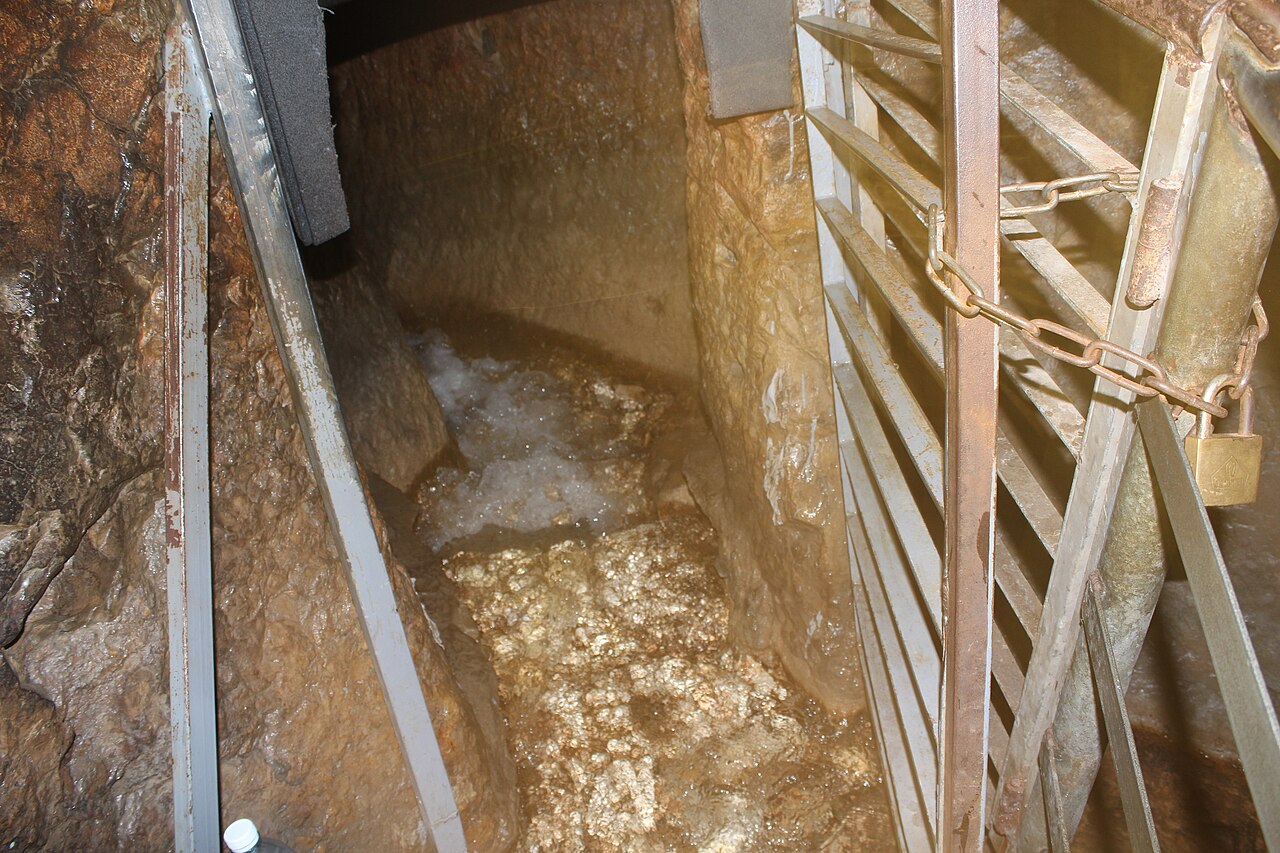
Единственият естествен воден извор в Йерусалим или близо до него е „Изворът на Дева Мария“ (вж. съответната статия), който извира извън градските стени на западния бряг на долината Кедрон. Когато асирийската войска под предводителството на Сенахирим наближила, Езекия, за да попречи на обсаждащите да намерят вода, „запуши горния воден изток на Гихон и отведе водата право надолу към западната страна на Давидовия град“ (2 Лет. 32:30; 33:14). Следователно този „извор“ трябва да се смята за „горния воден изток на Гихон“. От този „извор“ тунел, прокопан през рида, който образува южната част на храмовия хълм, отвежда водата до къпалнята Силоам. Тя се намира от противоположната страна на този рид, в началото на Тиропеонската долина („на производителите на сирене“), или долината на Еномовия син, сега запълнена с отпадъци. Дължината на този тунел е около 1,750 фута. През 1880 на стената на тунела случайно бил открит надпис на около деветнадесет фута от мястото, където той се отваря към къпалнята Силоам. По всяка вероятност този надпис е изсечен от работниците на Езекия. Той разказва накратко историята на прокопаването. Възможно е обаче тунелът да е бил прокопан по времето на Соломон. Ако „водите на Силоам, които текат тихо“ (Ис. 8:6) се отнасят до спокойния поток, който и днес тече през тунела към къпалнята Силоам, тогава това съоръжение трябва да е съществувало преди времето на Езекия.
В горната част на Тиропеонската долина все още съществуват два водоема: първият, наречен Birket el-Mamilla, е на запад от Яфската порта; вторият, на юг от първия, се нарича Birket es-Sultan. Според някои първият е бил „горният“, а вторият — „долният“ водоем на Гихон (4 Цар 18:17; Ис. 7:3; 36:2; 22:9).
Покажи английския оригинал
The only natural spring of water in or near Jerusalem is the “Fountain of the Virgin” (q.v.), which rises outside the city walls on the west bank of the Kidron valley. On the occasion of the approach of the Assyrian army under Sennacherib, Hezekiah, in order to prevent the besiegers from finding water, “stopped the upper water course of Gihon, and brought it straight down to the west side of the city of David” (2 Chr. 32:30; 33:14). This “fountain” or spring is therefore to be regarded as the “upper water course of Gihon.” From this “fountain” a tunnel cut through the ridge which forms the south part of the temple hill conveys the water to the Pool of Siloam, which lies on the opposite side of this ridge at the head of the Tyropoeon (“cheesemakers’”) valley, or valley of the son of Hinnom, now filled up by rubbish. The length of this tunnel is about 1,750 feet. In 1880 an inscription was accidentally discovered on the wall of the tunnel about nineteen feet from where it opens into the Pool of Siloam. This inscription was executed in all probability by Hezekiah’s workmen. It briefly narrates the history of the excavation. It may, however, be possible that this tunnel was executed in the time of Solomon. If the “waters of Shiloah that go softly” (Isa. 8:6) refers to the gentle stream that still flows through the tunnel into the Pool of Siloam, then this excavation must have existed before the time of Hezekiah.
In the upper part of the Tyropoeoan valley there are two pools still existing, the first, called Birket el-Mamilla, to the west of the Jaffa gate; the second, to the south of the first, called Birket es-Sultan. It is the opinion of some that the former was the “upper” and the latter the “lower” Pool of Gihon (2 Kings 18:17; Isa. 7:3; 36:2; 22:9).