Lot Summary
STEPBible TIPNR
Lot, the nephew of Abraham, was rescued from Sodom before its destruction.
son of Haran (GEN 11:27), nephew of Abram (GEN 12:5)
Lineage: God › Adam › Seth › Enos › Cainan › Mahalaleel › Jared › Enoch › Methuselah › Lamech › Noah › Shem › Arphaxad › Cainan › Salah › Eber › Peleg › Reu › Serug › Nahor › Terah › Haran › Lot
Loading book references…
Conditional birth bounds under generation assumptions; not attested parental ages, biological limits or a lifespan.
Below are relatives with a selected birth year, the generations separating them, and the interval allowed by each anchor. Each relative’s page shows available dates and sources. The overall estimate uses the intersection of the allowed intervals.
| Relative / anchor year | Generations | Conditional interval |
|---|---|---|
| Haran · 2056 BC Ancestor |
1 25–130 years per generation |
c. 2031 BC – 1926 BC |
| Terah · 2125 BC Ancestor |
2 25–130 years per generation |
c. 2075 BC – 1865 BC |
| Nahor · 2156 BC Ancestor |
3 25–130 years per generation |
c. 2081 BC – 1766 BC |
| Serug · 2186 BC Ancestor |
4 25–130 years per generation |
c. 2086 BC – 1666 BC |
| Reu · 2218 BC Ancestor |
5 25–130 years per generation |
c. 2093 BC – 1568 BC |
| Peleg · 2248 BC Ancestor |
6 25–130 years per generation |
c. 2098 BC – 1468 BC |
| Eber · 2282 BC Ancestor |
7 25–130 years per generation |
c. 2107 BC – 1372 BC |
| Salah · 2312 BC Ancestor |
8 25–130 years per generation |
c. 2112 BC – 1272 BC |
| Arphaxad · 2347 BC Ancestor |
10 25–130 years per generation |
c. 2097 BC – 1047 BC |
| Shem · 2447 BC Ancestor |
11 25–130 years per generation |
c. 2172 BC – 1017 BC |
| Noah · 2948 BC Ancestor |
12 25–130 years per generation |
c. 2648 BC – 1388 BC |
| Lamech · 3130 BC Ancestor |
13 25–130 years per generation |
c. 2805 BC – 1440 BC |
| Methuselah · 3317 BC Ancestor |
14 25–130 years per generation |
c. 2967 BC – 1497 BC |
| Enoch · 3382 BC Ancestor |
15 25–130 years per generation |
c. 3007 BC – 1432 BC |
| Jared · 3544 BC Ancestor |
16 25–130 years per generation |
c. 3144 BC – 1464 BC |
| Mahalaleel · 3609 BC Ancestor |
17 25–130 years per generation |
c. 3184 BC – 1399 BC |
| Cainan · 3679 BC Ancestor |
18 25–130 years per generation |
c. 3229 BC – 1339 BC |
| Cain · 4004 BC Ancestor |
18 25–130 years per generation |
c. 3554 BC – 1664 BC |
| Enos · 3769 BC Ancestor |
19 25–130 years per generation |
c. 3294 BC – 1299 BC |
| Adam · 4004 BC Ancestor |
19 25–130 years per generation |
c. 3529 BC – 1534 BC |
| Eve · 4005 BC Ancestor |
19 25–130 years per generation |
c. 3530 BC – 1535 BC |
| Seth · 3874 BC Ancestor |
20 25–130 years per generation |
c. 3374 BC – 1274 BC |
| Ben-ammi · 1896 BC Descendant |
1 20–45 years per generation |
c. 1941 BC – 1916 BC |
| Moab · 1896 BC Descendant |
1 20–45 years per generation |
c. 1941 BC – 1916 BC |
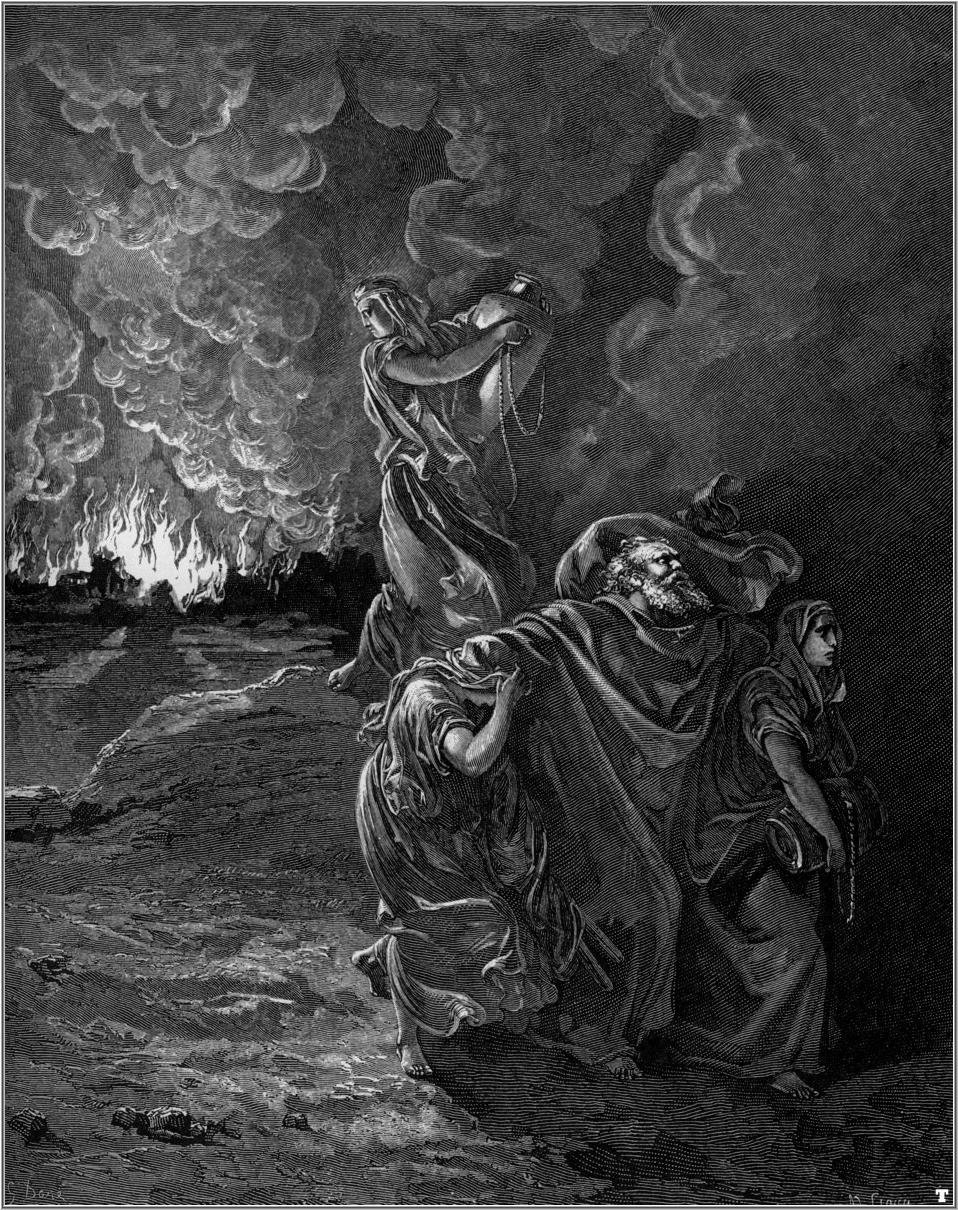
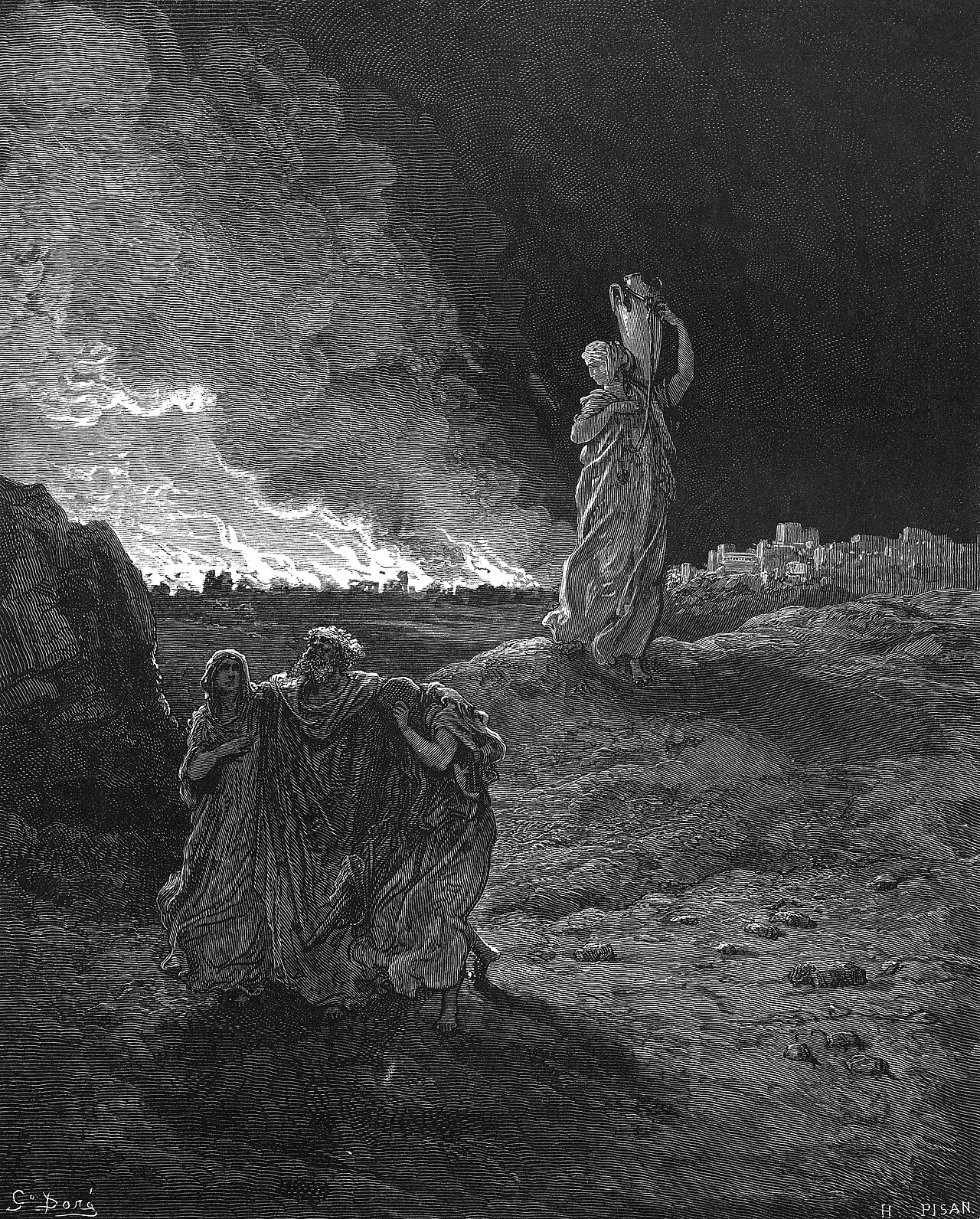
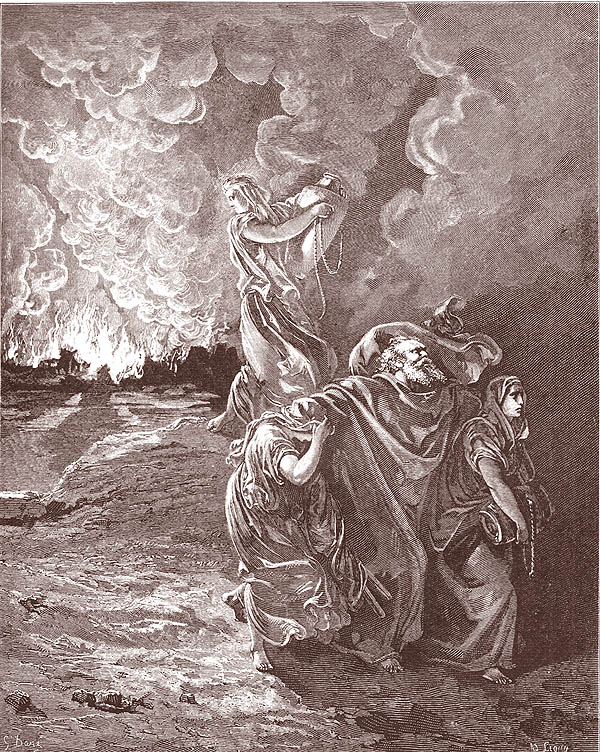
Lot, the nephew of Abraham, was rescued from Sodom before its destruction.
Lot was the son of Haran and the nephew of Abraham (Gen.11.27,31). He traveled with Abraham from Ur to Canaan (Gen 12:4-5). Due to strife between their herdsmen, Lot chose to settle in the plain of Jordan near Sodom (Gen 13:1-13). Lot was captured when Sodom was invaded, but Abraham rescued him (Gen.14.12,16). Despite the wickedness of Sodom, Lot continued living there (Gen 19:1). When God revealed His plan to destroy the city, Abraham pleaded for Lot's safety (Gen 18:16-33). Two angels warned Lot to flee Sodom with his family (Gen 19:1-22). Lot's wife disobeyed and was turned into a pillar of salt (Gen 19:26; Luk 17:32). Lot and his daughters escaped to Zoar and later settled in a cave (Gen 19:30). Lot's daughters, believing they were the last survivors, got him drunk and slept with him, resulting in the births of Moab and Ammon (Gen 19:31-38; Psa 83:8). The New Testament describes Lot as a righteous man distressed by the debauchery of Sodom (2Pe 2:7). Jesus used Lot's story as a warning about the suddenness of His return (Luk 17:28-29).
(Heb. goral, a “pebble”), a small stone used in casting lots (Num. 33:54; Jonah 1:7). The lot was always resorted to by the Hebrews with strictest reference to the interposition of God, and as a method of ascertaining the divine will (Prov. 16:33), and in serious cases of doubt (Esther 3:7). Thus the lot was used at the division of the land of Canaan among the serveral tribes (Num. 26:55; 34:13), at the detection of Achan (Josh. 7:14, 18), the election of Saul to be king (1 Sam. 10:20, 21), the distribution of the priestly offices of the temple service (1 Chr. 24:3, 5, 19; Luke 1:9), and over the two goats at the feast of Atonement (Lev. 16:8). Matthias, who was “numbered with the eleven” (Acts 1:24-26), was chosen by lot.
This word also denotes a portion or an inheritance (Josh. 15:1; Ps. 125:3; Isa. 17:4), and a destiny, as assigned by God (Ps. 16:5; Dan. 12:13).
Lot, (Heb. lot), a covering; veil, the son of Haran, and nephew of Abraham (Gen. 11:27). On the death of his father, he was left in charge of his grandfather Terah (31), after whose death he accompanied his uncle Abraham into Canaan (12:5), thence into Egypt (10), and back again to Canaan (13:1). After this he separated from him and settled in Sodom (13:5-13). There his righteous soul was “vexed” from day to day (2 Pet. 2:7), and he had great cause to regret this act. Not many years after the separation he was taken captive by Chedorlaomer, and was rescued by Abraham (Gen. 14). At length, when the judgment of God descended on the guilty cities of the plain (Gen. 19:1-20), Lot was miraculously delivered. When fleeing from the doomed city his wife “looked back from behind him, and became a pillar of salt.” There is to this day a peculiar crag at the south end of the Dead Sea, near Kumran, which the Arabs call Bint Sheik Lot, i.e., Lot’s wife. It is “a tall, isolated needle of rock, which really does bear a curious resemblance to an Arab woman with a child upon her shoulder.” From the words of warning in Luke 17:32, “Remember Lot’s wife,” it would seem as if she had gone back, or tarried so long behind in the desire to save some of her goods, that she became involved in the destruction which fell on the city, and became a stiffened corpse, fixed for a time in the saline incrustations. She became “a pillar of salt”, i.e., as some think, of asphalt.
Lot and his daughters sought refuge first in Zoar, and then, fearing to remain there longer, retired to a cave in the neighbouring mountains (Gen. 19:30). Lot has recently been connected with the people called on the Egyptian monuments Rotanu or Lotanu, who is supposed to have been the hero of the Edomite tribe Lotan.
Sources: BibleData (CC BY 4.0, Lot_1) · STEPBible TIPNR (CC BY 4.0, Lot@Gen.11.27-2Pe) · Theographic Bible Metadata (CC BY-SA 4.0, lot_1830)