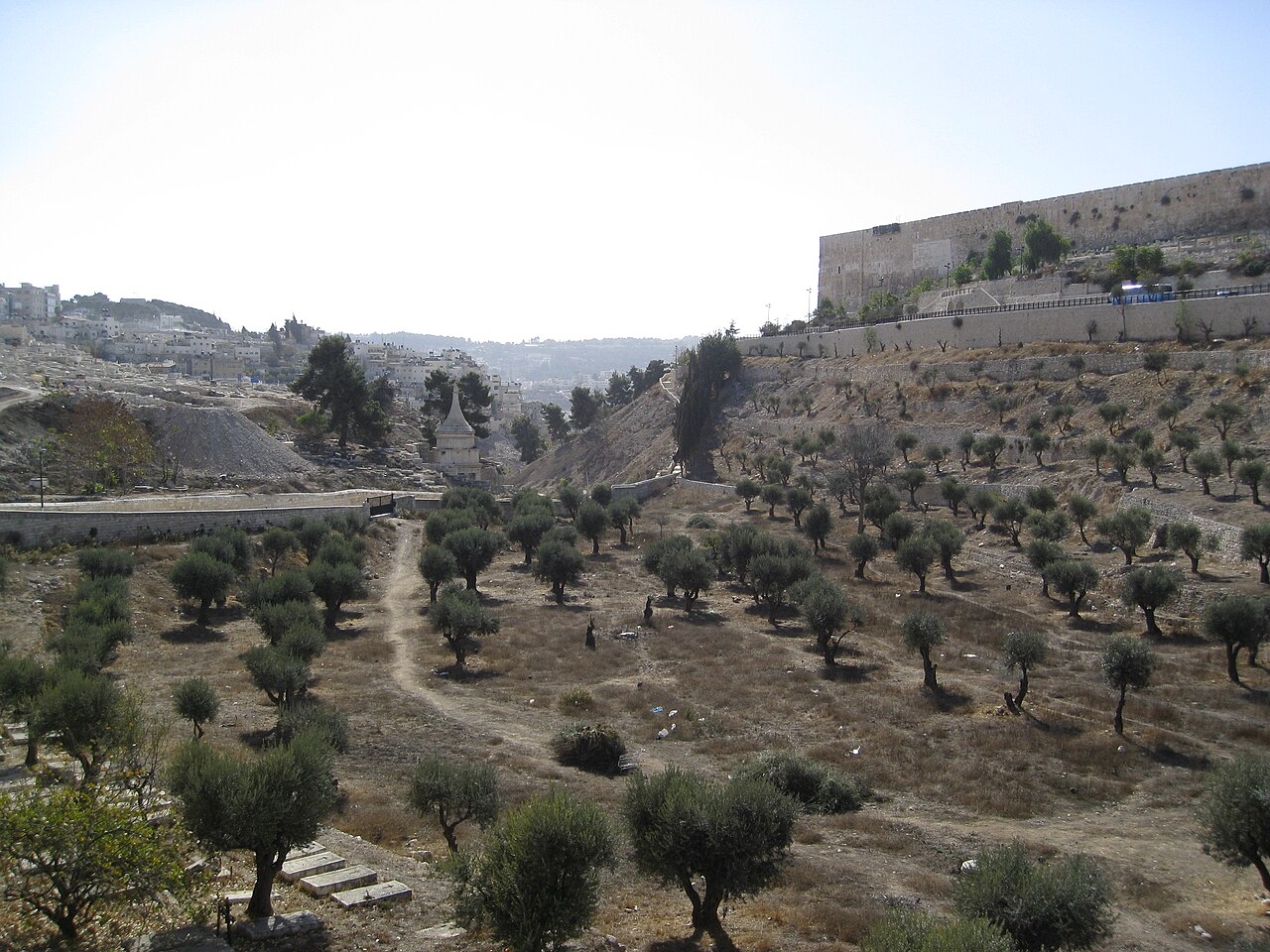
Kidron
Kidron is the brook and valley east of Jerusalem. The dictionary articles on Kidron describe the ravine and its seasonal watercourse. The form Cedron appears in the KJV account of the same brook in John’s Gospel. 2 Samuel 15:23; John 18:1.
David and his followers crossed the brook during their departure from Jerusalem, while the country wept aloud. Patriarchs and Prophets, chapter 72, describes Ittai’s loyalty and the procession toward the wilderness. 2 Samuel 15:22–30.
The brook also appears as a boundary in a royal command. Solomon tells Shimei to live in Jerusalem and warns that going out and crossing Kidron will bring death upon him. This condition belongs to the command and its later enforcement. 1 Kings 2:36–38.
Other notices associate the valley with the removal of objects used in foreign worship. Asa destroys and burns the image made by Maachah. During the cleansing of the temple, its impurities are carried to the brook, and at the Passover preparations removed altars are cast into it. Josiah later orders cult vessels burned in the fields of Kidron, outside Jerusalem. The study “The Book of the Law”, Sunday, December 5, 2021, relates the concrete removal of idolatry to the king’s response to the recovered law. 1 Kings 15:13; 2 Chronicles 15:16; 2 Chronicles 29:15–17; 2 Chronicles 30:13–16; 2 Kings 23:3–6.
The brook is also a landmark in the prophetic description of a restored Jerusalem. The area extending to Kidron is included in land that will be holy to the LORD. Jeremiah 31:38–40.
In the Gospel account, Jesus goes out with His disciples, crosses beyond the brook and enters a garden. The narrative then describes the arrival of those who will arrest Him. John 18:1–3.