Prayer and Betrayal in Gethsemane
The prayer and arrest in Gethsemane follow the Last Supper and the farewell instruction. Jesus goes with the disciples across the Kidron brook to a garden that Judas Iscariot already knows from their earlier gatherings. The Synoptic accounts identify the place with Gethsemane and the Mount of Olives. The episode brings the final private prayer and the public arrest into one setting. Matt 26:36-56 Luke 22:39-53 John 18:1-12
The prayer’s central request concerns the cup of approaching suffering, alongside submission to the Father’s will. The address Abba is immediately rendered as Father. The request and its qualification belong together: Jesus speaks openly of distress while accepting the course set before him. The movement from prayer to facing those who arrest him gives that acceptance a concrete expression within the narrative. Mark 14:32-52 Gethsemane, 10/09/2024
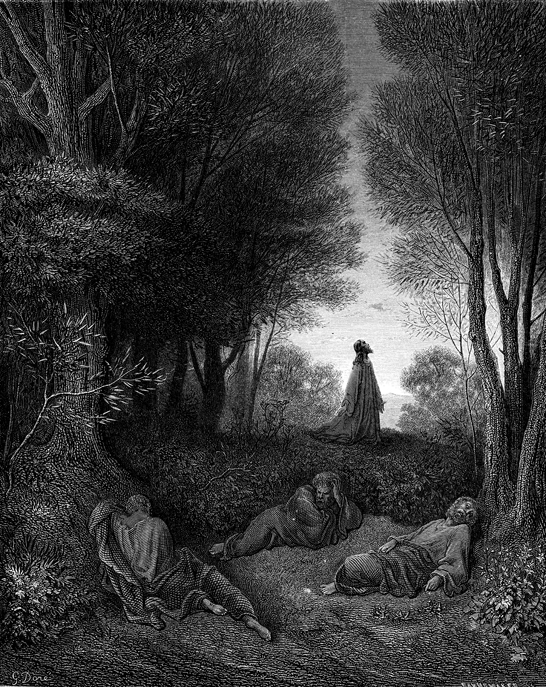
Peter, James and John accompany Jesus farther than the other disciples. James and John are the sons of Zebedee. Jesus then moves farther away to pray and repeatedly returns to find the three sleeping. His instruction to watch and pray concerns the danger of temptation and the weakness of the flesh. The account places his sustained prayer beside their inability to remain watchful. Matt 26:36-56 Mark 14:32-52
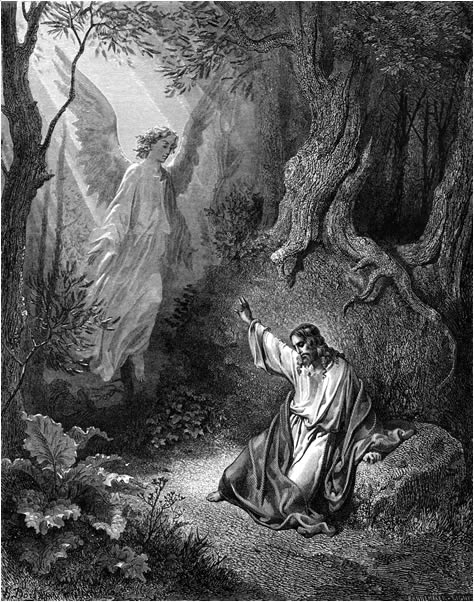
The account in Luke 22:39-53 records an unnamed angel strengthening Jesus and describes his sweat by comparison with falling drops of blood. It also associates the disciples’ sleep with sorrow. These details extend the description of prayer under severe distress while preserving the distinction between Jesus, the assisting angel and the sleeping disciples. The angel is not given a personal name in the passage. Luke 22:39-53
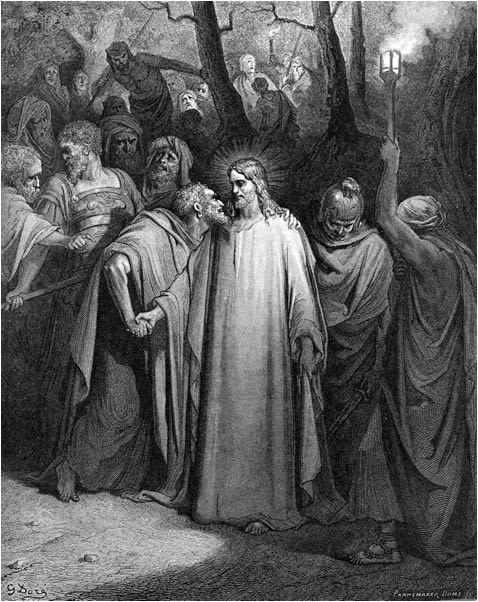
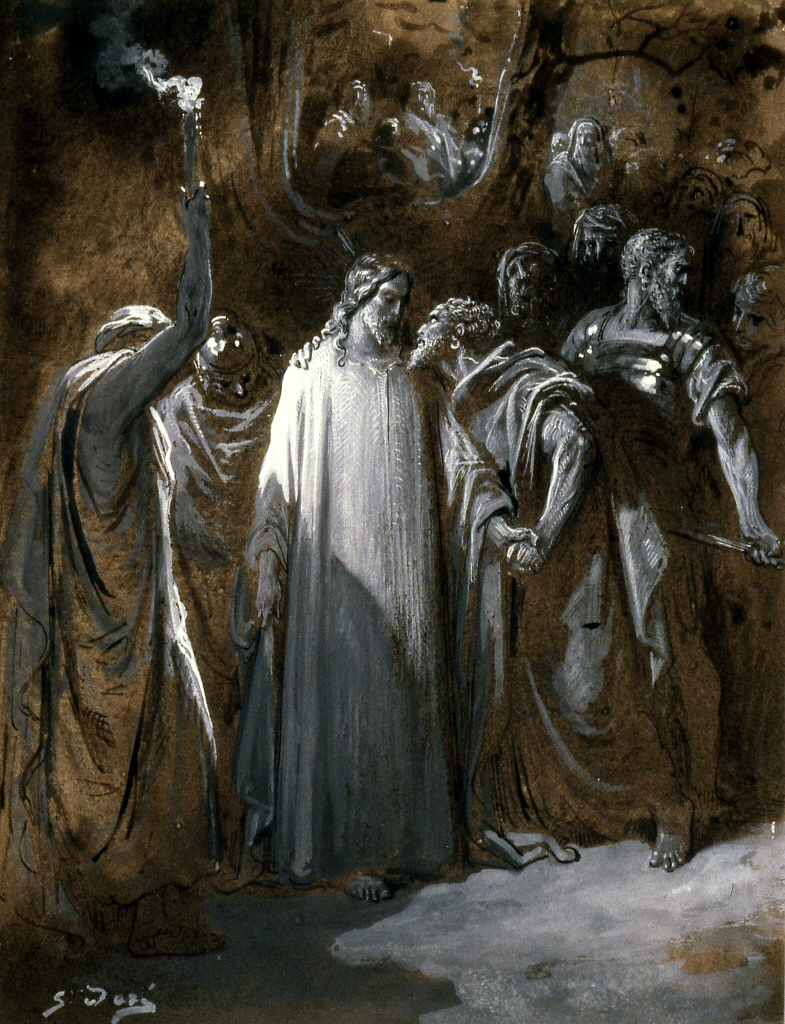
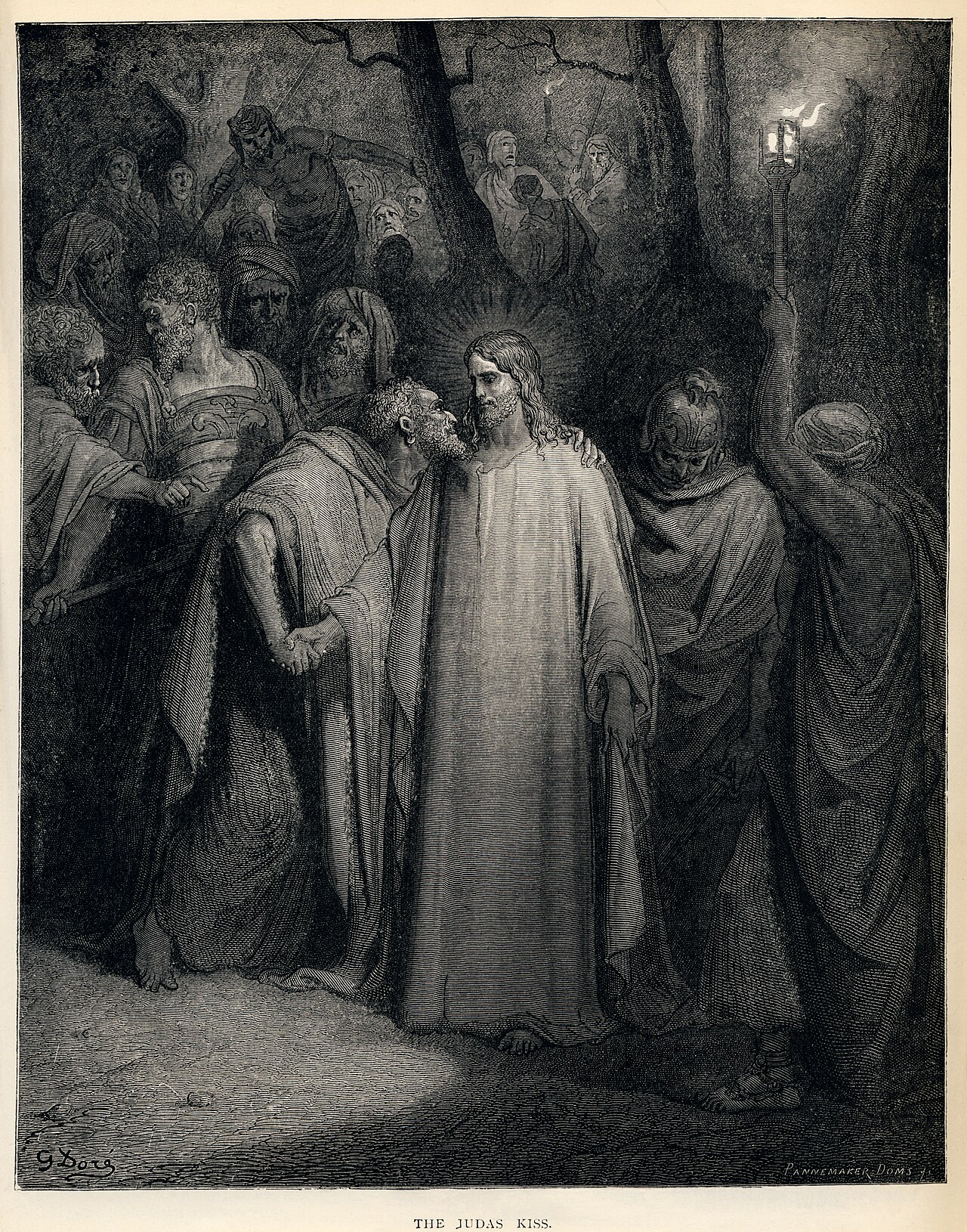
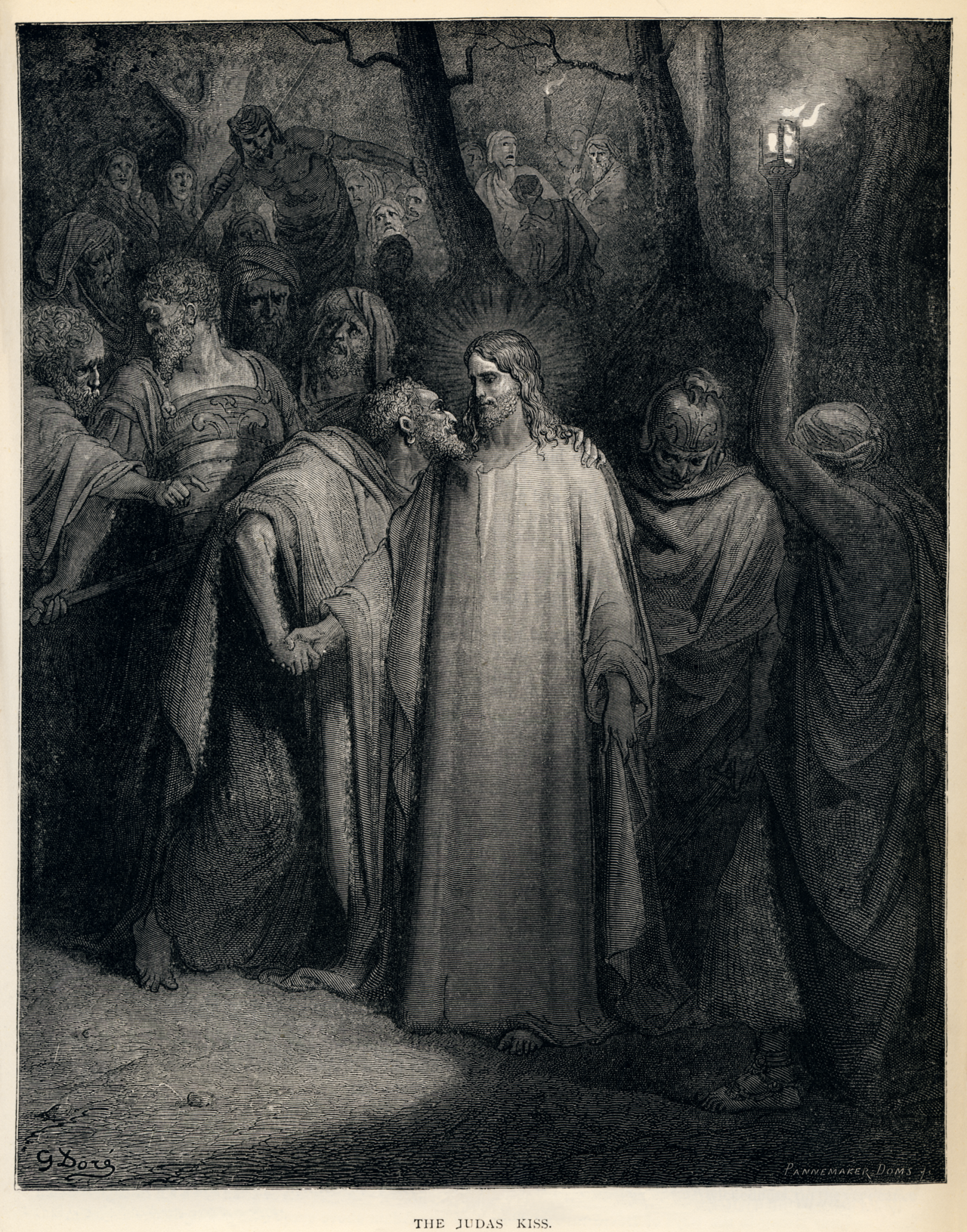
Judas leads an armed group and uses a kiss as the identifying sign. The group is associated with the chief priests, scribes and elders; the account in John 18:1-12 also names the Pharisees among those providing officers. Jesus identifies himself when asked for Jesus of Nazareth and seeks the release of his disciples. The arrest joins a familiar meeting place, insider knowledge and organized opposition. Matt 26:36-56 Mark 14:32-52
The violent intervention has two named actors: Simon Peter draws the sword, and Malchus, the high priest’s servant, loses his right ear. Jesus orders Peter to put away the weapon. The account in Luke 22:39-53 records the healing of the injured ear, connecting the refusal of armed defense with restoration of the wounded servant. The naming in John 18:1-12 supplies the identities that the other accounts leave unspecified. Matt 26:36-56
Jesus reminds the arresting group that he has taught openly in the temple and relates what is happening to the fulfillment of Scripture. The disciples flee; the account in Mark 14:32-52 separately records an unnamed young man who escapes by leaving his linen cloth. The armed group binds Jesus. This closes the garden episode and begins his custody and subsequent trials. Matt 26:36-56 John 18:1-12
The later interpretation in Heb 5:7-9 relates Christ’s prayers, cries and tears during his earthly life to obedience through suffering and the provision of salvation. It gives a theological explanation of that suffering within his saving work. Read alongside the garden narratives, the passage preserves the relation between earnest prayer, submission and obedience, rather than presenting the arrest as an interruption of the prayer’s meaning. Heb 5:7-9