John the Apostle
John is the son of Zebedee, brother of James and one of the Twelve selected by Jesus. The fishermen’s call places the brothers in a boat mending nets; they leave their father with hired servants and follow Jesus. The naming of the father and brother establishes the apostle’s identity independently of John the Baptist, John Mark and the high-priestly John. Mark 1:19-20 Mark 3:13-19
John and James request places beside Jesus in glory. His answer redirects the question from rank to suffering and service: the promised participation in his cup is followed by the explanation that greatness among the disciples means serving others. Jesus presents his own life as a ransom, while the remaining disciples express indignation at the brothers’ request. The exchange records both their ambition and the form of leadership taught in response. Mark 10:35-45 Rank and service
His selected participation in several gatherings is explicit. With Peter and James, John enters the room where Jesus raises Jairus’s daughter. The same three disciples witness the transfiguration, with Moses and Elijah appearing, and accompany Jesus in Gethsemane. John and Peter are also entrusted with preparing the Passover. These named appointments give evidence of repeated close participation, without supplying an exact age or a complete account of his private relationship with the teacher. Mark 5:21-24 Mark 5:35-43 Matt 17:1-9 Mark 14:32-42 Luke 22:7-13
Other encounters preserve correction as well as participation. John reports stopping an unnamed man who casts out demons in Jesus’ name because he does not accompany their group. Jesus tells him not to prohibit the man. On the journey toward Jerusalem, John and James propose fire against a Samaritan village that refuses hospitality, referring to Elijah’s example; they are rebuked, and the party goes to another village. The reports concern specific actions and responses, rather than establishing that every later activity of John followed the same pattern. Luke 9:49-56
After the ascension, John is named among the apostles praying in Jerusalem with Mary, the mother of Jesus, and other women. His temple-gate ministry with Peter leads to a hearing before the council, where Annas, Caiaphas, John and Alexander are among the officials. John and Peter answer that they must speak about what they have seen and heard. They subsequently go to Samaria, pray for the believers and encounter Simon the sorcerer, whose offer to purchase the gift of the Holy Spirit is rejected. Paul later names John with Cephas and James the Lord’s brother as leaders who give fellowship to Paul and Barnabas. Acts 1:12-14 Acts 3:1-10 Acts 4:1-22 Acts 8:14-25 Gal 1:18-19 Gal 2:7-10
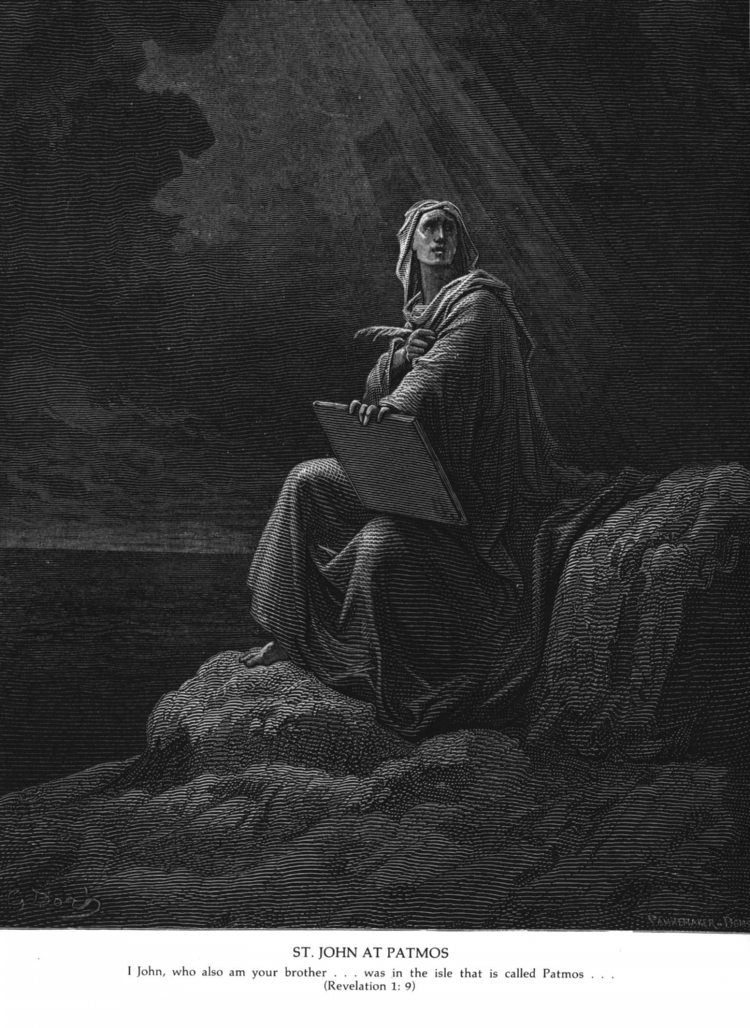
Later literary witnesses require their own identification. The closing passage of the Fourth Gospel identifies its witness as the disciple loved by Jesus and corrects the rumor that this disciple would not die, but does not give his personal name there. Revelation names its witness John, located on Patmos, and addresses seven churches in Asia. Those introductions differ from the explicit father-and-brother identification in the calling narratives. The named apostolic activities and the later attribution of writings should therefore be kept as distinct kinds of evidence. John 21:20-24 Rev 1:1-11