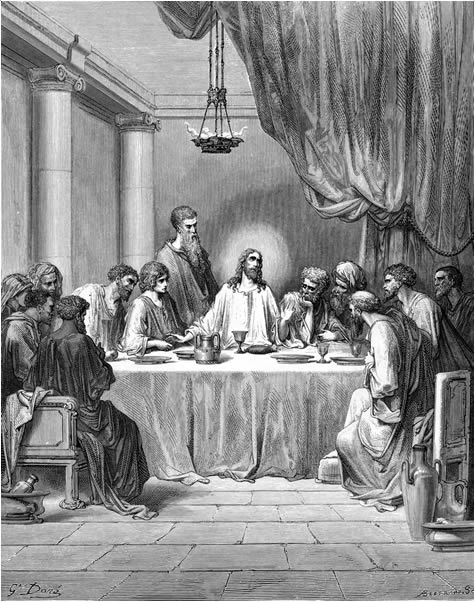
The Last Supper
The Last Supper is the meal of Jesus with his disciples before his arrest. The Synoptic accounts describe preparation for the Passover in Jerusalem and a furnished upper room. The occasion includes the announcement of betrayal, instructions concerning service, and the bread and cup assigned a lasting memorial significance. It precedes the departure toward the Mount of Olives. Matt 26:17-30 Mark 14:12-31 Luke 22:7-38
The language of covenant connects this meal with earlier acts of deliverance and worship. The Passover recalls departure from Egypt, while Moses’ proclamation over sacrificial blood belongs to the covenant ceremony in Exod 24:3-8. Jesus identifies the cup with the new covenant in his blood. The promise recorded by Jeremiah includes inwardly written law and forgiveness. These connections give the new memorial its biblical setting. Jer 31:31-34 Luke 22:7-38 The Last Supper, 09/09/2024
Peter and John are the named disciples sent to prepare the meal. They are directed to follow an unnamed man carrying water and speak to the householder, who shows the room. The preparation therefore has identified emissaries but unnamed local assistance. The recorded upper room is described by its suitability and furnishings; the accounts place the gathering within the city’s festival setting. Luke 22:7-38 Mark 14:12-31
The account of foot-washing places the authority of Jesus beside the work of a servant. He washes the disciples’ feet and explains that the action supplies a pattern for their treatment of one another. Peter first objects and then asks for more washing; the answer distinguishes the need for washing from the statement that not all are clean. The act joins humble service with the disciples’ relationship to their teacher. John 13:1-30
The betrayal announcement concerns Judas Iscariot, identified as the son of Simon. Peter signals to the unnamed disciple close to Jesus to ask who is meant. Jesus gives the dipped morsel to Judas, and the passage describes Satan’s entry into him. Judas leaves at night; some of those at the table interpret the instruction as a purchase for the feast or assistance to the poor because he keeps the money. Their misunderstanding is part of the account’s distinction between the visible meal and the approaching betrayal. John 13:1-30
The bread is blessed, broken and given with reference to Jesus’ body; the cup is given with reference to his blood and the covenant. The language of remembrance in Luke 22:7-38 is followed in Paul’s later account. Jesus also speaks of a future sharing in the kingdom of the Father. The institution therefore connects the imminent death with continued remembrance and future hope. Matt 26:17-30 1 Cor 11:20-34
The disciples’ argument about greatness is answered through the principle of service: Jesus presents himself among them as the one who serves. The same gathering includes his warning that Peter will deny him three times and his prayer for Peter’s faith. The accounts also record a promise of meeting again in Galilee after the resurrection. The instructions concern the community’s conduct through a crisis, alongside the memorial itself. Luke 22:7-38 Mark 14:12-31
In the later letter to Corinth, Paul addresses division, premature eating and the humiliation of people who have little. He recalls what he received concerning the meal and requires self-examination and consideration for others. Eating the bread and drinking the cup proclaim the Lord’s death until he comes. This later witness shows the memorial already functioning in a congregation and treats participation as a responsibility toward both Christ and the community. 1 Cor 11:20-34