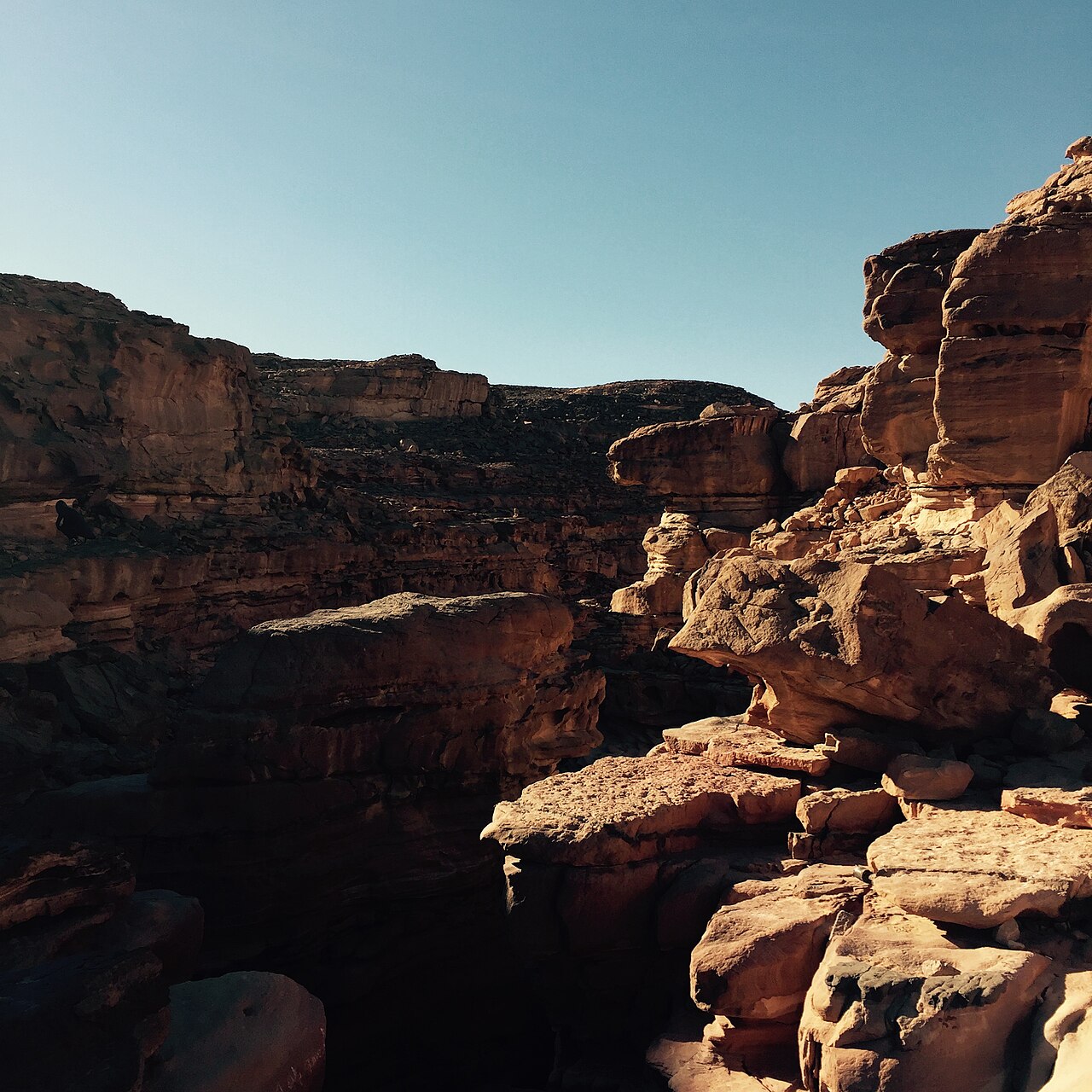
Hazeroth
Hazeroth is a station of the Israelites in the wilderness: “the people journeyed from Kibroth-hattaavah unto Hazeroth; and abode at Hazeroth”, and from there they removed and pitched in the wilderness of Paran. The list of stations gives the same order, from Kibroth-hattaavah to Hazeroth and from Hazeroth to Rithmah. BG1940 calls it Асирот. Num 11:35; Num 12:16; Num 33:17-18.
It is the setting of the complaint of Miriam and Aaron against Moses because of the Ethiopian woman he had married; after Miriam became leprous and was shut out from the camp seven days, “the people journeyed not till Miriam was brought in again”, and only then did they remove from Hazeroth. Ellen G. White, Patriarchs and Prophets, chapter 33, calls Hazeroth the next encampment after leaving Taberah, where “a still more bitter trial awaited Moses”, and says that the whole company abode in Hazeroth awaiting Miriam’s return. Num 12:1; Num 12:15-16.
Deuteronomy uses the name to locate the words that Moses spoke to all Israel “on this side Jordan in the wilderness, in the plain over against the Red sea, between Paran, and Tophel, and Laban, and Hazeroth, and Dizahab”. Hazeroth is thus listed with Paran, Tophel, Laban and Dizahab, in the plain on this side Jordan over against the Red sea. BG1940 has “оттатък Иордан” with the margin “на изток от”, and “срещу Суф” where KJV has “the Red sea”. Deut 1:1.
Easton explains the name as “fenced enclosures”, of a kind he says abound in the wilderness of Paran, calls Hazeroth “this third encampment” of the Israelites and reports its identification with ‘Ain el-Hudhera, some forty miles north-east of Sinai; from there, he says, the Israelites marched northward across the plateau of et-Tih to Kadesh. Smith renders the name “villages” and says the station is perhaps recognizable in ‘Ain Hudhera, forty miles north-east of Sinai; Hitchcock gives “villages; palaces”. Because Easton and Smith give different renderings, neither is set as the meaning here. Num 11:35; Num 33:17.