Medeba
Medeba is first named in the proverb on Heshbon, the city of Sihon the king of the Amorites: “Heshbon is perished even unto Dibon, and we have laid them waste even unto Nophah, which reacheth unto Medeba” (BG1940 likewise “до Нофа”, which reaches “до Медева”). Easton calls it an ancient Moabite town; Smith reads the line as marking the limit of the territory of Heshbon and says that at the conquest Medeba belonged to the Amorites, apparently as one of the towns they had taken from Moab. The places named with it are Dibon and Nophah. Num 21:26-30.
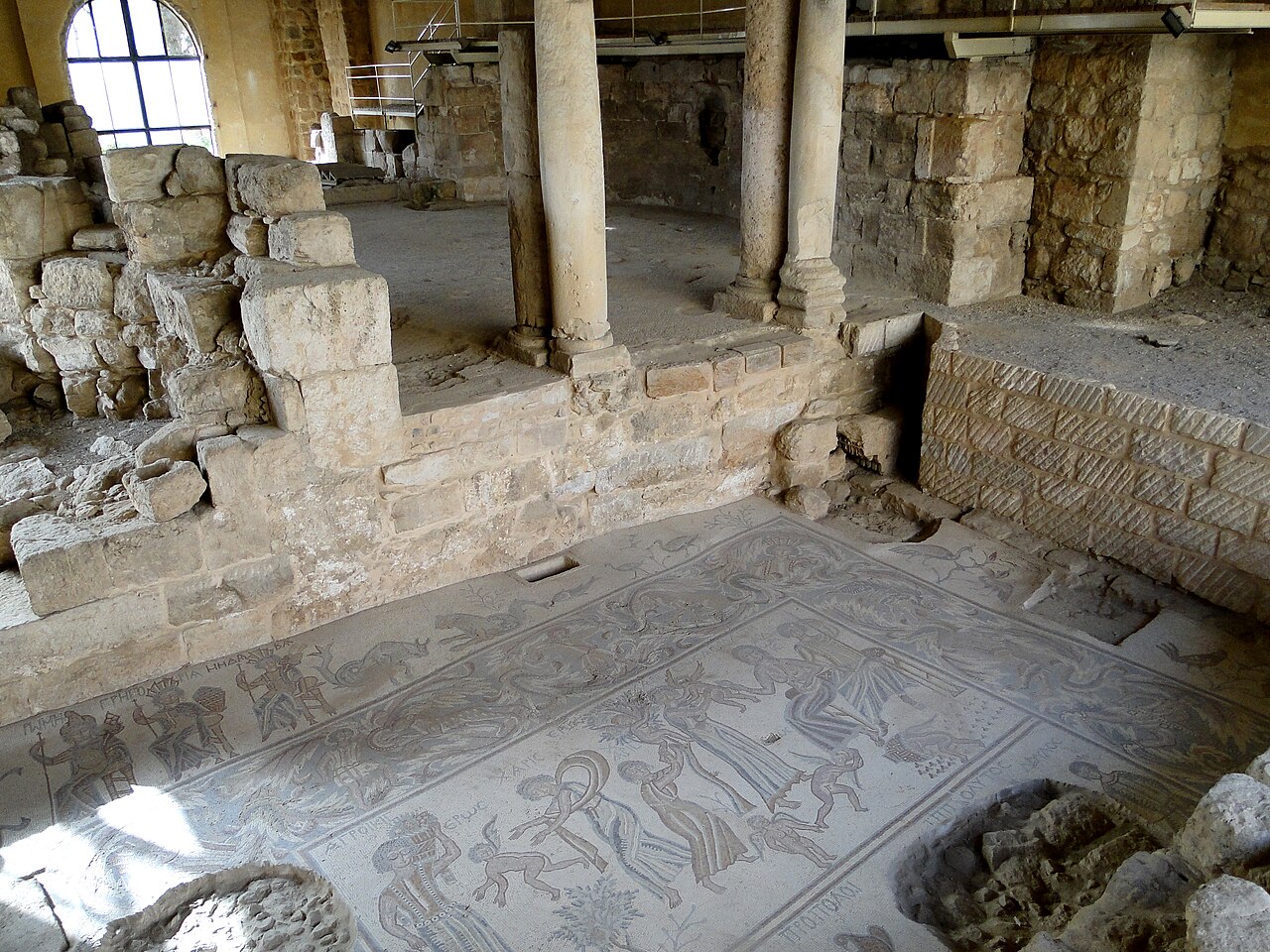
In Joshua’s account of what Moses gave the Reubenites and the Gadites beyond Jordan, the land runs from Aroer on the bank of the river Arnon “and all the plain of Medeba unto Dibon”; the coast of the tribe of Reuben itself includes “all the plain by Medeba”. BG1940 reads “цялата медеванска равнина до Девон” and “цялата равнина до Медева”. Smith explains the plain as a district of level downs, “the Mishor of Medeba”, to which the town gave its name; Easton and Nave record the allotment to Reuben. On the site Easton names the ruins Madeba or Madiyabah, about 8 miles south-west of Heshbon, with the remains of a large temple and three dry cisterns that may account for the name; Smith puts the town four miles south-east of Heshbon on a rounded but rocky hill. Josh 13:8-9; Josh 13:15-16.
When the children of Ammon hire chariots against David, the hired force and the king of Maachah with his people come and pitch before Medeba, while the children of Ammon gather from their cities to battle; this is part of the war that follows the humiliation of David’s envoys. The parallel account in 2 Samuel names the hired allies but not Medeba. Easton places here the great battle in which Joab defeated the Ammonites and their allies, and Nave records it as the place where David defeats an army and the Ammonites. 1 Chr 19:6-7; 2 Sam 10:6-8.
In the burden of Moab “Moab shall howl over Nebo, and over Medeba”, beside the high places of Bajith and Dibon, and every head is bald and every beard cut off (BG1940: „Моав ридае за Нево и за Медева“). Nave lists Medeba here as an idolatrous high place and Smith as a sanctuary of Moab; Easton reads the verse as showing that the Moabites had by then regained the town from the Ammonites. Nebo is the town of Moab named in the same line. Isa 15:1-2.