Dibon
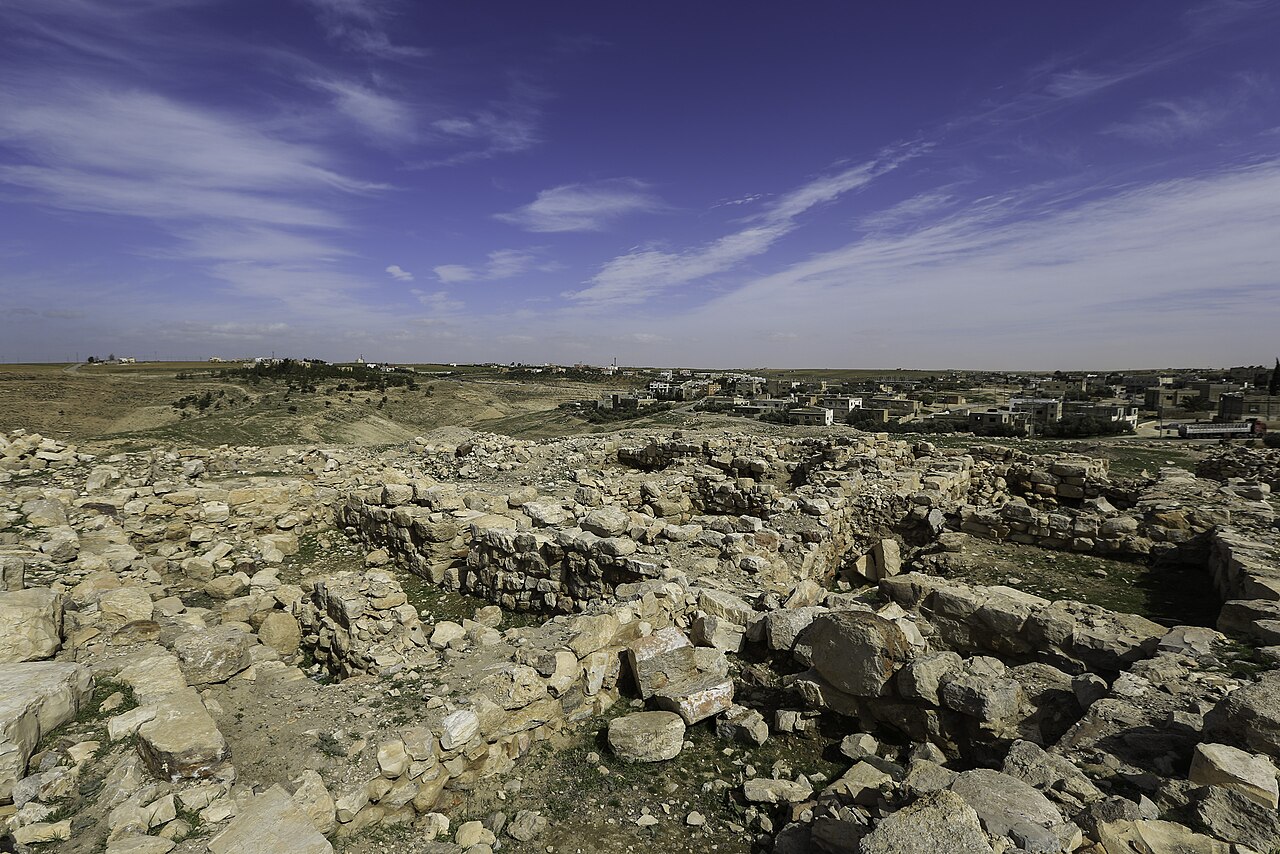
Dibon first appears in the song on the conquest of Sihon’s land: “Heshbon is perished even unto Dibon, and we have laid them waste even unto Nophah” (Nophah), which reaches unto Medeba; Smith infers from this that the town belonged originally to the Moabites. Easton and Nave place it in Moab, on the north side of the Arnon; Easton identifies it with the modern Diban, about 3 miles north of the Arnon and 12 miles east of the Dead Sea. Num 21:29-30.
Dibon is the second town in the list that the children of Gad and of Reuben ask for, and the first of the towns the children of Gad build. In the list of stations Israel pitches in Dibon-gad after Iim and removes from it to Almon-diblathaim (BG1940: Девон-гад); Easton and Smith take the name Dibon-gad from its building by Gad. Num 32:3; Num 32:34; Num 33:45-46.
In the description of the land that Moses gave east of Jordan, the plain of Medeba runs unto Dibon, and in the inheritance of the tribe of Reuben Dibon is the first of the cities of Heshbon in the plain, with Bamoth-baal and Beth-baal-meon; Smith notes that the lists of Joshua count it to Reuben. Josh 13:8-9; Josh 13:15-17.
In the prophecies against Moab Dibon is again Moabite, as Smith observes. In Isaiah Moab is gone up to Bajith and to Dibon, the high places, to weep. Jeremiah calls on the daughter that dwells in Dibon to come down from her glory and sit in thirst, for the spoiler of Moab is coming upon her strongholds, and he names judgment upon Dibon with Nebo and Beth-diblathaim. Isa 15:2; Jer 48:18; Jer 48:22.
The same chapter of Isaiah speaks of “the waters of Dimon” that shall be full of blood (BG1940: “водите на Димон”). Easton and Nave take Dimon as another name of Dibon; Smith describes the waters of Dimon as streams east of the Dead Sea and reports Gesenius’ conjecture that Dimon and Dibon are the same name. Isa 15:9.