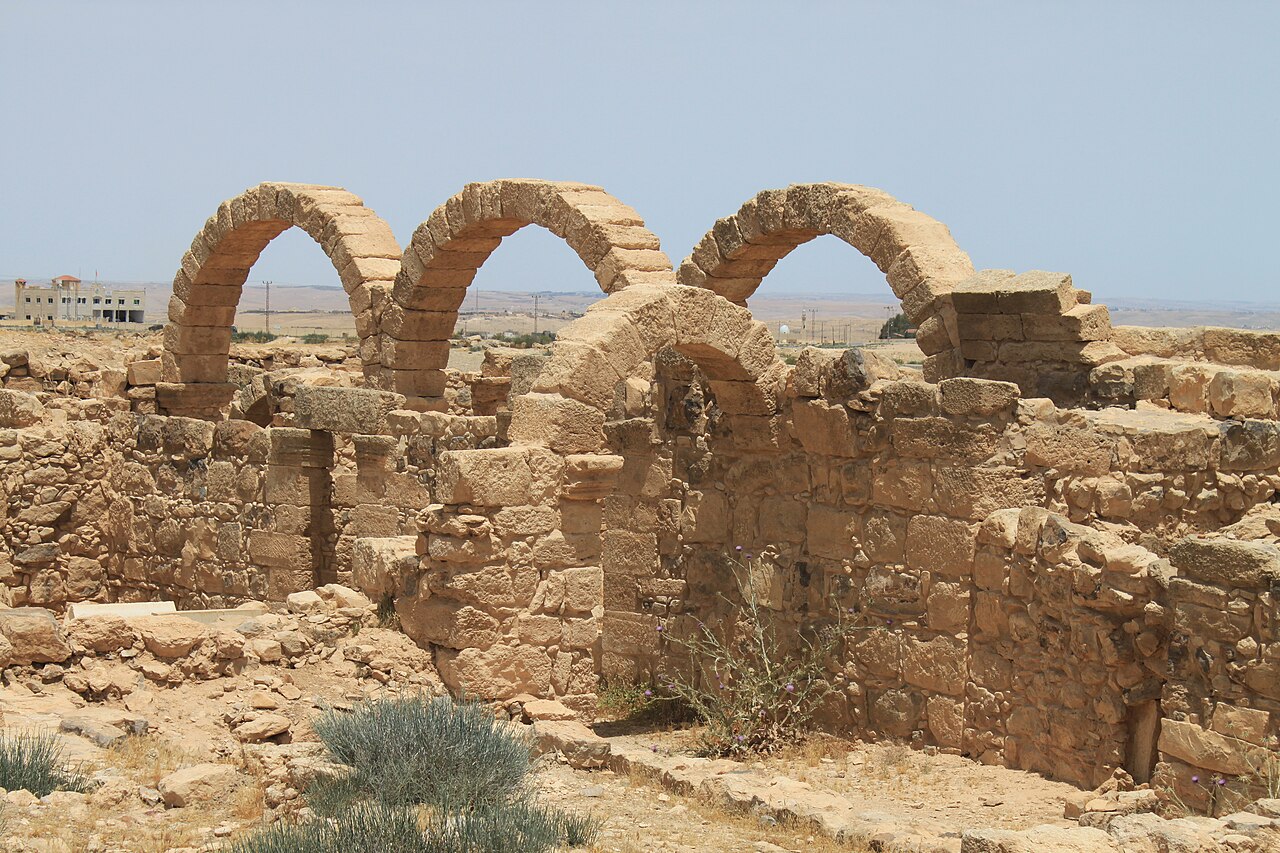
Mephaath
Mephaath is one of the cities of the tribe of Reuben in the inheritance that Moses gave them east of the Jordan: after Heshbon “and all her cities that are in the plain”, the list names Dibon, Bamoth-baal and Beth-baal-meon, and then “Jahazah, and Kedemoth, and Mephaath” (Jahazah, Kedemoth). BG1940 spells the name here “Мафаат”. Smith places it in the district of the Mishor, the “plain”, which he thinks probably answers to the modern Belka, and says that its site is uncertain. Josh 13:15-18.
With its suburbs it is one of the four cities out of the tribe of Reuben given to the families of the children of Merari, the rest of the Levites, with Bezer, Jahazah and Kedemoth; Chronicles repeats the list, placing these cities on the other side Jordan by Jericho. BG1940 spells the name “Мефаят” in Joshua and “Мефаат” in Chronicles. Easton calls it a Levitical city of the tribe of Reuben, and Smith one of the cities allotted with their suburbs to the Merarite Levites. Josh 21:34-37; 1 Chr 6:77-79.
In Jeremiah’s word against Moab, judgment comes “upon the plain country; upon Holon, and upon Jahazah, and upon Mephaath” (Holon), followed by Dibon, Nebo and the other cities of the land of Moab; BG1940 reads “полската земя” and spells the town “Мифаат”. Nave lists this verse with the others under the Levitical city of Reuben. Jer 48:21-24.