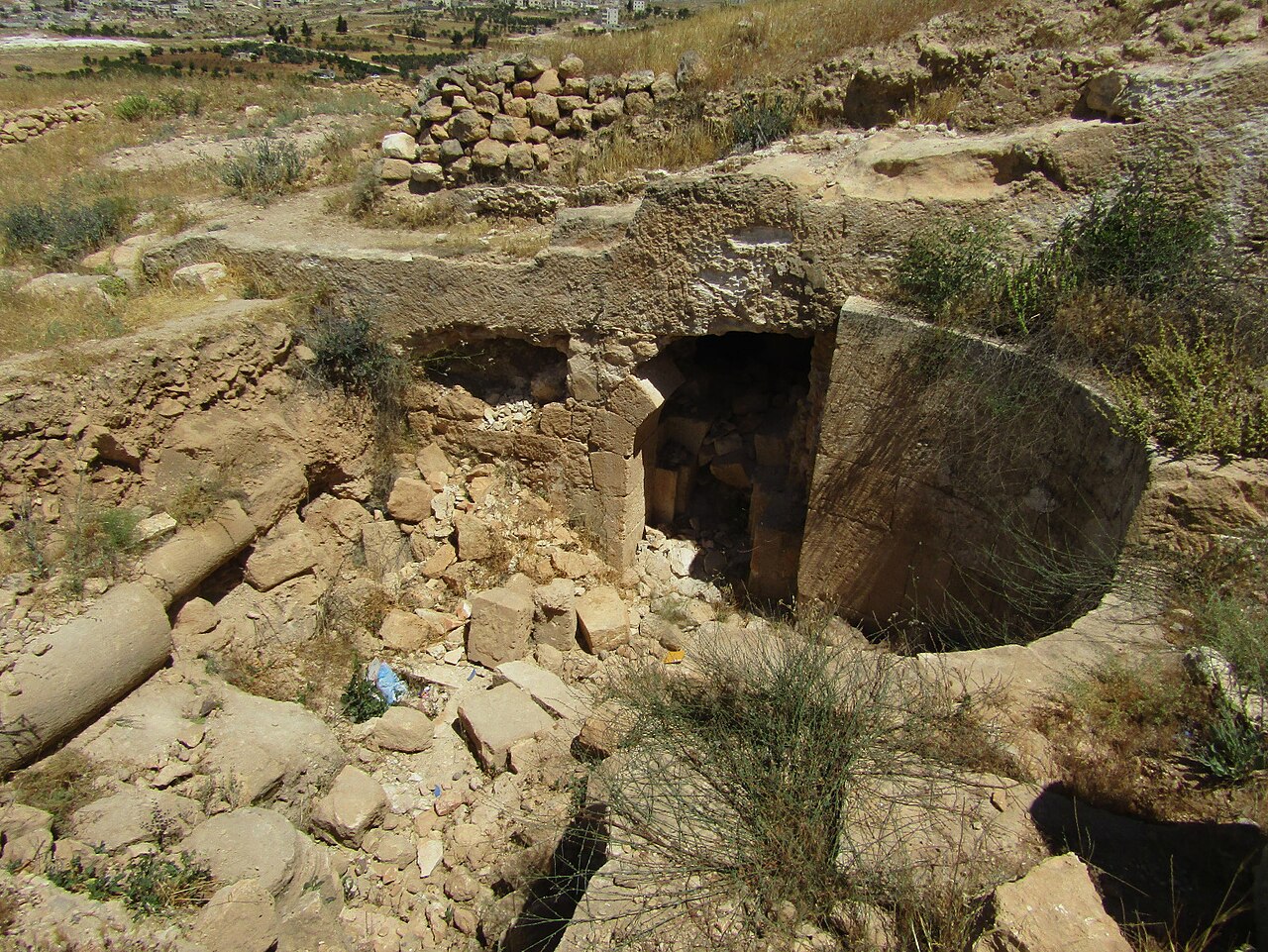
Ziph
Ziph is one of the cities of Judah in the mountains, named between Carmel and Juttah, after Maon. Easton identifies it with the uninhabited ruins of Tell ez-Zif, about five miles south-east of Hebron; Smith with a rounded hill called Tell Zif south of Hebron. Easton heads his entry with the meaning “flowing”, Smith with “battlement”, and Hitchcock gives “this mouth or mouthful; falsehood”. Josh 15:55.
The Ziphites twice go up to Saul at Gibeah to tell him where David is hiding, first “in strong holds in the wood, in the hill of Hachilah” and then “in the hill of Hachilah, which is before Jeshimon” (Hachilah, Jeshimon); the first time they go on to Ziph before Saul, which leads to the pursuit near Maon. The title of Psalm 54 calls them the Ziphims (BG1940: „зифеяните“), and Smith notes that in the Authorized Version this form occurs only there. Ellen G. White, Patriarchs and Prophets, chapter 65, writes of the time after Samuel’s death: “Again he repaired to the solitude of the Ziphites; but these enemies, hoping to secure the favor of the king, informed him of David’s hiding place.” 1 Sam 23:19; 1 Sam 23:24; 1 Sam 26:1; Ps 54:1.
The open country around the town is the wilderness of Ziph, where David abides in strong holds and Saul seeks him every day. 1 Sam 23:14.
Ziph is among the cities that Rehoboam builds for defence in Judah, in the account of how Rehoboam fortifies defensive cities. 2 Chr 11:5; 2 Chr 11:8.
Chronicles also names a Ziph as son of Mesha in the line of Judah; the verse does not say whether the town is meant. Another town of the name, in the south of Judah, is Ziph of Josh 15:24. 1 Chr 2:42; Josh 15:24.