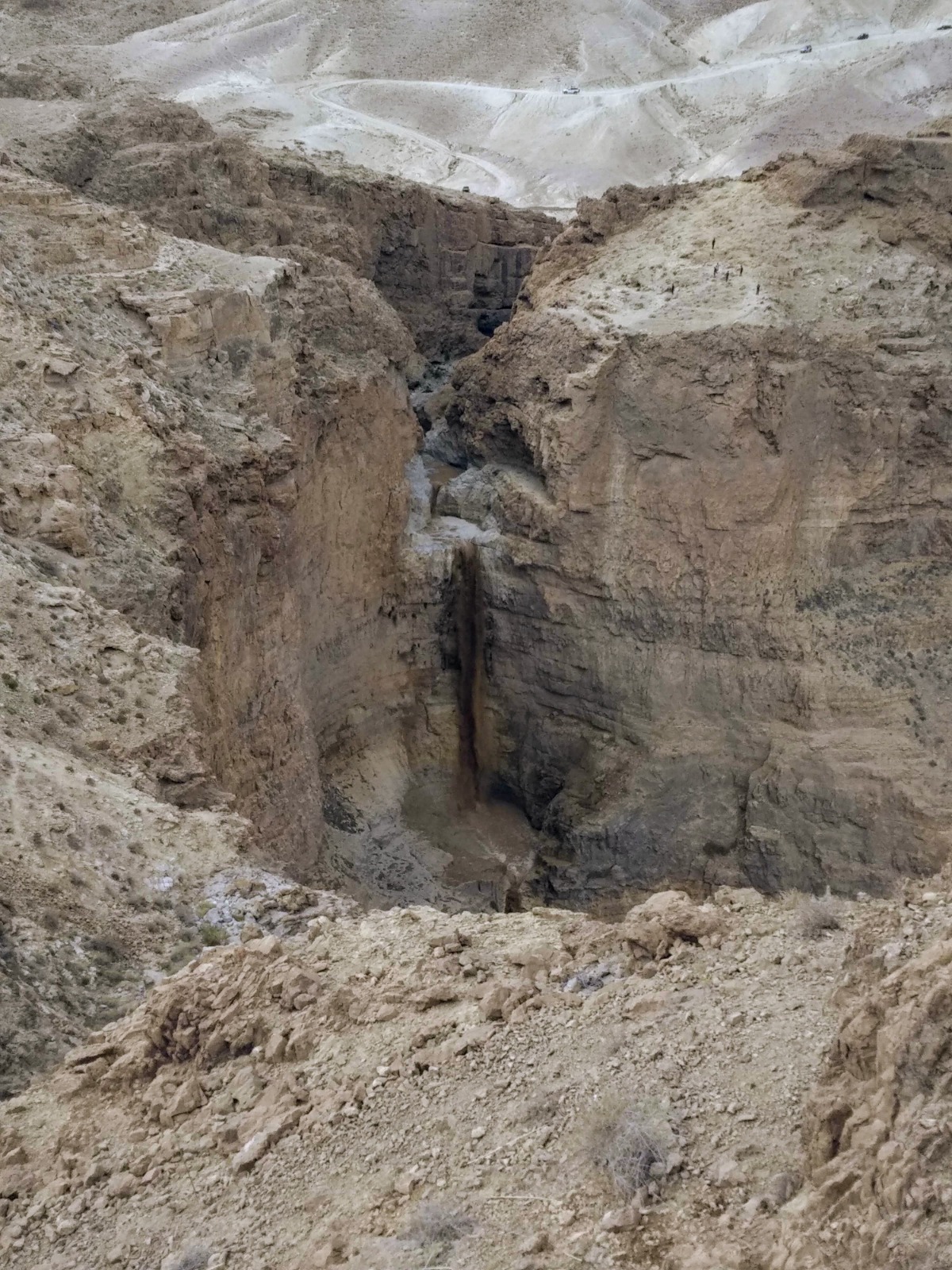
Jeshimon
In First Samuel, Jeshimon is the waste by which the hiding places of David in the hill country are located. The Ziphites come to Saul at Gibeah and say that David hides “in strong holds in the wood, in the hill of Hachilah, which is on the south of Jeshimon”; while they go before Saul, David and his men are in the wilderness of Maon, “in the plain on the south of Jeshimon” (BG1940: Есимон in the first verse, Иесимон in the second). These reports lead to Saul’s pursuit near Maon. Hachilah is named here and again in 1 Sam 26:1, 1 Sam 26:3. 1 Sam 23:19; 1 Sam 23:24.
When the Ziphites inform Saul a second time, they place David “in the hill of Hachilah, which is before Jeshimon”, and Saul pitches there, “which is before Jeshimon, by the way”, in the account in which David takes the king’s spear and water jar. BG1940 reads „срещу Есимон“ and, in the second verse, the spelling „Есимос“. 1 Sam 26:1; 1 Sam 26:3.
Easton explains the name as “the waste” and thinks it is perhaps not a proper name at all, but simply “the waste” or “wilderness”, the district on which the plateau of Ziph looks down; Nave lists a Jeshimon as a place in the desert of Judah. Smith renders the name “a wilderness” and Hitchcock “solitude; desolation”. 1 Sam 23:19; 1 Sam 26:1.
The record also carries two verses of Numbers, where the top of Pisgah and the top of Peor are said to look toward Jeshimon (BG1940: Есимон with the margin „Т.ест: Пустинята“, and Иесимон). Nave treats this as a separate place east of the Jordan; Smith’s entry is written on these two verses and suggests the barren hills immediately west of the Dead Sea; Easton puts all the verses under one head as some high waste land, probably south of the Dead Sea. The text does not say whether the same waste is meant in both books. Num 21:20; Num 23:28.