Abraham, originally named Abram, was the patriarch whom God called to leave his homeland and blessed to become the father of many nations, establishing His covenant with him and his descendants.
son of Terah (GEN 11:26)
Lineage: God › Adam › Seth › Enos › Cainan › Mahalaleel › Jared › Enoch › Methuselah › Lamech › Noah › Shem › Arphaxad › Cainan › Salah › Eber › Peleg › Reu › Serug › Nahor › Terah › Abraham
-
en
Abraham
father of a great multitude
-
en
Abram
high father
-
en
Abram
· Also called high father
-
en
Abraham
· Also called · H85 G11 · GEN 17:5 father of many
-
en
My servant Abraham
· Title · H85, H5650 · GEN 26:24 Abraham [my] servant
-
en
Abraham My friend
· Title · H85, H157 G11, G3739, G25 Abraham [my] friend [literally, "my love"]
-
en
Abraham our father
· Title · H85, H1 G11, G3588, G3962 · LUK 1:73 Abraham our father
-
en
friend of G-d
· Title · none, H430 G5384, G2316 · JAS 2:23 friend [of] G-d
-
he
אַבְרָ֔ם
avəram · H87 · GEN 11:27 exalted father
-
he
אַבְרָהָ֔ם
avəraham · H85 · GEN 17:5 father of many
- he אַבְרָהָם · H0085
- he אַבְרָם · H0087
-
he
אַבְרָהָם עַבְדִּי
avəraham avədiy · Title · H85, H5650 · GEN 26:24 Abraham [my] servant
-
he
אַבְרָהָם אֹהֲבִֽי
avəraham ochaviy · Title · H85, H157 Abraham [my] friend [literally, "my love"]
-
he
אַבְרָהָם אָבִינוּ
avəraham aviynu · Title · H85, H1 · LUK 1:73 Abraham our father
-
he
אוֹהֵב אֱלֹהִים
ohev elohiym · Title · none, H430 · JAS 2:23 friend [of] G-d
- el Αβραμ Abram · none · GEN 11:27
- el Αβρααμ Abraam · G11 · GEN 17:5
- el Ἀβραάμ · G0011
- el [none] · Title · GEN 26:24
-
el
Αβρααμ, ὃν ἠγάπησα
Abraam, o̔̀n ē̓gápēsa · Title · G11, G3739, G25 Abraham who [I] love [as a friend]
-
el
Ἀβραὰμ τὸν πατέρα
A̓braàm tòn patéra · Title · G11, G3588, G3962 · LUK 1:73 Abraham our father
-
el
φίλος θεοῦ
phílos theou͂ · Title · G5384, G2316 · JAS 2:23 friend [of] G-d
- bg Авраам
SDA Books (157)
Awaiting permission to publish-
Великата Борба Ellen Gould White · BG · 5 related paragraphs
-
Великата Борба Между Христа И Сатана Ellen Gould White · BG · 3 related paragraphs
-
Възпитание Ellen Gould White · BG · 3 related paragraphs
-
Деянията на апостолите Ellen Gould White · BG · 4 related paragraphs
-
Желанието На Вековете Ellen Gould White · BG · 11 related paragraphs
-
Мисли От Планината На Благословението Ellen Gould White · BG · 1 related paragraphs
-
Патриарси И Пророци Ellen Gould White · BG · 38 related paragraphs
-
По Стъпките На Великия Лекар Ellen Gould White · BG · 4 related paragraphs
-
Поглед Нагоре Ellen Gould White · BG · 3 related paragraphs
-
Притчи Христови Ellen Gould White · BG · 4 related paragraphs
-
Пророци И Царе Ellen Gould White · BG · 7 related paragraphs
-
Събитията На Последните Дни Ellen Gould White · BG · 1 related paragraphs
-
Христос в Своето светилище Ellen Gould White · BG · 2 related paragraphs
-
A Call To Stand Apart Ellen Gould White · EN · 1 related paragraphs
-
A New Life (Revival and Beyond) Ellen Gould White · EN · 2 related paragraphs
-
Battle Creek Letters Ellen Gould White · EN · 1 related paragraphs
-
Beginning of the End Ellen Gould White · EN · 15 related paragraphs
-
Christ Triumphant Ellen Gould White · EN · 5 related paragraphs
-
Christ in His Sanctuary Ellen Gould White · EN · 4 related paragraphs
-
Christian Education Ellen Gould White · EN · 1 related paragraphs
-
Christian Experience and Teachings of Ellen G. White Ellen Gould White · EN · 1 related paragraphs
-
Christian Service, volume 2 Ellen Gould White · EN · 1 related paragraphs
-
Christian Temperance and Bible Hygiene Ellen Gould White · EN · 1 related paragraphs
-
Christ’s Object Lessons Ellen Gould White · EN · 5 related paragraphs
-
Conflict and Courage Ellen Gould White · EN · 39 related paragraphs
-
Counsels on Stewardship Ellen Gould White · EN · 1 related paragraphs
-
Daughters of God Ellen Gould White · EN · 9 related paragraphs
-
EGW SDA Bible Commentary, vol. 1 Ellen Gould White · EN · 73 related paragraphs
-
EGW SDA Bible Commentary, vol. 2 Ellen Gould White · EN · 12 related paragraphs
-
EGW SDA Bible Commentary, vol. 3 Ellen Gould White · EN · 9 related paragraphs
-
EGW SDA Bible Commentary, vol. 4 Ellen Gould White · EN · 5 related paragraphs
-
EGW SDA Bible Commentary, vol. 5 Ellen Gould White · EN · 58 related paragraphs
-
EGW SDA Bible Commentary, vol. 6 Ellen Gould White · EN · 56 related paragraphs
-
EGW SDA Bible Commentary, vol. 7 Ellen Gould White · EN · 75 related paragraphs
-
Education Ellen Gould White · EN · 3 related paragraphs
-
Faith and Works Ellen Gould White · EN · 2 related paragraphs
-
From Eternity Past Ellen Gould White · EN · 18 related paragraphs
-
From Heaven With Love Ellen Gould White · EN · 7 related paragraphs
-
From Here to Forever Ellen Gould White · EN · 4 related paragraphs
-
From Splendor to Shadow Ellen Gould White · EN · 5 related paragraphs
-
From Trials to Triumph Ellen Gould White · EN · 4 related paragraphs
-
From the Heart Ellen Gould White · EN · 2 related paragraphs
-
God’s Amazing Grace Ellen Gould White · EN · 4 related paragraphs
-
Gospel Workers (1892/1893 ed.) Ellen Gould White · EN · 3 related paragraphs
-
Gospel Workers (1915 ed.) Ellen Gould White · EN · 3 related paragraphs
-
Heaven Ellen Gould White · EN · 1 related paragraphs
-
Help In Daily Living Ellen Gould White · EN · 1 related paragraphs
-
Homeward Bound Ellen Gould White · EN · 2 related paragraphs
-
Humble Hero Ellen Gould White · EN · 7 related paragraphs
-
In Heavenly Places Ellen Gould White · EN · 2 related paragraphs
-
Jesus, Name Above All Names Ellen Gould White · EN · 4 related paragraphs
-
Letters and Manuscripts — Volume 1 (1844 - 1868) Ellen Gould White · EN · 2 related paragraphs
-
Letters and Manuscripts — Volume 10 (1895) Ellen Gould White · EN · 11 related paragraphs
-
Letters and Manuscripts — Volume 11 (1896) Ellen Gould White · EN · 11 related paragraphs
-
Letters and Manuscripts — Volume 12 (1897) Ellen Gould White · EN · 15 related paragraphs
-
Letters and Manuscripts — Volume 13 (1898) Ellen Gould White · EN · 25 related paragraphs
-
Letters and Manuscripts — Volume 14 (1899) Ellen Gould White · EN · 26 related paragraphs
-
Letters and Manuscripts — Volume 15 (1900) Ellen Gould White · EN · 11 related paragraphs
-
Letters and Manuscripts — Volume 16 (1901) Ellen Gould White · EN · 13 related paragraphs
-
Letters and Manuscripts — Volume 17 (1902) Ellen Gould White · EN · 9 related paragraphs
-
Letters and Manuscripts — Volume 18 (1903) Ellen Gould White · EN · 17 related paragraphs
-
Letters and Manuscripts — Volume 19 (1904) Ellen Gould White · EN · 14 related paragraphs
-
Letters and Manuscripts — Volume 20 (1905) Ellen Gould White · EN · 5 related paragraphs
-
Letters and Manuscripts — Volume 21 (1906) Ellen Gould White · EN · 10 related paragraphs
-
Letters and Manuscripts — Volume 22 (1907) Ellen Gould White · EN · 10 related paragraphs
-
Letters and Manuscripts — Volume 23 (1908) Ellen Gould White · EN · 3 related paragraphs
-
Letters and Manuscripts — Volume 24 (1909) Ellen Gould White · EN · 8 related paragraphs
-
Letters and Manuscripts — Volume 25 (1910 - 1915) Ellen Gould White · EN · 8 related paragraphs
-
Letters and Manuscripts — Volume 4 (1883 - 1886) Ellen Gould White · EN · 10 related paragraphs
-
Letters and Manuscripts — Volume 5 (1887-1888) Ellen Gould White · EN · 5 related paragraphs
-
Letters and Manuscripts — Volume 6 (1889-1890) Ellen Gould White · EN · 12 related paragraphs
-
Letters and Manuscripts — Volume 7 (1891-1892) Ellen Gould White · EN · 13 related paragraphs
-
Letters and Manuscripts — Volume 8 (1893) Ellen Gould White · EN · 10 related paragraphs
-
Letters and Manuscripts — Volume 9 (1894) Ellen Gould White · EN · 12 related paragraphs
-
Lift Him Up Ellen Gould White · EN · 4 related paragraphs
-
Loma Linda Messages Ellen Gould White · EN · 1 related paragraphs
-
Love Under Fire Ellen Gould White · EN · 4 related paragraphs
-
Manuscript Release No 1033 Ellen Gould White · EN · 2 related paragraphs
-
Manuscript Releases, vol. 10 [Nos. 771-850] Ellen Gould White · EN · 2 related paragraphs
-
Manuscript Releases, vol. 11 [Nos. 851-920] Ellen Gould White · EN · 2 related paragraphs
-
Manuscript Releases, vol. 12 [Nos. 921-999] Ellen Gould White · EN · 2 related paragraphs
-
Manuscript Releases, vol. 13 [Nos. 1000-1080] Ellen Gould White · EN · 3 related paragraphs
-
Manuscript Releases, vol. 14 [Nos. 1081-1135] Ellen Gould White · EN · 3 related paragraphs
-
Manuscript Releases, vol. 15 [Nos. 1136-1185] Ellen Gould White · EN · 1 related paragraphs
-
Manuscript Releases, vol. 17 [Nos. 1236-1300] Ellen Gould White · EN · 3 related paragraphs
-
Manuscript Releases, vol. 19 [Nos. 1360-1419] Ellen Gould White · EN · 1 related paragraphs
-
Manuscript Releases, vol. 20 [Nos. 1420-1500] Ellen Gould White · EN · 1 related paragraphs
-
Manuscript Releases, vol. 21 [Nos. 1501-1598] Ellen Gould White · EN · 1 related paragraphs
-
Manuscript Releases, vol. 6 [Nos. 347-418] Ellen Gould White · EN · 1 related paragraphs
-
Manuscript Releases, vol. 8 [Nos. 526-663] Ellen Gould White · EN · 2 related paragraphs
-
Manuscript Releases, vol. 9 [Nos. 664-770] Ellen Gould White · EN · 3 related paragraphs
-
Mind, Character, and Personality, vol. 2 Ellen Gould White · EN · 2 related paragraphs
-
My Life Today Ellen Gould White · EN · 2 related paragraphs
-
Notebook Leaflets from the Elmshaven Library, vol. 1 Ellen Gould White · EN · 1 related paragraphs
-
Our Father Cares Ellen Gould White · EN · 2 related paragraphs
-
Our High Calling Ellen Gould White · EN · 1 related paragraphs
-
Patriarchs and Prophets Ellen Gould White · EN · 27 related paragraphs
-
Prayer Ellen Gould White · EN · 1 related paragraphs
-
Prophets and Kings Ellen Gould White · EN · 6 related paragraphs
-
Radiant Religion Ellen Gould White · EN · 2 related paragraphs
-
Reflecting Christ Ellen Gould White · EN · 6 related paragraphs
-
Royalty and Ruin Ellen Gould White · EN · 5 related paragraphs
-
SDA Bible Commentary, vol. 1 1SDABC Francis Nichol-GCSDA · EN · 1397 bibliographic references from the official index
-
SDA Bible Commentary, vol. 2 2SDABC Francis Nichol-GCSDA · EN · 186 bibliographic references from the official index
-
SDA Bible Commentary, vol. 3 3SDABC Francis Nichol-GCSDA · EN · 253 bibliographic references from the official index
-
SDA Bible Commentary, vol. 4 4SDABC Francis Nichol-GCSDA · EN · 234 bibliographic references from the official index
-
SDA Bible Commentary, vol. 5 5SDABC Francis Nichol-GCSDA · EN · 712 bibliographic references from the official index
-
SDA Bible Commentary, vol. 6 6SDABC Francis Nichol-GCSDA · EN · 598 bibliographic references from the official index
-
SDA Bible Commentary, vol. 7 7SDABC Francis Nichol-GCSDA · EN · 251 bibliographic references from the official index
-
Selected Messages Book 1 Ellen Gould White · EN · 5 related paragraphs
-
Selected Messages Book 2 Ellen Gould White · EN · 3 related paragraphs
-
Selected Messages Book 3 Ellen Gould White · EN · 3 related paragraphs
-
Sermons and Talks, vol. 1 Ellen Gould White · EN · 2 related paragraphs
-
Sermons and Talks, vol. 2 Ellen Gould White · EN · 3 related paragraphs
-
Spalding and Magan Collection Ellen Gould White · EN · 1 related paragraphs
-
Special Instruction Relating to The Review and Herald Office, and The Work in Battle Creek Ellen Gould White · EN · 1 related paragraphs
-
Special Testimonies on Church Schools Ellen Gould White · EN · 1 related paragraphs
-
Spiritual Gifts, vol. 4b Ellen Gould White · EN · 1 related paragraphs
-
Story of Hope Ellen Gould White · EN · 3 related paragraphs
-
Story of Redemption Ellen Gould White · EN · 15 related paragraphs
-
Testimonies for the Church, vol. 1 Ellen Gould White · EN · 1 related paragraphs
-
Testimonies for the Church, vol. 6 Ellen Gould White · EN · 1 related paragraphs
-
Testimonies for the Church, vol. 8 Ellen Gould White · EN · 2 related paragraphs
-
Testimony Treasures, vol. 1 Ellen Gould White · EN · 2 related paragraphs
-
Testimony Treasures, vol. 2 Ellen Gould White · EN · 1 related paragraphs
-
That I May Know Him Ellen Gould White · EN · 5 related paragraphs
-
The Acts of the Apostles Ellen Gould White · EN · 5 related paragraphs
-
The Attack Ellen Gould White · EN · 15 related paragraphs
-
The Desire of Ages Ellen Gould White · EN · 11 related paragraphs
-
The Ellen G. White 1888 Materials Ellen Gould White · EN · 6 related paragraphs
-
The Faith I Live By Ellen Gould White · EN · 3 related paragraphs
-
The Great Controversy Ellen Gould White · EN · 6 related paragraphs
-
The Great Controversy (1888 ed.) Ellen Gould White · EN · 7 related paragraphs
-
The Great Hope (Adapted) Ellen Gould White · EN · 1 related paragraphs
-
The Great Hope (Condensed) Ellen Gould White · EN · 1 related paragraphs
-
The Hero Ellen Gould White · EN · 7 related paragraphs
-
The Ministry of Healing Ellen Gould White · EN · 4 related paragraphs
-
The Ministry of Health and Healing Ellen Gould White · EN · 4 related paragraphs
-
The Mission Ellen Gould White · EN · 4 related paragraphs
-
The Paulson Collection of Ellen G. White Letters Ellen Gould White · EN · 1 related paragraphs
-
The Promise Ellen Gould White · EN · 5 related paragraphs
-
The Publishing Ministry Ellen Gould White · EN · 1 related paragraphs
-
The Review and Herald Ellen Gould White · EN · 7 related paragraphs
-
The Signs of the Times Ellen Gould White · EN · 1 related paragraphs
-
The Spirit of Prophecy, vol. 4 Ellen Gould White · EN · 1 related paragraphs
-
The Story of Redemption Ellen Gould White · EN · 11 related paragraphs
-
The Upward Look Ellen Gould White · EN · 4 related paragraphs
-
The Victory Ellen Gould White · EN · 4 related paragraphs
-
There Is Help in God Ellen Gould White · EN · 1 related paragraphs
-
This Day With God Ellen Gould White · EN · 1 related paragraphs
-
Thoughts From the Mount of Blessing Ellen Gould White · EN · 1 related paragraphs
-
To Be Like Jesus Ellen Gould White · EN · 1 related paragraphs
-
True Education Ellen Gould White · EN · 1 related paragraphs
-
True Revival Ellen Gould White · EN · 2 related paragraphs
-
Unlikely Leaders Ellen Gould White · EN · 4 related paragraphs
-
Welfare Ministry Ellen Gould White · EN · 1 related paragraphs
-
Ye Shall Receive Power Ellen Gould White · EN · 3 related paragraphs
Age · 175
Explicitly stated · Age explicitly stated in the Bible text.
Source calculation and assumptions
The year of Abram_1's birth is the year his father, Terah_1, was born (1880) + the age of his father at Abram_1's birth (130) = 2010
The year of Abram_1's death is the year he was born (2010) + his age at death (175) = 2185
Terah lived SEVENTY YEARS, and became the father of Abram, Nahor and Haran. (GEN 11:26) [Who was born first? Terah was at least 70 years old when Abram was born.] The days of Terah were two hundred and five years; and Terah died in Haran. (GEN 11:32) [Terah died in Haran at the age of 205 in Haran.] Now Abram was seventy-five years old when he departed from Haran. (GEN 12:4) [Terah was 205 when he died in Haran and Abram (aged 75) left Haran when Terah died (Acts 7:4). This means Terah was 130 when Abram was born.]
Dates and sources (15)
Absolute years are conditional chronological estimates. A biblical passage may state an age or event, but does not by itself establish a BCE year. Different calendar systems are preserved separately.
-
Birth BibleData Matches the current date; this is not historical verificationAH with conditional Ussher anchor:
2010→ ≈ 1995 BCSource record and calculation
Birth_Abram_1·event_year_ahbibledata/BibleData-Event.csv· record 39The year of Abram_1's birth is the year his father, Terah_1, was born (1880) + the age of his father at Abram_1's birth (130) = 2010Terah was at least 70 years old when Abram was born. (GEN 11:26) Terah was 205 when he died in Haran. (GEN 11:32) Abram was 75 (GEN 12:4) and left Haran when Terah died (Acts 7:4). This means Terah was 130 when Abram was born. [Shulman date p18] [Ussher date p22]SHA-256:af4b6b71c7d819a99bf9ccd560fa287808b95c020e972218688df33ea96c7922 -
Birth BibleData Matches the current date; this is not historical verificationAH with conditional Ussher anchor:
2010→ ≈ 1995 BCSource record and calculation
Life_of_Abram_1·start_year_ahbibledata/BibleData-Epoch.csv· record 24The year of Abram_1's birth is the year his father, Terah_1, was born (1880) + the age of his father at Abram_1's birth (130) = 2010Terah lived SEVENTY YEARS, and became the father of Abram, Nahor and Haran. (GEN 11:26) [Who was born first? Terah was at least 70 years old when Abram was born.] The days of Terah were two hundred and five years; and Terah died in Haran. (GEN 11:32) [Terah died in Haran at the age of 205 in Haran.] Now Abram was seventy-five years old when he departed from Haran. (GEN 12:4) [Terah was 205 when he died in Haran and Abram (aged 75) left Haran when Terah died (Acts 7:4). This means Terah was 130 when Abram was born.]SHA-256:325b6321284f7271ea0f444c3f1c1646068f46ecf2db3aebba5da36b5448d8b5 -
Birth BibleData Alternative estimateBibleData BCE year:
1952→ ≈ 1952 BCSource record and calculation
Birth_Abram_1·bce_yearbibledata/BibleData-Event.csv· record 39The year of Abram_1's birth is the year his father, Terah_1, was born (1880) + the age of his father at Abram_1's birth (130) = 2010Terah was at least 70 years old when Abram was born. (GEN 11:26) Terah was 205 when he died in Haran. (GEN 11:32) Abram was 75 (GEN 12:4) and left Haran when Terah died (Acts 7:4). This means Terah was 130 when Abram was born. [Shulman date p18] [Ussher date p22]SHA-256:af4b6b71c7d819a99bf9ccd560fa287808b95c020e972218688df33ea96c7922 -
Birth BibleData Unverified estimate without an established conversionShulman AM:
1948· No established conversion to a BCE/CE year.Source record and calculation
Birth_Abram_1·shulman_am_yearbibledata/BibleData-Event.csv· record 39The year of Abram_1's birth is the year his father, Terah_1, was born (1880) + the age of his father at Abram_1's birth (130) = 2010Terah was at least 70 years old when Abram was born. (GEN 11:26) Terah was 205 when he died in Haran. (GEN 11:32) Abram was 75 (GEN 12:4) and left Haran when Terah died (Acts 7:4). This means Terah was 130 when Abram was born. [Shulman date p18] [Ussher date p22]SHA-256:af4b6b71c7d819a99bf9ccd560fa287808b95c020e972218688df33ea96c7922 -
Birth BibleData Unverified estimate without an established conversionUssher AM:
2008· No established conversion to a BCE/CE year.Source record and calculation
Birth_Abram_1·ussher_am_yearbibledata/BibleData-Event.csv· record 39The year of Abram_1's birth is the year his father, Terah_1, was born (1880) + the age of his father at Abram_1's birth (130) = 2010Terah was at least 70 years old when Abram was born. (GEN 11:26) Terah was 205 when he died in Haran. (GEN 11:32) Abram was 75 (GEN 12:4) and left Haran when Terah died (Acts 7:4). This means Terah was 130 when Abram was born. [Shulman date p18] [Ussher date p22]SHA-256:af4b6b71c7d819a99bf9ccd560fa287808b95c020e972218688df33ea96c7922 -
Birth BibleData Alternative estimateUssher BCE year:
1996→ ≈ 1996 BCSource record and calculation
Birth_Abram_1·ussher_bce_yearbibledata/BibleData-Event.csv· record 39The year of Abram_1's birth is the year his father, Terah_1, was born (1880) + the age of his father at Abram_1's birth (130) = 2010Terah was at least 70 years old when Abram was born. (GEN 11:26) Terah was 205 when he died in Haran. (GEN 11:32) Abram was 75 (GEN 12:4) and left Haran when Terah died (Acts 7:4). This means Terah was 130 when Abram was born. [Shulman date p18] [Ussher date p22]SHA-256:af4b6b71c7d819a99bf9ccd560fa287808b95c020e972218688df33ea96c7922 -
Birth Theographic Alternative estimateTheographic signed year:
-1997· Calendar interpretation is unverified; the raw value is shown.Person mentions; these are not evidence for this date: 277
Gen.11.26Gen.11.27Gen.11.29Gen.11.31Gen.12.1Gen.12.4Gen.12.5Gen.12.6Gen.12.7Gen.12.9Gen.12.10Gen.12.14Gen.12.16Gen.12.17Gen.12.18Gen.13.1Gen.13.2Gen.13.4Gen.13.5Gen.13.7Gen.13.8Gen.13.12Gen.13.14Gen.13.18Gen.14.12Gen.14.13Gen.14.14Gen.14.19Gen.14.21Gen.14.22Gen.14.23Gen.15.1Gen.15.2Gen.15.3Gen.15.11Gen.15.12Gen.15.13Gen.15.18Gen.16.1Gen.16.2Gen.16.3Gen.16.5Gen.16.6Gen.16.15Gen.16.16Gen.17.1Gen.17.3Gen.17.5Gen.17.9Gen.17.15Gen.17.17Gen.17.18Gen.17.22Gen.17.23Gen.17.24Gen.17.26Gen.18.6Gen.18.7Gen.18.11Gen.18.13Gen.18.16Gen.18.17Gen.18.18Gen.18.19Gen.18.22Gen.18.23Gen.18.27Gen.18.33Gen.19.27Gen.19.29Gen.20.1Gen.20.2Gen.20.9Gen.20.10Gen.20.11Gen.20.14Gen.20.17Gen.20.18Gen.21.2Gen.21.3Gen.21.4Gen.21.5Gen.21.7Gen.21.8Gen.21.9Gen.21.10Gen.21.11Gen.21.12Gen.21.14Gen.21.22Gen.21.24Gen.21.25Gen.21.27Gen.21.28Gen.21.29Gen.21.33Gen.21.34Gen.22.1Gen.22.3Gen.22.4Gen.22.5Gen.22.6Gen.22.7Gen.22.8Gen.22.9Gen.22.10Gen.22.11Gen.22.13Gen.22.14Gen.22.15Gen.22.19Gen.22.20Gen.22.23Gen.23.2Gen.23.3Gen.23.5Gen.23.7Gen.23.10Gen.23.12Gen.23.14Gen.23.16Gen.23.18Gen.23.19Gen.23.20Gen.24.1Gen.24.2Gen.24.6Gen.24.9Gen.24.12Gen.24.15Gen.24.27Gen.24.34Gen.24.42Gen.24.48Gen.24.52Gen.24.59Gen.25.1Gen.25.5Gen.25.6Gen.25.7Gen.25.8Gen.25.10Gen.25.11Gen.25.12Gen.25.19Gen.26.1Gen.26.3Gen.26.5Gen.26.15Gen.26.18Gen.26.24Gen.28.4Gen.28.9Gen.28.13Gen.31.42Gen.31.53Gen.32.9Gen.35.12Gen.35.27Gen.48.15Gen.48.16Gen.49.30Gen.49.31Gen.50.13Gen.50.24Exod.2.24Exod.3.6Exod.3.15Exod.3.16Exod.4.5Exod.6.3Exod.6.8Exod.32.13Exod.33.1Lev.26.42Num.32.11Deut.1.8Deut.6.10Deut.9.5Deut.9.27Deut.29.13Deut.30.20Deut.34.4Josh.24.2Josh.24.31Kgs.18.362Kgs.13.231Chr.1.271Chr.1.281Chr.1.321Chr.1.341Chr.16.161Chr.29.182Chr.20.72Chr.30.6Neh.9.7Ps.47.9Ps.105.6Ps.105.9Ps.105.42Isa.29.22Isa.41.8Isa.51.2Isa.63.16Jer.33.26Ezek.33.24Mic.7.20Matt.1.1Matt.1.2Matt.1.17Matt.3.9Matt.8.11Matt.22.32Mark.12.26Luke.1.55Luke.1.73Luke.3.8Luke.3.34Luke.13.16Luke.13.28Luke.16.22Luke.16.23Luke.16.24Luke.16.25Luke.16.29Luke.16.30Luke.19.9Luke.20.37John.8.33John.8.37John.8.39John.8.40John.8.52John.8.53John.8.56John.8.57John.8.58Acts.3.13Acts.3.25Acts.7.2Acts.7.8Acts.7.16Acts.7.17Acts.7.32Acts.13.26Rom.4.1Rom.4.2Rom.4.3Rom.4.9Rom.4.12Rom.4.13Rom.4.16Rom.9.7Rom.11.12Cor.11.22Gal.3.6Gal.3.7Gal.3.8Gal.3.9Gal.3.14Gal.3.16Gal.3.18Gal.3.29Gal.4.22Heb.2.16Heb.6.13Heb.7.1Heb.7.2Heb.7.4Heb.7.5Heb.7.6Heb.7.9Heb.11.8Heb.11.17Jas.2.21Jas.2.231Pet.3.6Source record and calculation
abraham_58·birthYeartheographic/People.csv· record 59SHA-256:caac2ca4b94bd52c0fbbd1b9d93faea094af46999ecd0f13b9378eabc8800e1c -
Death BibleData Matches the current date; this is not historical verificationAH with conditional Ussher anchor:
2185→ ≈ 1820 BCSource record and calculation
Death_Abram_1·event_year_ahbibledata/BibleData-Event.csv· record 67The year of Abram_1's death is the year he was born (2010) + his age at death (175) = 2185[Shulman date p18] [Ussher date p28]SHA-256:cb210ba8fd569e7b1d2857e8e96d713ec7c237c21dd0ed03d120cb15e9db5672 -
Death BibleData Matches the current date; this is not historical verificationAH with conditional Ussher anchor:
2185→ ≈ 1820 BCSource record and calculation
Life_of_Abram_1·end_year_ahbibledata/BibleData-Epoch.csv· record 24The year of Abram_1's death is the year he was born (2010) + his age at death (175) = 2185Terah lived SEVENTY YEARS, and became the father of Abram, Nahor and Haran. (GEN 11:26) [Who was born first? Terah was at least 70 years old when Abram was born.] The days of Terah were two hundred and five years; and Terah died in Haran. (GEN 11:32) [Terah died in Haran at the age of 205 in Haran.] Now Abram was seventy-five years old when he departed from Haran. (GEN 12:4) [Terah was 205 when he died in Haran and Abram (aged 75) left Haran when Terah died (Acts 7:4). This means Terah was 130 when Abram was born.]SHA-256:325b6321284f7271ea0f444c3f1c1646068f46ecf2db3aebba5da36b5448d8b5 -
Death BibleData Matches the current date; this is not historical verificationScriptural age + conditional chronological anchor: ≈ 1820 BC
Source record and calculation
biblical-age:Abram_1·derived_end_yeardatabase:person_age_evidence· record 21(2010 AH - 4004) + 175 scripture age years = -1819 astronomicalAge explicitly stated in the Bible text.SHA-256:39d973d188d122774d44f302718e4732b49b6f5c5b37a91e6bd062daf4eece6e -
Death BibleData Alternative estimateBibleData BCE year:
1777→ ≈ 1777 BCSource record and calculation
Death_Abram_1·bce_yearbibledata/BibleData-Event.csv· record 67The year of Abram_1's death is the year he was born (2010) + his age at death (175) = 2185[Shulman date p18] [Ussher date p28]SHA-256:cb210ba8fd569e7b1d2857e8e96d713ec7c237c21dd0ed03d120cb15e9db5672 -
Death BibleData Unverified estimate without an established conversionShulman AM:
2123· No established conversion to a BCE/CE year.Source record and calculation
Death_Abram_1·shulman_am_yearbibledata/BibleData-Event.csv· record 67The year of Abram_1's death is the year he was born (2010) + his age at death (175) = 2185[Shulman date p18] [Ussher date p28]SHA-256:cb210ba8fd569e7b1d2857e8e96d713ec7c237c21dd0ed03d120cb15e9db5672 -
Death BibleData Unverified estimate without an established conversionUssher AM:
2183· No established conversion to a BCE/CE year.Source record and calculation
Death_Abram_1·ussher_am_yearbibledata/BibleData-Event.csv· record 67The year of Abram_1's death is the year he was born (2010) + his age at death (175) = 2185[Shulman date p18] [Ussher date p28]SHA-256:cb210ba8fd569e7b1d2857e8e96d713ec7c237c21dd0ed03d120cb15e9db5672 -
Death BibleData Alternative estimateUssher BCE year:
1821→ ≈ 1821 BCSource record and calculation
Death_Abram_1·ussher_bce_yearbibledata/BibleData-Event.csv· record 67The year of Abram_1's death is the year he was born (2010) + his age at death (175) = 2185[Shulman date p18] [Ussher date p28]SHA-256:cb210ba8fd569e7b1d2857e8e96d713ec7c237c21dd0ed03d120cb15e9db5672 -
Death Theographic Alternative estimateTheographic signed year:
-1821· Calendar interpretation is unverified; the raw value is shown.Person mentions; these are not evidence for this date: 277
Gen.11.26Gen.11.27Gen.11.29Gen.11.31Gen.12.1Gen.12.4Gen.12.5Gen.12.6Gen.12.7Gen.12.9Gen.12.10Gen.12.14Gen.12.16Gen.12.17Gen.12.18Gen.13.1Gen.13.2Gen.13.4Gen.13.5Gen.13.7Gen.13.8Gen.13.12Gen.13.14Gen.13.18Gen.14.12Gen.14.13Gen.14.14Gen.14.19Gen.14.21Gen.14.22Gen.14.23Gen.15.1Gen.15.2Gen.15.3Gen.15.11Gen.15.12Gen.15.13Gen.15.18Gen.16.1Gen.16.2Gen.16.3Gen.16.5Gen.16.6Gen.16.15Gen.16.16Gen.17.1Gen.17.3Gen.17.5Gen.17.9Gen.17.15Gen.17.17Gen.17.18Gen.17.22Gen.17.23Gen.17.24Gen.17.26Gen.18.6Gen.18.7Gen.18.11Gen.18.13Gen.18.16Gen.18.17Gen.18.18Gen.18.19Gen.18.22Gen.18.23Gen.18.27Gen.18.33Gen.19.27Gen.19.29Gen.20.1Gen.20.2Gen.20.9Gen.20.10Gen.20.11Gen.20.14Gen.20.17Gen.20.18Gen.21.2Gen.21.3Gen.21.4Gen.21.5Gen.21.7Gen.21.8Gen.21.9Gen.21.10Gen.21.11Gen.21.12Gen.21.14Gen.21.22Gen.21.24Gen.21.25Gen.21.27Gen.21.28Gen.21.29Gen.21.33Gen.21.34Gen.22.1Gen.22.3Gen.22.4Gen.22.5Gen.22.6Gen.22.7Gen.22.8Gen.22.9Gen.22.10Gen.22.11Gen.22.13Gen.22.14Gen.22.15Gen.22.19Gen.22.20Gen.22.23Gen.23.2Gen.23.3Gen.23.5Gen.23.7Gen.23.10Gen.23.12Gen.23.14Gen.23.16Gen.23.18Gen.23.19Gen.23.20Gen.24.1Gen.24.2Gen.24.6Gen.24.9Gen.24.12Gen.24.15Gen.24.27Gen.24.34Gen.24.42Gen.24.48Gen.24.52Gen.24.59Gen.25.1Gen.25.5Gen.25.6Gen.25.7Gen.25.8Gen.25.10Gen.25.11Gen.25.12Gen.25.19Gen.26.1Gen.26.3Gen.26.5Gen.26.15Gen.26.18Gen.26.24Gen.28.4Gen.28.9Gen.28.13Gen.31.42Gen.31.53Gen.32.9Gen.35.12Gen.35.27Gen.48.15Gen.48.16Gen.49.30Gen.49.31Gen.50.13Gen.50.24Exod.2.24Exod.3.6Exod.3.15Exod.3.16Exod.4.5Exod.6.3Exod.6.8Exod.32.13Exod.33.1Lev.26.42Num.32.11Deut.1.8Deut.6.10Deut.9.5Deut.9.27Deut.29.13Deut.30.20Deut.34.4Josh.24.2Josh.24.31Kgs.18.362Kgs.13.231Chr.1.271Chr.1.281Chr.1.321Chr.1.341Chr.16.161Chr.29.182Chr.20.72Chr.30.6Neh.9.7Ps.47.9Ps.105.6Ps.105.9Ps.105.42Isa.29.22Isa.41.8Isa.51.2Isa.63.16Jer.33.26Ezek.33.24Mic.7.20Matt.1.1Matt.1.2Matt.1.17Matt.3.9Matt.8.11Matt.22.32Mark.12.26Luke.1.55Luke.1.73Luke.3.8Luke.3.34Luke.13.16Luke.13.28Luke.16.22Luke.16.23Luke.16.24Luke.16.25Luke.16.29Luke.16.30Luke.19.9Luke.20.37John.8.33John.8.37John.8.39John.8.40John.8.52John.8.53John.8.56John.8.57John.8.58Acts.3.13Acts.3.25Acts.7.2Acts.7.8Acts.7.16Acts.7.17Acts.7.32Acts.13.26Rom.4.1Rom.4.2Rom.4.3Rom.4.9Rom.4.12Rom.4.13Rom.4.16Rom.9.7Rom.11.12Cor.11.22Gal.3.6Gal.3.7Gal.3.8Gal.3.9Gal.3.14Gal.3.16Gal.3.18Gal.3.29Gal.4.22Heb.2.16Heb.6.13Heb.7.1Heb.7.2Heb.7.4Heb.7.5Heb.7.6Heb.7.9Heb.11.8Heb.11.17Jas.2.21Jas.2.231Pet.3.6Source record and calculation
abraham_58·deathYeartheographic/People.csv· record 59SHA-256:caac2ca4b94bd52c0fbbd1b9d93faea094af46999ecd0f13b9378eabc8800e1c
- Birth of Abraham · c. 1997 BC
- Lifetime of Abraham · c. 1997 BC – 1822 BC
- Abram departed Ur* · c. 1922 BC
- Abraham enters Canaan · c. 1921 BC
- Abraham goes to Egypt · c. 1921 BC
- Abrahamic Covenant · c. 1921 BC
- Abram departed Haran · c. 1921 BC
- Sojourn in Canaan and Egypt · c. 1921 BC – 1491 BC
- Abraham and Lot Separate · c. 1920 BC
- Abram Met Melchizedek · c. 1912 BC
- The Promise to Abram · c. 1912 BC
- Abram married Hagar · c. 1911 BC
- Birth of Ishmael · c. 1910 BC
- Abraham and all his household circumcised · c. 1897 BC
- G-d makes a covenant with Abram and changes his name to Abraham · c. 1897 BC
- Sodom Destroyed · c. 1897 BC
- Birth of Isaac · c. 1896 BC
- Death of Abraham · c. 1821 BC
- Ur of the Chaldees · c. 1998 BC
Abraham, initially named Abram, was a central figure in the early history of the Israelites. He was born in Ur of the Chaldeans and was the son of Terah (Gen 11:26-31). God called Abram to leave his country and family and go to a land that He would show him, promising to make him a great nation and to bless all peoples through him (Gen 12:1-3).
Abram obeyed God and journeyed to Canaan with his wife Sarai and his nephew Lot (Gen 12:4-5). God reaffirmed His covenant with Abram, promising him numerous descendants and the land of Canaan (Gen.13.14-17; 15.1-21). God changed Abram's name to Abraham, meaning "father of many," and Sarai's name to Sarah (Gen 17:1-16).
Despite their advanced age, Abraham and Sarah miraculously bore a son, Isaac, through whom God's covenant would be established (Gen.18.1-15; 21.1-7). Abraham demonstrated his faith and obedience when God tested him by asking him to sacrifice Isaac (Gen 22:1-19). God provided a ram as a substitute, reaffirming His promise to Abraham (Gen 22:15-18).
Abraham's faith was credited to him as righteousness (Gen 15:6; Rom 4:3; Gal 3:6; Jam 2.23). He became known as the father of the faithful and the friend of God (Isa 41:8; 2Ch 20:7; Jam 2.23). God's covenant with Abraham, which included the promise of land, descendants, and blessing, was passed down to his son Isaac and grandson Israel (or 'Jacob') (Gen.26.1-5; 28.10-15).
The life and faith of Abraham are significant in both the Old and New Testaments. He is recognized as the ancestor of the Israelites (Exo.2.24; 3.6, 15-16; 4.5) and is mentioned in connection with God's faithfulness and His promises (Exo.6.8; 32.13; 33.1; Lev 26:42). In the New Testament, Abraham is upheld as an example of faith (Rom.4.1-3, 9, 12, 16; Gal.3.6-9, 14, 29; Heb 11:8-19) and is identified as the spiritual father of all believers (Rom.4.11-12, 16-17; Gal.3.7, 29).
Jesus Christ is identified as the ultimate fulfillment of God's promises to Abraham (Mat 1:1; Gal 3:16). Through faith in Christ, believers from all nations become part of Abraham's spiritual lineage and heirs to the promises made to him (Gal.3.7-9, 14, 26-29).
Father of a multitude, son of Terah, named (Gen. 11:27) before his older brothers Nahor and Haran, because he was the heir of the promises. Till the age of seventy, Abram sojourned among his kindred in his native country of Chaldea. He then, with his father and his family and household, quitted the city of Ur, in which he had hitherto dwelt, and went some 300 miles north to Haran, where he abode fifteen years. The cause of his migration was a call from God (Acts 7:2-4). There is no mention of this first call in the Old Testament; it is implied, however, in Gen. 12. While they tarried at Haran, Terah died at the age of 205 years. Abram now received a second and more definite call, accompanied by a promise from God (Gen. 12:1, 2); whereupon he took his departure, taking his nephew Lot with him, “not knowing whither he went” (Heb. 11:8). He trusted implicitly to the guidance of Him who had called him.
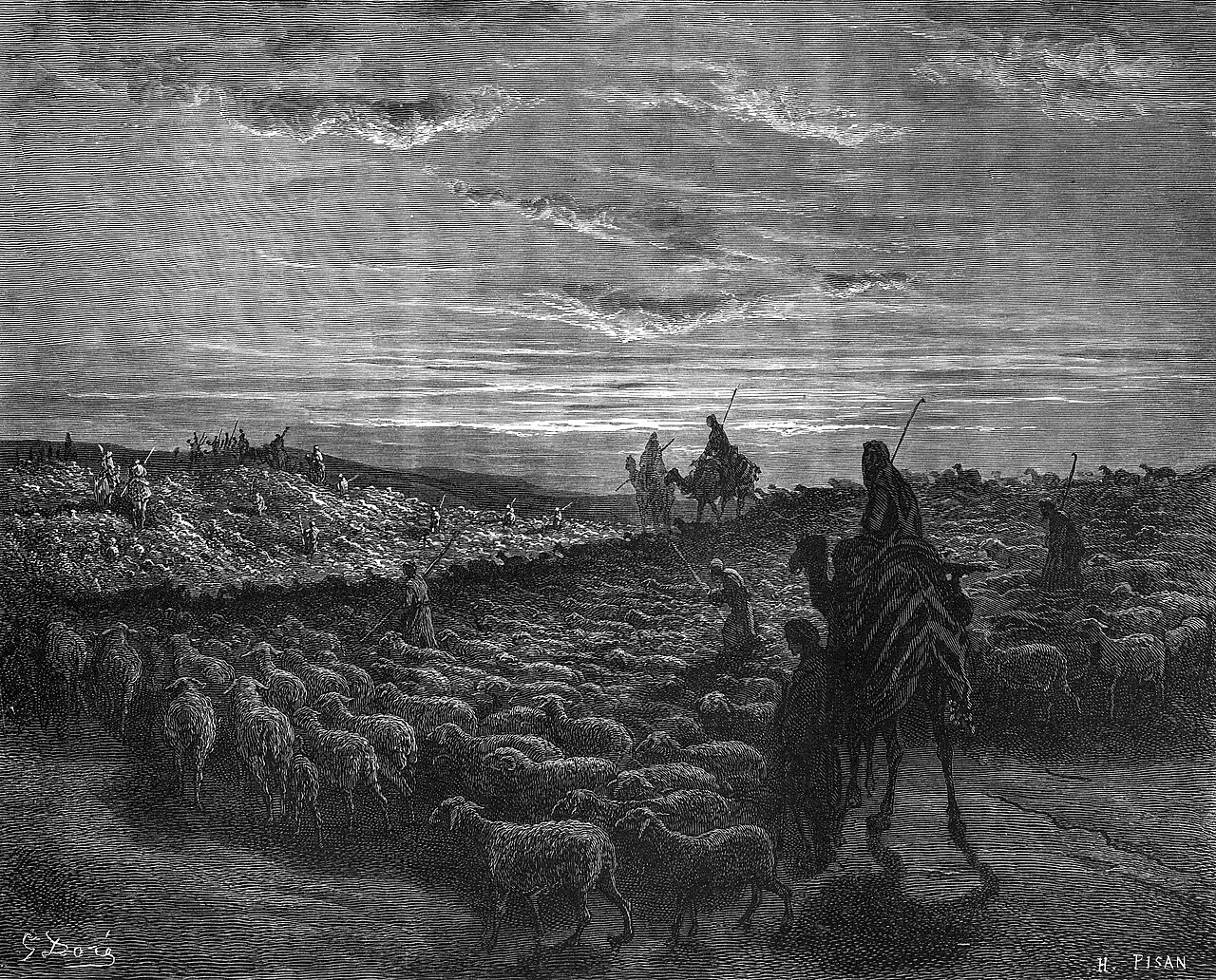
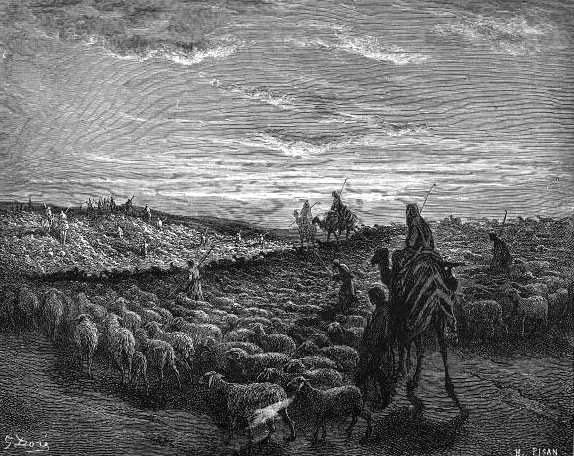
Abram now, with a large household of probably a thousand souls, entered on a migratory life, and dwelt in tents. Passing along the valley of the Jabbok, in the land of Canaan, he formed his first encampment at Sichem (Gen. 12:6), in the vale or oak-grove of Moreh, between Ebal on the north and Gerizim on the south. Here he received the great promise, “I will make of thee a great nation,” etc. (Gen. 12:2, 3, 7). This promise comprehended not only temporal but also spiritual blessings. It implied that he was the chosen ancestor of the great Deliverer whose coming had been long ago predicted (Gen. 3:15). Soon after this, for some reason not mentioned, he removed his tent to the mountain district between Bethel, then called Luz, and Ai, towns about two miles apart, where he built an altar to “Jehovah.” He again moved into the southern tract of Palestine, called by the Hebrews the Negeb; and was at length, on account of a famine, compelled to go down into Egypt. This took place in the time of the Hyksos, a Semitic race which now held the Egyptians in bondage. Here occurred that case of deception on the part of Abram which exposed him to the rebuke of Pharaoh (Gen. 12:18). Sarai was restored to him; and Pharaoh loaded him with presents, recommending him to withdraw from the country. He returned to Canaan richer than when he left it, “in cattle, in silver, and in gold” (Gen. 12:8; 13:2. Comp. Ps. 105:13, 14). The whole party then moved northward, and returned to their previous station near Bethel. Here disputes arose between Lot’s shepherds and those of Abram about water and pasturage. Abram generously gave Lot his choice of the pasture-ground. (Comp. 1 Cor. 6:7.) He chose the well-watered plain in which Sodom was situated, and removed thither; and thus the uncle and nephew were separated. Immediately after this Abram was cheered by a repetition of the promises already made to him, and then removed to the plain or “oak-grove” of Mamre, which is in Hebron. He finally settled here, pitching his tent under a famous oak or terebinth tree, called “the oak of Mamre” (Gen. 13:18). This was his third resting-place in the land.
Some fourteen years before this, while Abram was still in Chaldea, Palestine had been invaded by Chedorlaomer, King of Elam, who brought under tribute to him the five cities in the plain to which Lot had removed. This tribute was felt by the inhabitants of these cities to be a heavy burden, and after twelve years they revolted. This brought upon them the vengeance of Chedorlaomer, who had in league with him four other kings. He ravaged the whole country, plundering the towns, and carrying the inhabitants away as slaves. Among those thus treated was Lot. Hearing of the disaster that had fallen on his nephew, Abram immediately gathered from his own household a band of 318 armed men, and being joined by the Amoritish chiefs Mamre, Aner, and Eshcol, he pursued after Chedorlaomer, and overtook him near the springs of the Jordan. They attacked and routed his army, and pursued it over the range of Anti-Libanus as far as to Hobah, near Damascus, and then returned, bringing back all the spoils that had been carried away. Returning by way of Salem, i.e., Jerusalem, the king of that place, Melchizedek, came forth to meet them with refreshments. To him Abram presented a tenth of the spoils, in recognition of his character as a priest of the most high God (Gen. 14:18-20).
In a recently-discovered tablet, dated in the reign of the grandfather of Amraphel (Gen. 14:1), one of the witnesses is called “the Amorite, the son of Abiramu,” or Abram.
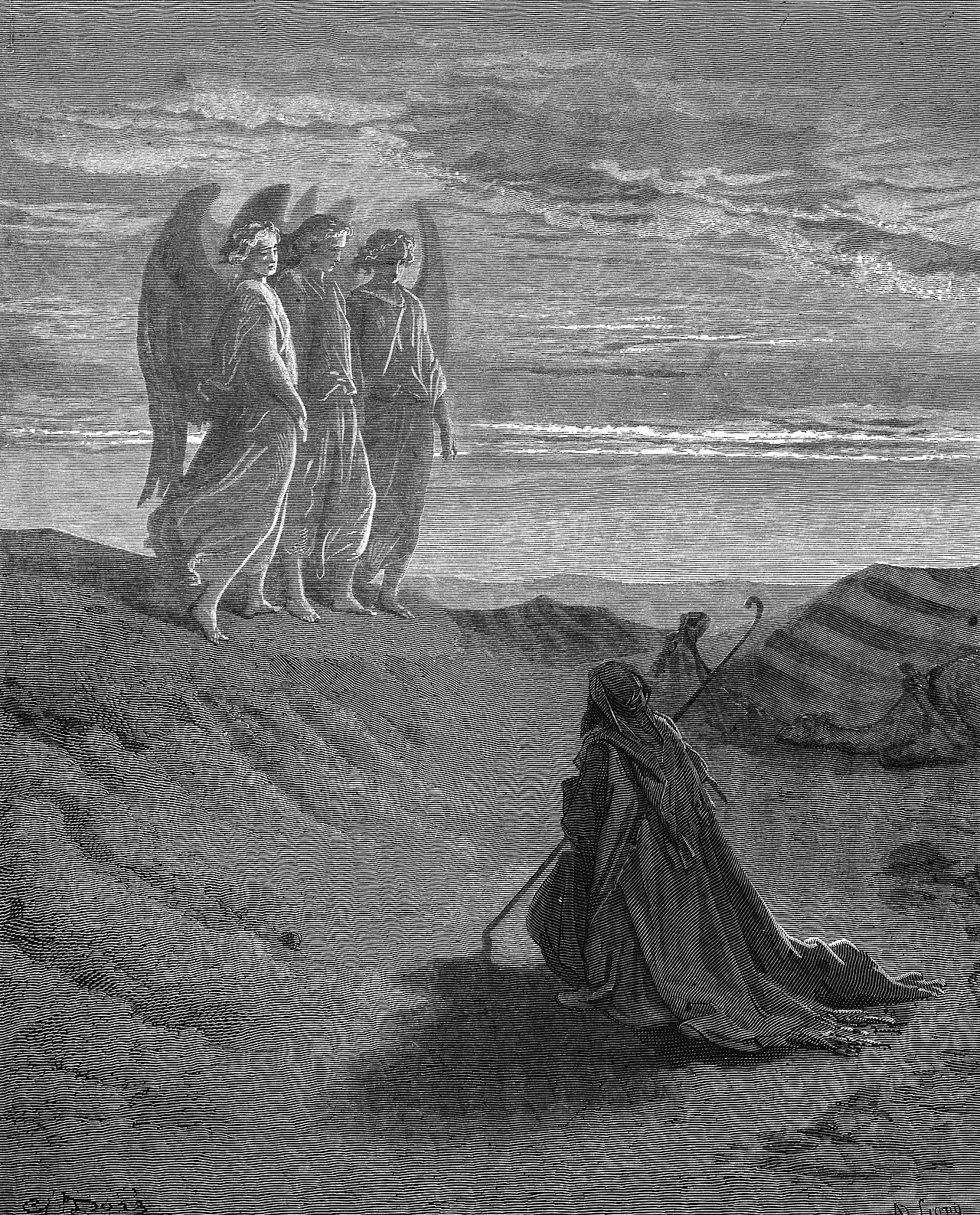
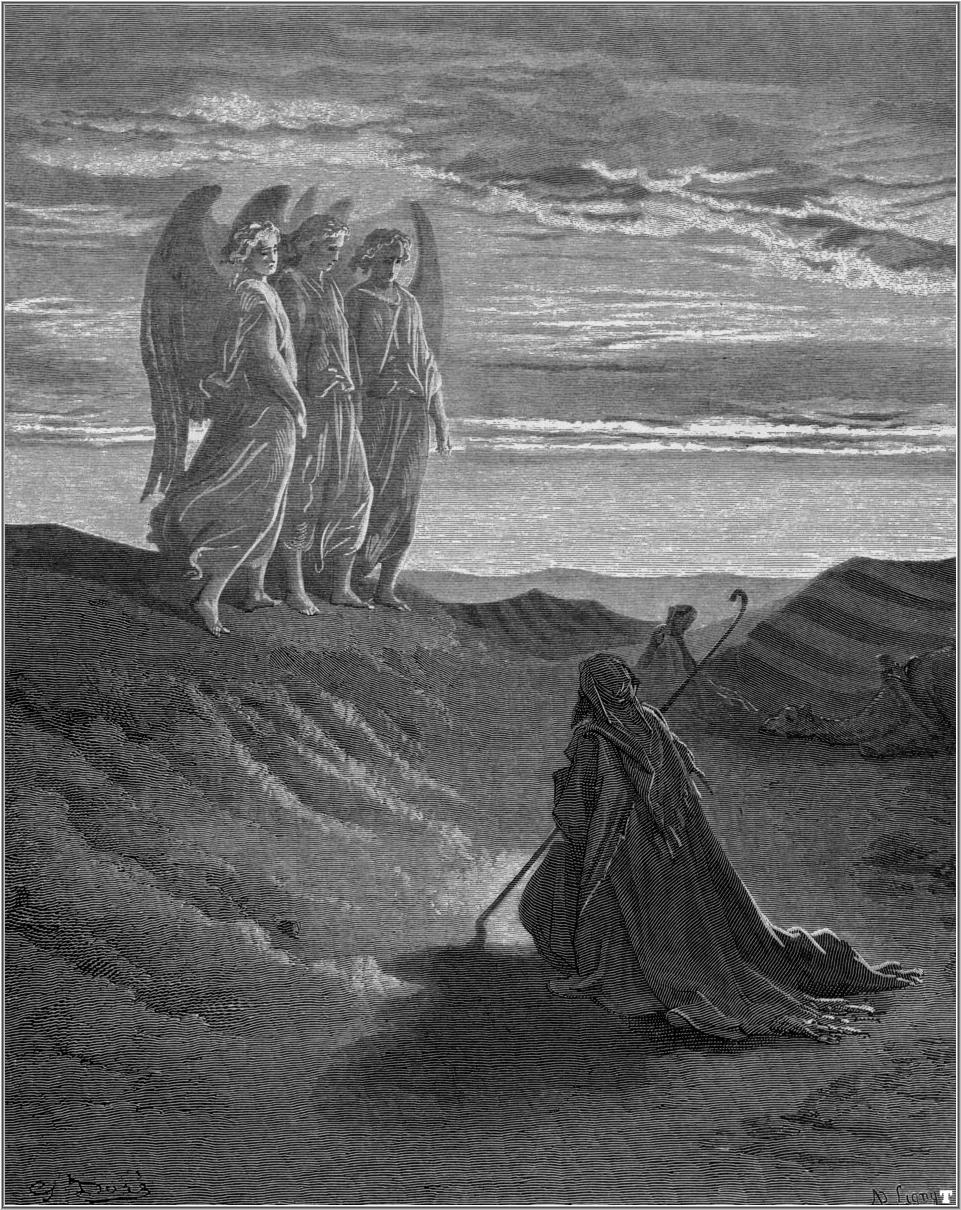
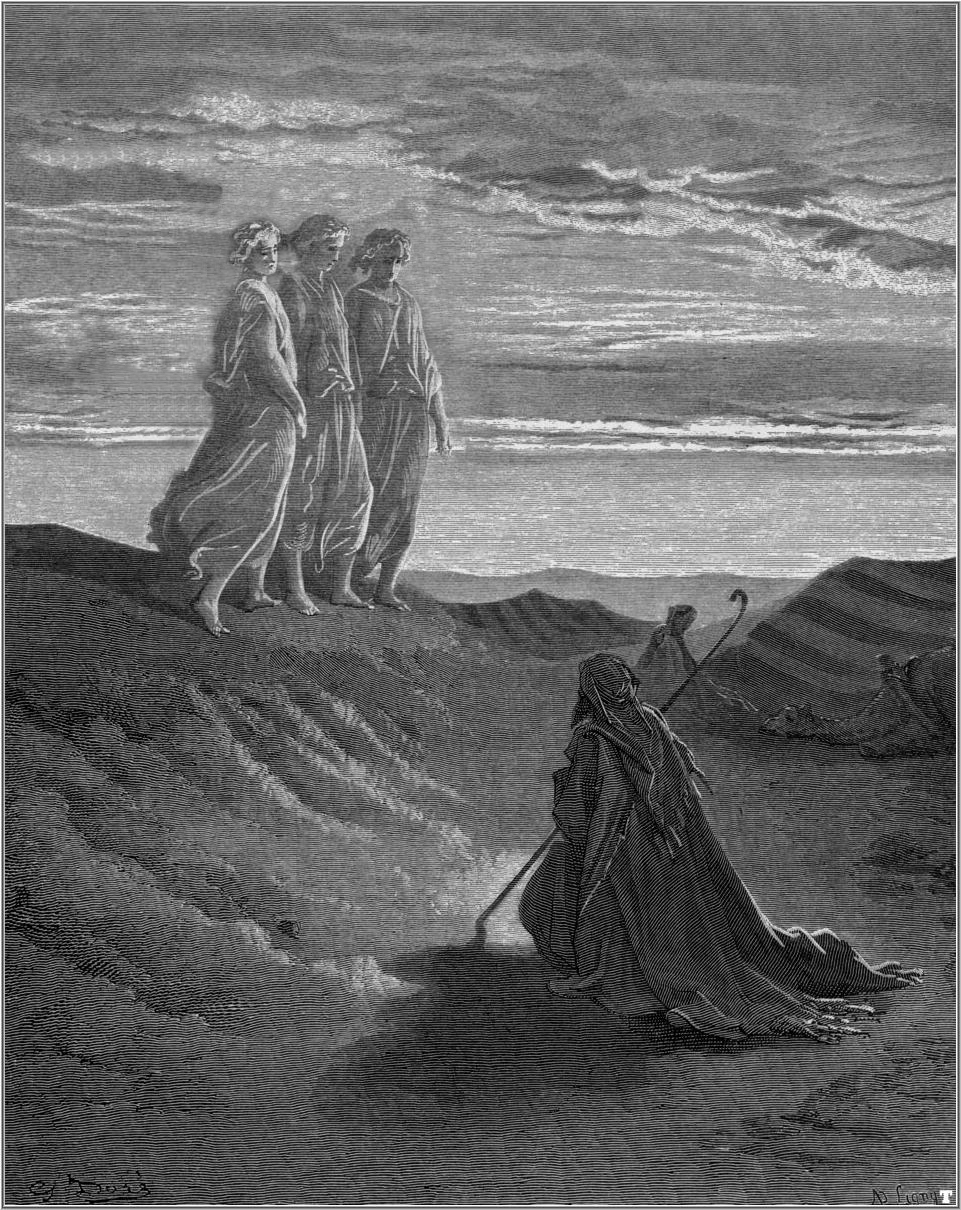
Having returned to his home at Mamre, the promises already made to him by God were repeated and enlarged (Gen. 13:14). “The word of the Lord” (an expression occurring here for the first time) “came to him” (15:1). He now understood better the future that lay before the nation that was to spring from him. Sarai, now seventy-five years old, in her impatience, persuaded Abram to take Hagar, her Egyptian maid, as a concubine, intending that whatever child might be born should be reckoned as her own. Ishmael was accordingly thus brought up, and was regarded as the heir of these promises (Gen. 16). When Ishmael was thirteen years old, God again revealed yet more explicitly and fully his gracious purpose; and in token of the sure fulfilment of that purpose the patriarch’s name was now changed from Abram to Abraham (Gen. 17:4, 5), and the rite of circumcision was instituted as a sign of the covenant. It was then announced that the heir to these covenant promises would be the son of Sarai, though she was now ninety years old; and it was directed that his name should be Isaac. At the same time, in commemoration of the promises, Sarai’s name was changed to Sarah. On that memorable day of God’s thus revealing his design, Abraham and his son Ishmael and all the males of his house were circumcised (Gen. 17). Three months after this, as Abraham sat in his tent door, he saw three men approaching. They accepted his proffered hospitality, and, seated under an oak-tree, partook of the fare which Abraham and Sarah provided. One of the three visitants was none other than the Lord, and the other two were angels in the guise of men. The Lord renewed on this occasion his promise of a son by Sarah, who was rebuked for her unbelief. Abraham accompanied the three as they proceeded on their journey. The two angels went on toward Sodom; while the Lord tarried behind and talked with Abraham, making known to him the destruction that was about to fall on that guilty city. The patriarch interceded earnestly in behalf of the doomed city. But as not even ten righteous persons were found in it, for whose sake the city would have been spared, the threatened destruction fell upon it; and early next morning Abraham saw the smoke of the fire that consumed it as the “smoke of a furnace” (Gen. 19:1-28).
After fifteen years’ residence at Mamre, Abraham moved southward, and pitched his tent among the Philistines, near to Gerar. Here occurred that sad instance of prevarication on his part in his relation to Abimelech the King (Gen. 20). Soon after this event, the patriarch left the vicinity of Gerar, and moved down the fertile valley about 25 miles to Beer-sheba. It was probably here that Isaac was born, Abraham being now an hundred years old. A feeling of jealousy now arose between Sarah and Hagar, whose son, Ishmael, was no longer to be regarded as Abraham’s heir. Sarah insisted that both Hagar and her son should be sent away. This was done, although it was a hard trial to Abraham (Gen. 21:12). (See HAGAR; ISHMAEL.)
At this point there is a blank in the patriarch’s history of perhaps twenty-five years. These years of peace and happiness were spent at Beer-sheba. The next time we see him his faith is put to a severe test by the command that suddenly came to him to go and offer up Isaac, the heir of all the promises, as a sacrifice on one of the mountains of Moriah. His faith stood the test (Heb. 11:17-19). He proceeded in a spirit of unhesitating obedience to carry out the command; and when about to slay his son, whom he had laid on the altar, his uplifted hand was arrested by the angel of Jehovah, and a ram, which was entangled in a thicket near at hand, was seized and offered in his stead. From this circumstance that place was called Jehovah-jireh, i.e., “The Lord will provide.” The promises made to Abraham were again confirmed (and this was the last recorded word of God to the patriarch); and he descended the mount with his son, and returned to his home at Beer-sheba (Gen. 22:19), where he resided for some years, and then moved northward to Hebron.
Some years after this Sarah died at Hebron, being 127 years old. Abraham acquired now the needful possession of a burying-place, the cave of Machpelah, by purchase from the owner of it, Ephron the Hittite (Gen. 23); and there he buried Sarah. His next care was to provide a wife for Isaac, and for this purpose he sent his steward, Eliezer, to Haran (or Charran, Acts 7:2), where his brother Nahor and his family resided (Gen. 11:31). The result was that Rebekah, the daughter of Nahor’s son Bethuel, became the wife of Isaac (Gen. 24). Abraham then himself took to wife Keturah, who became the mother of six sons, whose descendants were afterwards known as the “children of the east” (Judg. 6:3), and later as “Saracens.” At length all his wanderings came to an end. At the age of 175 years, 100 years after he had first entered the land of Canaan, he died, and was buried in the old family burying-place at Machpelah (Gen. 25:7-10).
The history of Abraham made a wide and deep impression on the ancient world, and references to it are interwoven in the religious traditions of almost all Eastern nations. He is called “the friend of God” (James 2:23), “faithful Abraham” (Gal. 3:9), “the father of us all” (Rom. 4:16).
Sources: BibleData (CC BY 4.0, Abram_1) · STEPBible TIPNR (CC BY 4.0, Abraham@Gen.11.26-1Pe) · Theographic Bible Metadata (CC BY-SA 4.0, abraham_58)