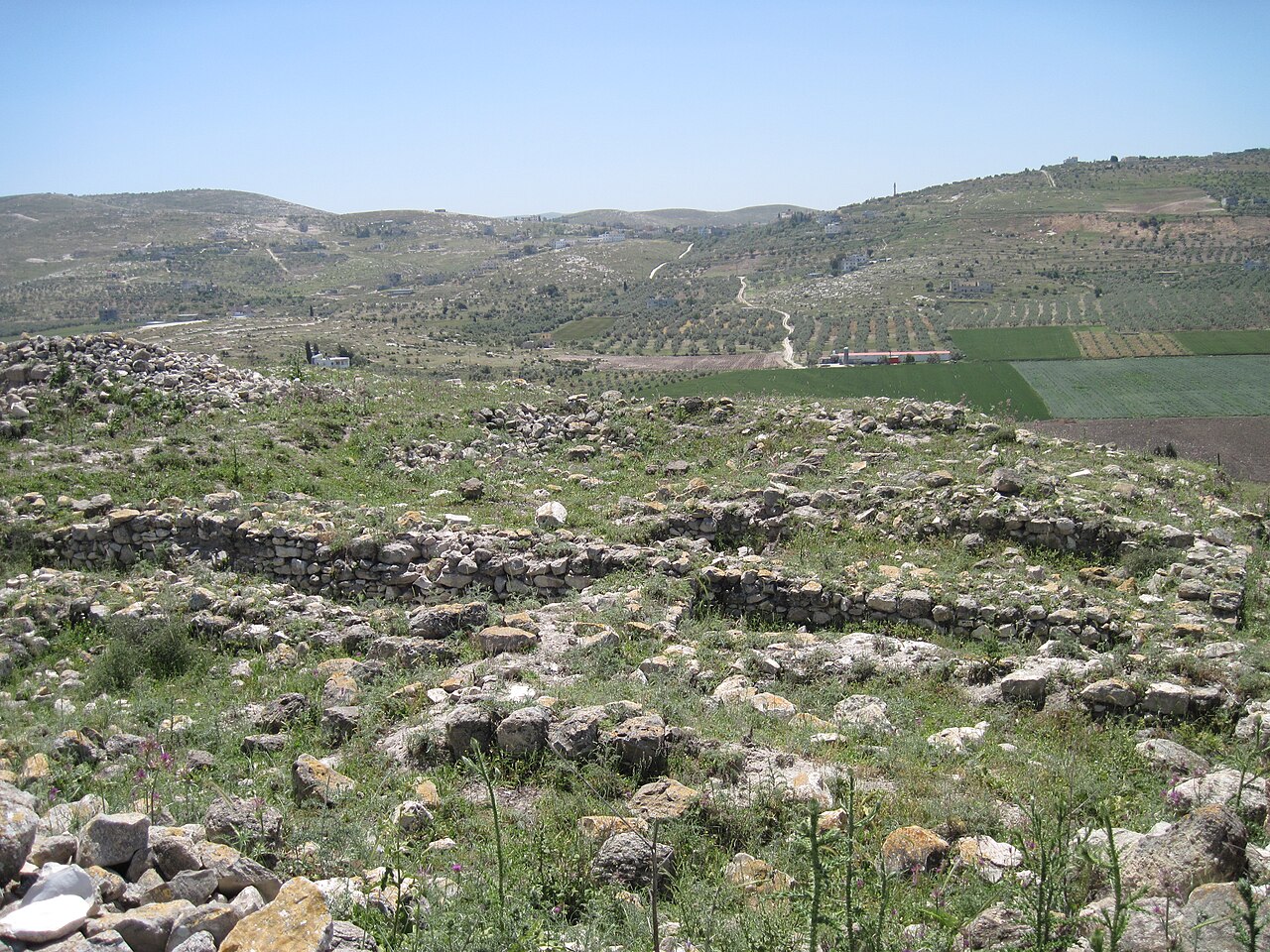
Dothan
Dothan is where Joseph finds his brethren with their father's flock. Israel sends him out of the vale of Hebron to Shechem, where the brethren were feeding the flock; a man who finds him wandering in the field tells him that he heard them say, “Let us go to Dothan”, and Joseph goes after them and finds them there. Smith accordingly places it apparently in the neighbourhood of Shechem, and Eusebius, as Smith reports, twelve miles north of Sebaste (Samaria); Easton identifies it with Tell-Dothan, about twelve miles north of Samaria, and says that the two wells are still in existence, one of them called the “pit of Joseph”. Gen 37:12-17.
At Dothan the brethren see Joseph afar off and conspire to slay him. Reuben persuades them to shed no blood but to cast him into a pit in the wilderness, meaning to deliver him to his father; the pit is empty, with no water in it. When a company of Ishmeelites comes from Gilead on its way down to Egypt, Judah proposes to sell him rather than slay him, and as Midianite merchantmen pass by, Joseph is drawn up out of the pit and sold to the Ishmeelites for twenty pieces of silver (BG1940: „двадесет сребърника“). Easton also places the sale here, at Judah's suggestion. In Ellen G. White, Patriarchs and Prophets, chapter 20, “the scene at Dothan” comes up again before Joseph as the caravan carries him toward Egypt, and in chapter 21 the brothers' later confession in Egypt recalls Reuben as the one “who had formed the plan for delivering him at Dothan”. Gen 37:17-28; Gen 42:21-22.
Dothan appears again in the time of Elisha. When the king of Syria learns that the prophet tells the king of Israel the words spoken in his bedchamber, he sends men to spy out where Elisha is, and is told, “Behold, he is in Dothan.” He sends horses, chariots and a great host, which come by night and compass the city about; Elisha's servant is shown the mountain full of horses and chariots of fire round about Elisha, and the host, smitten with blindness, is led to Samaria. KJV has the servant see “the mountain”, BG1940 „хълмът“ (the hill). Easton and Smith both name Dothan here as the residence of Elisha. 2 Kgs 6:11-19.