Moab
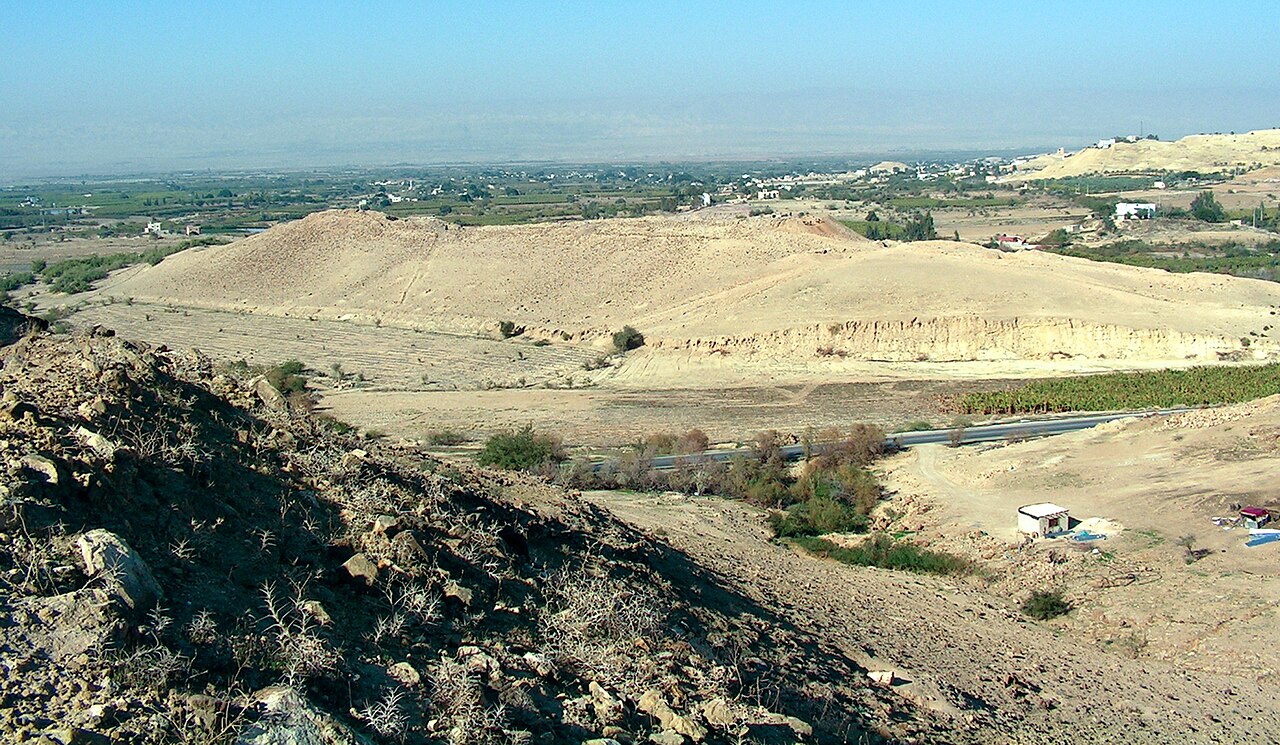
This record of the name Moab stands for the plains of Moab, the camping ground of Israel by the Jordan near Jericho; every one of its twelve verses speaks of "the plains of Moab" (BG1940: "моавските полета"), while the land and people of Moab east of the Dead Sea have their own page. Numbers brings the children of Israel there after their journeys, and its list of stations ends there, with the camp pitched by the Jordan from Beth-jesimoth to Abel-shittim. Num 22:1; Num 33:48; Num 33:49.
Nave gives the plains a heading of their own under Moab: the military forces of Israel are numbered there, the law is rehearsed by Moses, the covenant is renewed and the land of promise is allotted. In these verses the numbering is the work of Moses and Eleazar the priest, who count the children of Israel "by Jordan near Jericho" in the census, and the camp in the plains receives the captives and spoil of the war against Midian. Num 26:3; Num 26:63; Num 31:12; Deut 29:1.
Three times Numbers places the commands of the LORD in the plains of Moab by Jordan near Jericho: twice the LORD speaks to Moses there at the head of a new command, and the closing verse of the book places there all "the commandments and the judgments" given by the hand of Moses. Num 33:50; Num 35:1; Num 36:13.
The plains are the starting point of Moses' last ascent: he goes up from them to the mountain of Nebo, to the top of Pisgah. Ellen White writes that he went up "in silence and alone" and saw the Great Sea to the west and the tableland of Moab to the east. After the death of Moses the people mourn for him thirty days in the plains of Moab, and the book of Joshua later records that Moses distributed the inheritances east of the Jordan there, in the division of the land. Deut 34:1; Deut 34:8; Josh 13:32.