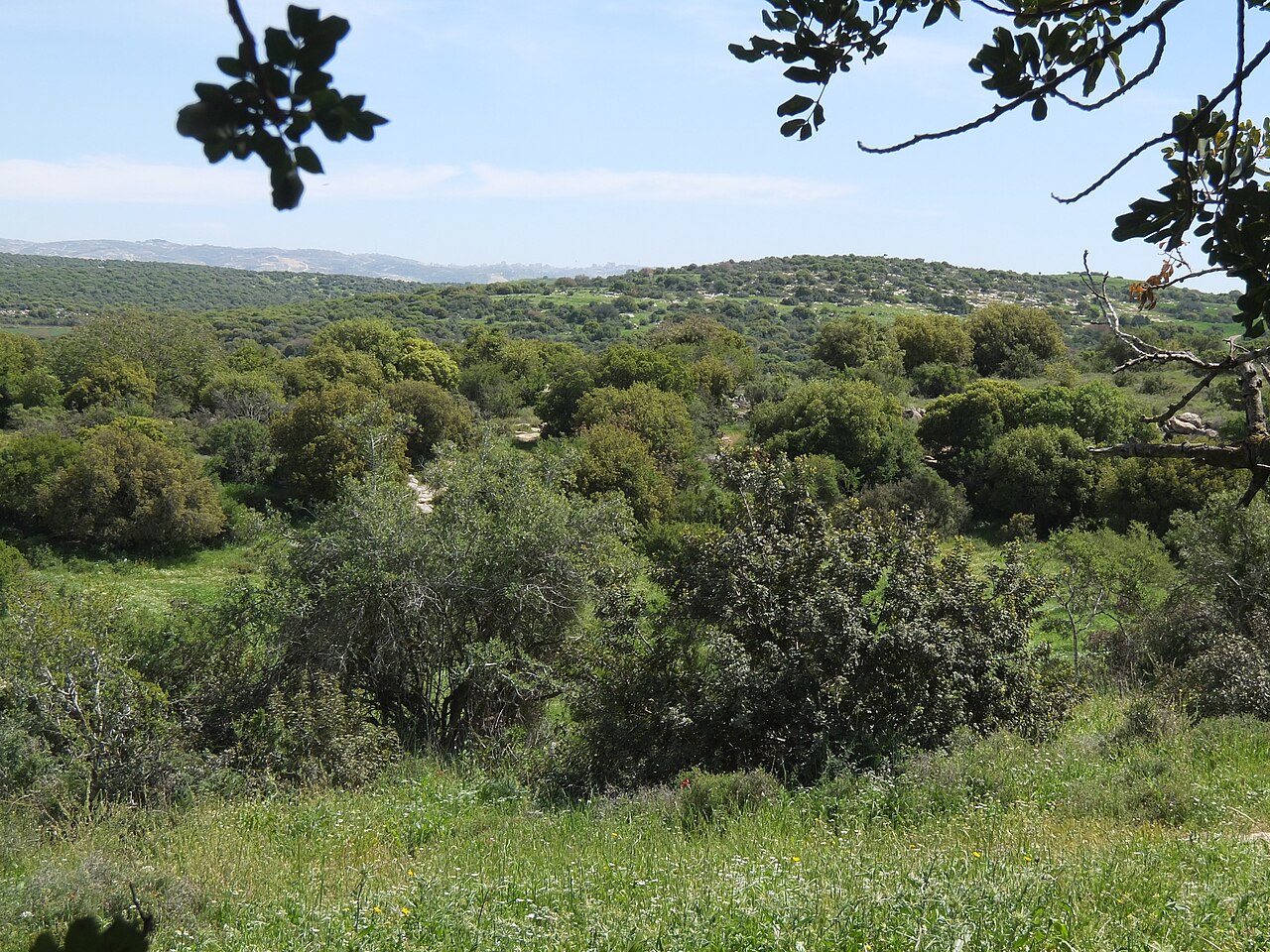
Shephelah
The Shephelah is the low country of the land, a name that KJV never keeps as a name. Smith, under the Greek form Sephela, calls has-Shefelah the native name of the southern part of the low district between the central highlands and the Mediterranean, says that it always has the article and always denotes the same region, and notes that the Authorized Version renders it “the vale”, “the valley”, “the plain”, “the low plains” and “the low country”. Easton, in his article on the word plain, gives its sense as “low ground”, “low hill-land”. BG1940 has no name for it either and uses ordinary words such as „полянска земя“, „равнината“ and „ниските места“. Josh 10:40; Josh 15:33; 2 Chr 26:10.
The region belongs to the descriptions of the land in Deuteronomy and Joshua. The command to go to the mount of the Amorites names “the vale” beside the plain, the hills, the south and the sea side. The kings “in the hills, and in the valleys” (BG1940: „в хълмистите места и в полетата“) hear of Israel's victories at the time of the treaty with the Gibeonites; Joshua smites “the country of the hills, and of the south, and of the vale, and of the springs” (BG1940: „полянска земя“); the northern kings whom Jabin calls include those “in the valley” (BG1940: „в долината“); the summary of the war counts “the valley” among the lands taken, and the list of the conquered kings repeats “in the valleys” (BG1940: „в равнините“). Deut 1:7; Josh 9:1; Josh 10:40; Josh 11:2; Josh 11:16; Josh 12:8.
In the inheritance of the tribe of Judah the cities “in the valley” (BG1940: „В равнината“) begin with Eshtaol, Zoreah and Ashnah. In Judges the children of Judah go down to fight the Canaanites who dwell “in the mountain, and in the south, and in the valley” (BG1940: „в хълмистата, и в южната и в полската страни“). Josh 15:20; Josh 15:33; Judg 1:9.
Among the rulers of the substance of king David, Baal-hanan the Gederite is set over the olive trees and the sycomore trees “in the low plains” (BG1940: „на полето“). Under Solomon the cedars become as the sycomore trees “that are in the vale”, in Chronicles once “in the low plains”; BG1940 has simply „полските черници“ in all three places. Uzziah has much cattle “both in the low country, and in the plains” (BG1940: „по ниските места и по поляната“), in the passage on how Uzziah builds towers and digs wells. In the time of king Ahaz the Philistines invade “the cities of the low country” (BG1940: „полските градове“) and take Beth-shemesh, Ajalon, Gederoth, Shocho, Timnah and Gimzo with their villages. 1 Chr 27:28; 1 Chr 27:31; 1 Kgs 10:26-27; 2 Chr 1:14-15; 2 Chr 9:27; 2 Chr 26:9-10; 2 Chr 28:16; 2 Chr 28:18.
The prophets name it with the mountains and the south. In Jeremiah offerings shall come “from the plain” (BG1940: „от полската“), and fields shall be bought “in the cities of the valley” and flocks pass again “in the cities of the vale” (BG1940 both times: „в полските градове“). Obadiah promises that “they of the plain” shall possess the Philistines (BG1940: „ония на поляните“), and Zechariah recalls the time when men inhabited “the south and the plain” (BG1940: „южната и полянската страни“). Jer 17:26; Jer 32:44; Jer 33:13; Obad 1:19; Zech 7:7.