Abarim
Abarim is the height from which the LORD tells Moses to look at the land: “Get thee up into this mount Abarim, and see the land which I have given unto the children of Israel.” The command opens the passage that ends with Joshua’s commissioning as Moses’ successor. Num 27:12.
Deuteronomy repeats the command and places the mountain more closely: Moses is to go up into “this mountain Abarim”, to mount Nebo in the land of Moab over against Jericho, and behold the land of Canaan; BG1940 turns the name into an adjective there, “тая аваримска планина”. In the account of his death Moses goes up from the plains of Moab to mount Nebo, to the top of Pisgah over against Jericho; that verse names Nebo and Pisgah but not Abarim. Deut 32:49; Deut 34:1.
In the list of stations the mountains of Abarim are the last camp before the plains: Israel removes from Almon-diblathaim and pitches in the mountains of Abarim before Nebo, then departs and pitches in the plains of Moab by Jordan near Jericho. Where KJV has the plural “the mountains of Abarim” in both verses, BG1940 has the singular “планината Аварим”. Num 33:47-48.
In Jeremiah, BG1940 reads the name: “С висок глас извикай от Аварим към Васан”, beside Lebanon and Bashan. KJV has no proper name at that point but “cry from the passages”. The record cites this verse; Hitchcock’s rendering of Abarim, “passages; passengers”, matches the KJV word. Jer 22:20.
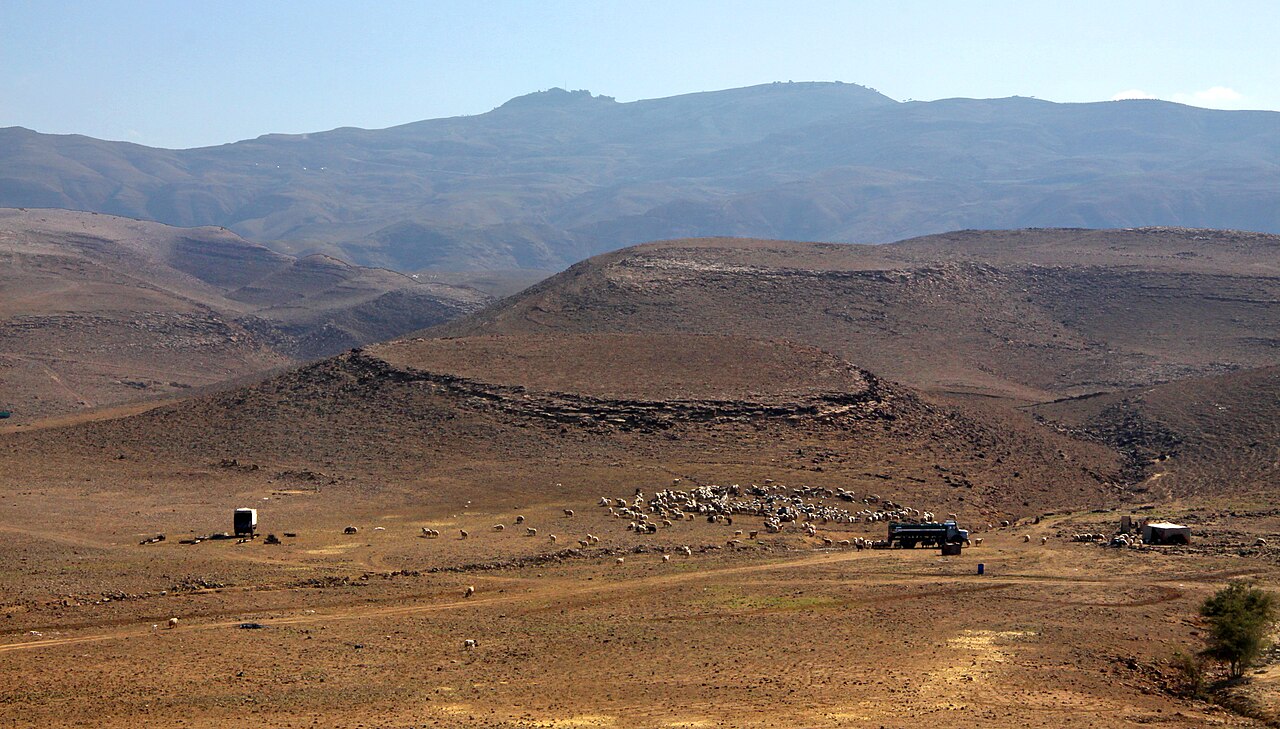
Easton describes a mountain-chain on the east of Jordan, over against Jericho, to the east and south-east of the Dead Sea, in the land of Moab; from the top of Pisgah, that is Mount Nebo, one of its summits, Moses surveyed the Promised Land and there he died, and the Israelites had one of their encampments in these mountains after crossing the Arnon. Smith calls Abarim the range that forms the eastern wall of the Jordan valley at that part, its most elevated spot being “the Mount Nebo, ’head’ of ’the’ Pisgah”. Nave refers the reader to his entry Nebo. Num 33:47; Deut 32:49.