Zoar
Zoar is first named as the point toward which Lot sees the plain of Jordan well watered, before the LORD destroyed Sodom and Gomorrah; in KJV the words “as thou comest unto Zoar” follow the comparison with the land of Egypt, while BG1940 joins them to the watering (“доде се стигне в Сигор”, as far as one comes to Zoar). Smith counts this verse among the notices of Zoar and places the city in close connection with the cities of the plain of Jordan, Sodom, Gomorrah, Admah and Zeboiim. Gen 13:10.
In the war of the four kings against the five, the fifth city is Bela, “which is Zoar” (BG1940: Вала, която е Сигор). Its ruler is the king of Bela, the one king of the five left unnamed, who goes out with the kings of Sodom, Gomorrah, Admah and Zeboiim and joins battle in the vale of Siddim. Easton and Smith say that Zoar was originally called Bela. Gen 14:2; Gen 14:8.
On the morning of the overthrow Lot, told to escape to the mountain, asks to flee instead to a city that is near and “a little one”, and is answered that this city will not be overthrown and that nothing can be done till he comes there; “therefore the name of the city was called Zoar”, to which BG1940 adds the note “Т.е., Малък” (that is, Small). The sun was risen upon the earth when Lot entered into Zoar (BG1940: “Слънцето изгряваше”, the sun was rising). Ellen G. White, Patriarchs and Prophets, chapter 14, says that the city was Bela, afterward called Zoar, but a few miles from Sodom and, like it, corrupt and doomed to destruction, and that Lot asked it might be spared, urging that this was but a small request. Gen 19:17; Gen 19:20-23.
Lot does not stay. He goes up out of Zoar and dwells in the mountain with his two daughters, for he fears to dwell in Zoar, and lives in a cave; there the episode of his daughters follows. The same chapter of Patriarchs and Prophets says that Lot dwelt but a short time in Zoar, that iniquity prevailed there as in Sodom, and that not long after Zoar was consumed, as God had purposed. Gen 19:30.
Zoar is the last landmark named when the LORD shows Moses, from the top of Pisgah, the land, the south and the plain of the valley of Jericho, the city of palm trees, unto Zoar (BG1940: “околността на долината Ерихон, град на палми, до Сигор”); Smith notes that it is mentioned in the account of the death of Moses as one of the landmarks bounding his view. Deut 34:1; Deut 34:3.
In the prophets' oracles against Moab, Isaiah has Moab's fugitives flee unto Zoar (BG1940: “Благородните му”, his nobles), with weeping up the ascent of Luhith and a cry of destruction in the way of Horonaim, and Jeremiah has the cry go from Heshbon to Elealeh and Jahaz and from Zoar to Horonaim, for the waters of Nimrim shall be desolate. Where KJV twice translates the words as “an heifer of three years old”, BG1940 reads the place name Eglath-shelishiyah (Еглат-шелишия). Isa 15:5; Jer 48:34.
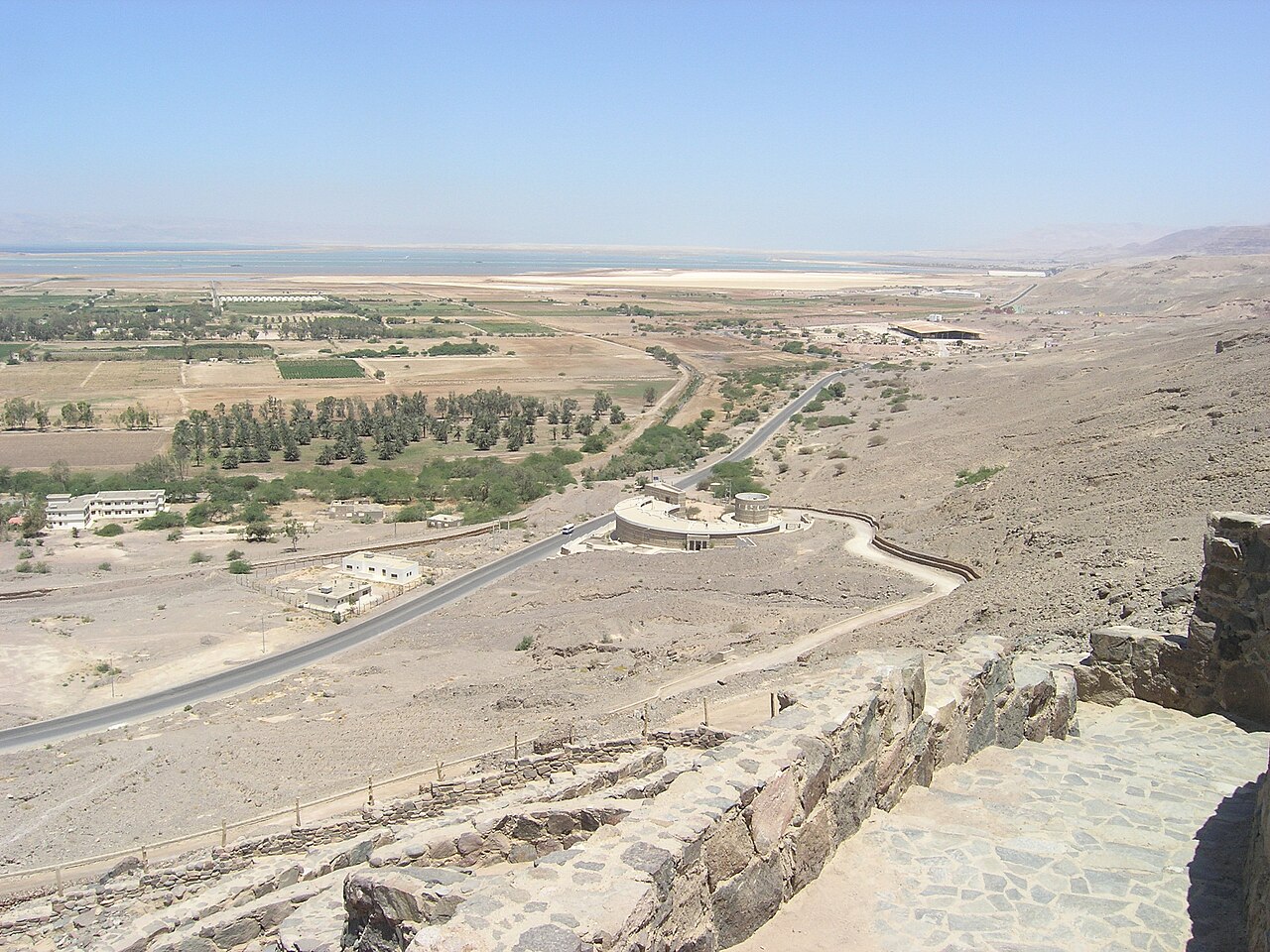
Where Zoar lay is disputed in the dictionaries. Easton places it on the east or south-east of the Dead Sea, with its ruins at the opening of the ravine of Kerak; Smith argues that the plain of Jordan, and so Zoar with the other cities, lay at the north end of the Dead Sea rather than at its southern end, where they are generally placed; a bracketed editorial note, cut off in the archived text, begins “But the great majority of scholars from Josephus and Eusebius to the present”. Easton introduces the city as the place to which Lot and his daughters fled from Sodom, and Smith reasons from its connection with the cities of the plain of Jordan. Gen 13:10; Gen 19:22-23.
The record also cites the verse in which Jehoram, called Joram there, goes over to Zair with all his chariots and smites by night the Edomites who compass him about, during the revolt of Edom; the verse names Zair (BG1940: Саир), not Zoar. Smith, under Zair, says only that it has been conjectured to be identical with Zoar, and his Zoar entry does not count this verse among the notices of Zoar. 2 Kgs 8:21.