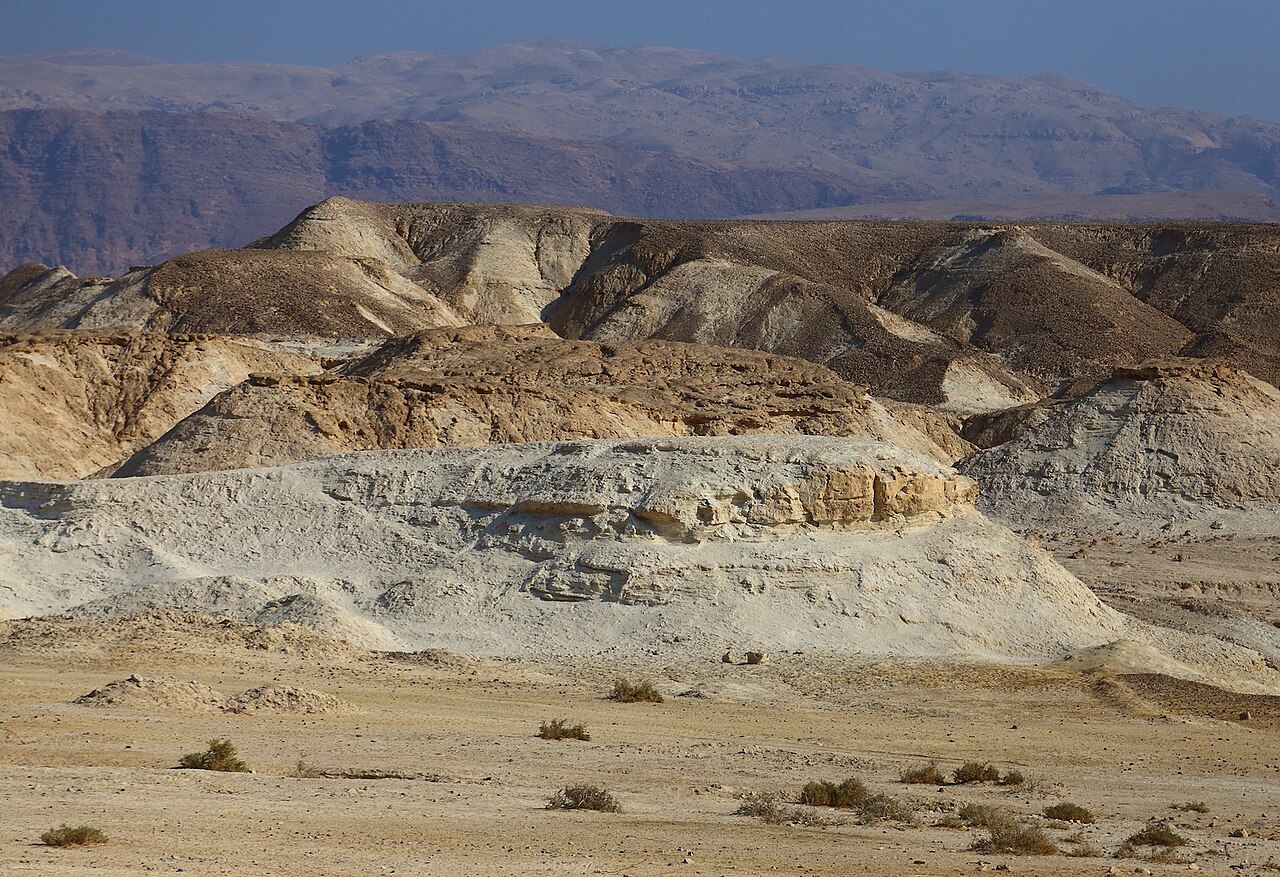
Gomorrah
Gomorrah is one of the cities on the border of the Canaanites, listed after Sodom on the way to Admah, Zeboim and Lasha. Easton observes that it is always mentioned next after Sodom, the two serving together as types of impiety and wickedness, and places the cities of the plain close together near the northern end of the Dead Sea; Smith counts four of the five as destroyed and Zoar as the one spared. When Lot parts from Abram, the plain of Jordan is well watered everywhere, as the garden of the LORD and as the land of Egypt toward Zoar, “before the LORD destroyed Sodom and Gomorrah”. The New Testament of the KJV spells the name Gomorrha. Gen 10:19; Gen 13:10-11.
Gomorrah’s king in the war of the four kings is Birsha. After twelve years of service to Chedorlaomer king of Elam and a rebellion in the thirteenth, he goes out with the kings of Sodom, Admah, Zeboiim and Bela to join battle in the vale of Siddim against Chedorlaomer, Tidal, Amraphel and Arioch. The vale is full of slimepits; the kings of Sodom and Gomorrah flee and fall there, the rest flee to the mountain, and the victors take all the goods of Sodom and Gomorrah and all their victuals and go their way, until Abram pursues them and brings back all the goods. “The Babel Coalition”, 4 May 2022, explains the campaign by the rebellion of the Canaanite peoples against their Babylonian suzerains. Gen 14:2; Gen 14:4; Gen 14:8-11; Gen 14:16.
The LORD tells Abraham that the cry of Sodom and Gomorrah is great and their sin very grievous, and that he will go down and see whether they have done altogether according to it. Ellen G. White, Patriarchs and Prophets, chapter 12, says that God knew well the measure of Sodom’s guilt but expressed himself after the manner of men, so that the justice of his dealings might be understood, and that he would still have granted space for repentance had the limits of mercy not been passed. Then the LORD rains brimstone and fire upon Sodom and upon Gomorrah out of heaven and overthrows those cities, all the plain, all their inhabitants and that which grows on the ground; Abraham, looking toward Sodom and Gomorrah and all the land of the plain, sees the smoke of the country go up as the smoke of a furnace. Gen 18:20-21; Gen 19:24-25; Gen 19:28.
Moses makes the overthrow of Sodom, Gomorrah, Admah and Zeboim the picture of the land under the curses of the covenant, brimstone and salt and burning, and in the song he teaches Israel the enemies’ vine is “of the vine of Sodom, and of the fields of Gomorrah”, with grapes of gall and bitter clusters. Isaiah says that without a very small remnant left by the LORD of hosts “we should have been as Sodom, and we should have been like unto Gomorrah”, and calls on the rulers of Sodom and the people of Gomorrah to hear the word of the LORD; Ellen G. White, The Desire of Ages, chapter 65, reads this as Isaiah addressing the apostasy of the Jews, whose sacrifices without obedience the LORD rejects. Isaiah also foretells that Babylon, the glory of kingdoms, the beauty of the Chaldees’ excellency, will be as when God overthrew Sodom and Gomorrah; Prophets and Kings, chapter 43, sees the word fulfilled in Babylon’s becoming a place forever accursed. Deut 29:23; Deut 32:32; Isa 1:9-10; Isa 13:19.
Jeremiah says that the prophets of Jerusalem, who commit adultery, walk in lies and strengthen evildoers, are all to the LORD as Sodom and their inhabitants as Gomorrah; of Edom and of Babylon he says that, as in the overthrow of Sodom and Gomorrah and their neighbour cities, no man shall abide there nor any son of man dwell in it. Amos tells Israel that the LORD has overthrown some of them as God overthrew Sodom and Gomorrah, and that they were as a firebrand plucked out of the burning, yet have not returned to him. Zephaniah swears by the LORD of hosts that Moab shall be as Sodom and the children of Ammon as Gomorrah, nettles, saltpits and perpetual desolation. Jer 23:14; Jer 49:17-18; Jer 50:1; Jer 50:40; Amos 4:11; Zeph 2:9.
Jesus tells the twelve that it shall be more tolerable for the land of Sodom and Gomorrha in the day of judgment than for the city that will not receive them; KJV has the same saying in Mark, where BG1940 ends the verse with the testimony against them and does not name the cities. The Desire of Ages, chapter 37, says the words were given to impress the people with the solemnity of the disciples’ message, on which the destiny of men depended. The Epistle to the Romans quotes Isaiah: “we had been as Sodoma, and been made like unto Gomorrha”. Peter writes that God turned the cities of Sodom and Gomorrha into ashes and condemned them with an overthrow, making them an ensample to those who should afterward live ungodly; Jude says that Sodom and Gomorrha and the cities about them, giving themselves over to fornication and going after strange flesh (BG1940: falling into unnatural vices), are set forth for an example, suffering the vengeance of eternal fire. Patriarchs and Prophets, chapter 14, adds that the Redeemer declares there are greater sins than that for which Sodom and Gomorrah were destroyed: those who hear the gospel invitation and heed it not are more guilty than the dwellers in the vale of Siddim. Matt 10:15; Mark 6:11; Rom 9:29; 2 Pet 2:6; Jude 1:7.