Sodom
Sodom is the first named of the cities at the far end of the border of the Canaanites, which runs from Sidon toward Gerar as far as Gaza and then toward Sodom, Gomorrah, Admah and Zeboim as far as Lasha. Smith calls it evidently the chief town of that settlement, and Easton places it in the vale of Siddim. When Lot parts from Abram, he beholds the plain of Jordan, well watered everywhere as the garden of the LORD and as the land of Egypt toward Zoar, “before the LORD destroyed Sodom and Gomorrah”; Abram dwells in Canaan, Lot in the cities of the plain, and pitches his tent toward Sodom, whose men are wicked and sinners before the LORD exceedingly. Ellen G. White, Patriarchs and Prophets, chapter 12, describes the cities of the valley as wealthy and beautiful, inviting to profitable traffic, and says that Lot, dazzled with visions of worldly gain, overlooked the moral and spiritual evils he would meet there. “Abram and Lot”, 3 May 2022, reads his choice of the best part for himself, without concern about the wickedness of his future neighbours, as a mark of his character. Gen 10:19; Gen 13:10-13.
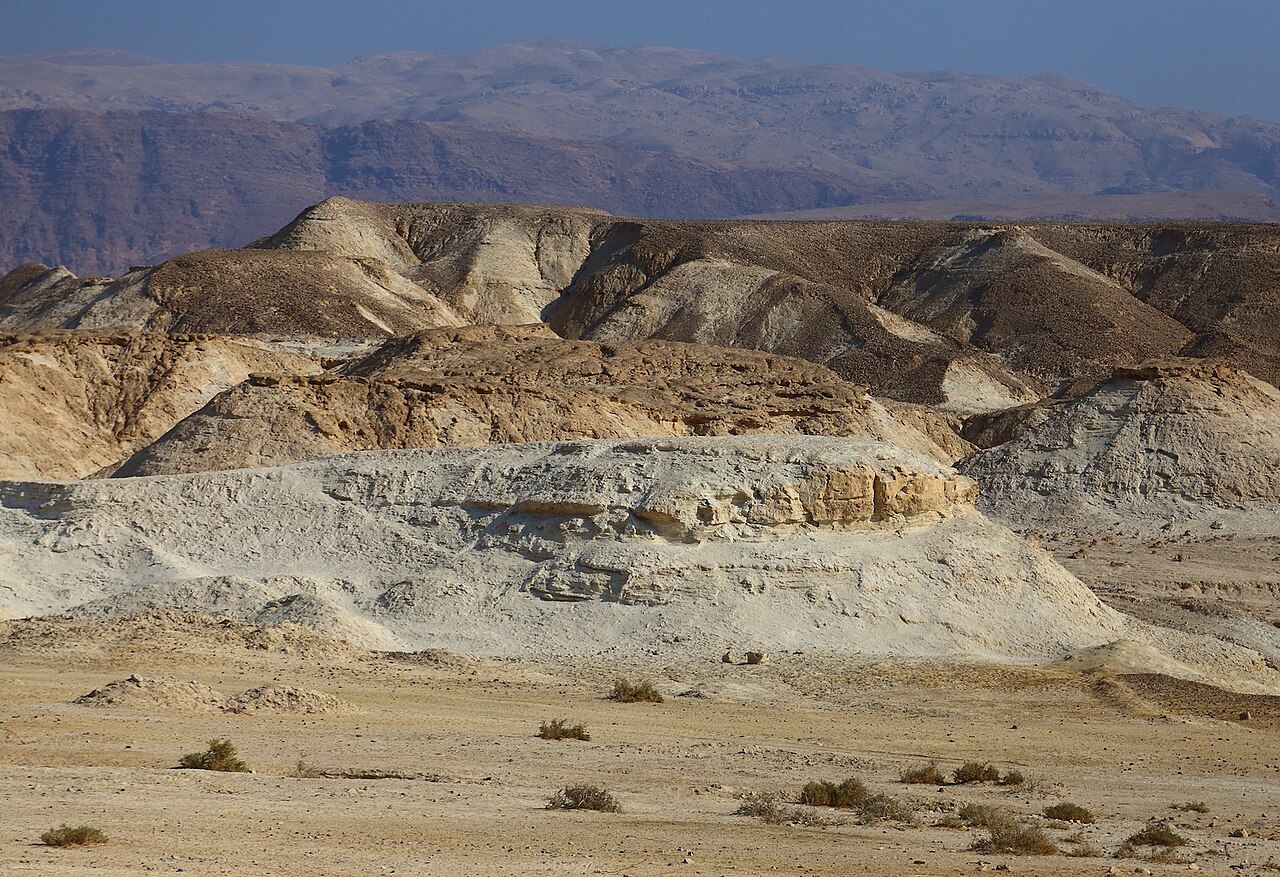
Sodom’s king Bera is the first of the five kings against whom Amraphel king of Shinar, Arioch king of Ellasar, Chedorlaomer king of Elam and Tidal king of nations make war; the five gather in the vale of Siddim, which is the salt sea, after serving Chedorlaomer twelve years and rebelling in the thirteenth. In the battle in the vale, full of slimepits, the kings of Sodom and Gomorrah flee and fall there while the rest flee to the mountain; the victors take all the goods of Sodom and Gomorrah and their victuals, and Lot, Abram’s brother’s son, who dwelt in Sodom, with his goods. Abram pursues them by night and brings back the goods, Lot and the people. “The Babel Coalition”, 4 May 2022, notes that Abram’s camp stays outside the conflict at first and that he intervenes only for the sake of his nephew. Gen 14:2-4; Gen 14:8; Gen 14:10-12; Gen 14:16.
On Abram’s return from the slaughter of Chedorlaomer and the kings with him, the king of Sodom goes out to meet him at the valley of Shaveh, the king’s dale; there Melchizedek king of Salem brings bread and wine and blesses him. The king of Sodom asks for the persons and offers Abram the goods, but Abram answers that he has lifted up his hand to the LORD, the most high God, possessor of heaven and earth, and will take nothing that is his, from a thread to a shoelatchet, lest the king say that he made Abram rich; only the young men’s food and the portion of Aner, Eshcol and Mamre are excepted. “The Tithe of Melchizedek”, 5 May 2022, reads the names Bera and Birsha as “in evil” and “in wickedness”, probably surnames for what the kings represent, and sets Melchizedek against them. Patriarchs and Prophets, chapter 14, says that Abraham was no stranger to the people of Sodom, that his worship of the unseen God had been ridiculed among them, and that his victory and his disposition of the prisoners and spoil called their attention to the true faith. Gen 14:17-19; Gen 14:21-24.
When the three men who visit Abraham rise and look toward Sodom, he goes with them to bring them on the way, and the LORD says that the cry of Sodom and Gomorrah is great and their sin very grievous. The men turn toward Sodom, but Abraham stands before the LORD and asks whether the city will be spared for fifty righteous within it; the LORD answers that he will spare all the place for their sakes, and Abraham brings the number down to ten. Patriarchs and Prophets, chapter 12, says that love for perishing souls inspired this prayer, and that Abraham loathed the sins of the city while desiring that the sinners might be saved. “Lot in Sodom”, 12 May 2022, notes that “stood before the LORD” is an idiom for praying, and “Further Thought”, 13 May 2022, sees in God’s willingness to forgive the city for ten righteous the idea that a remnant of the righteous can preserve the whole. Gen 18:16; Gen 18:20-22; Gen 18:26; Gen 18:32.
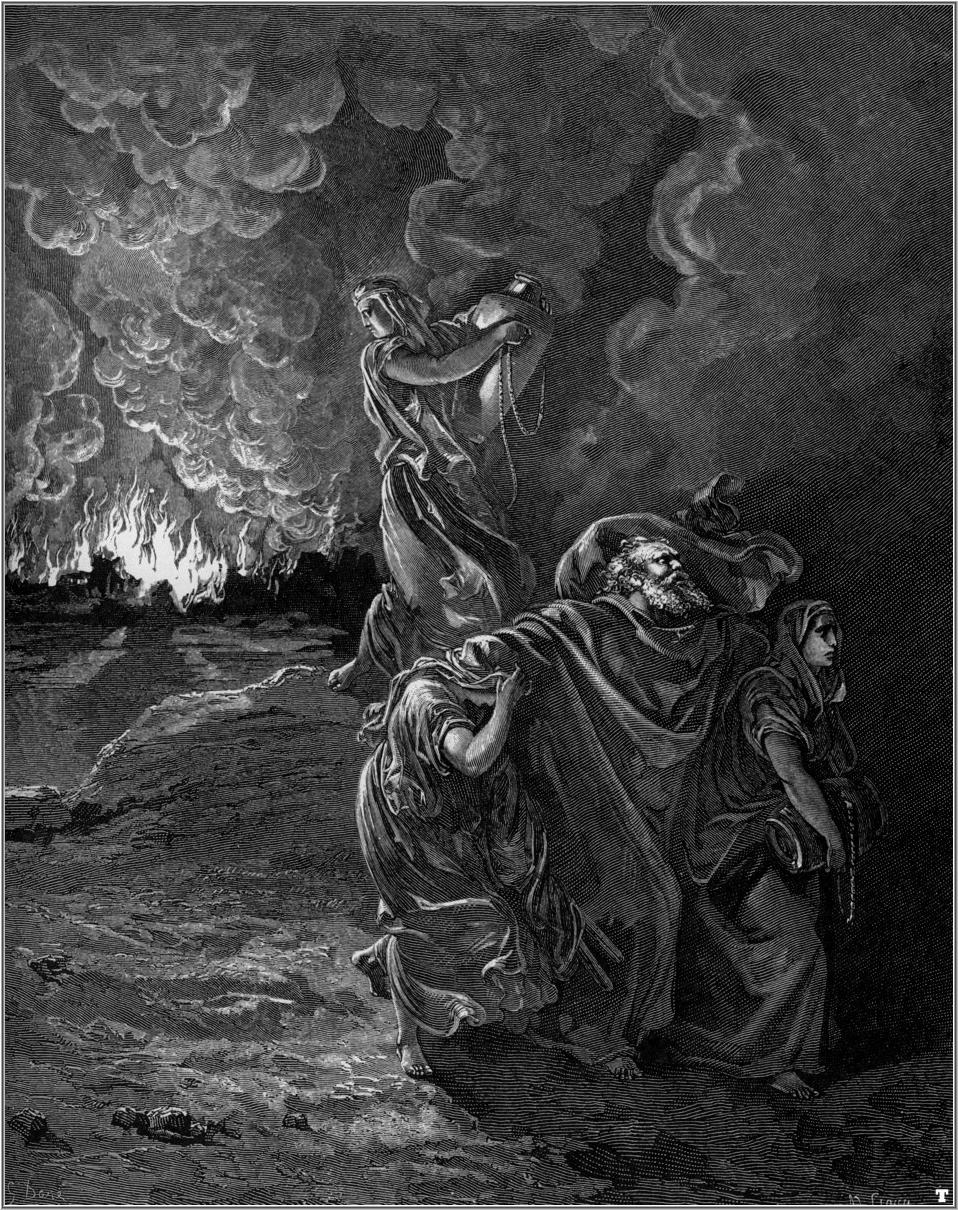
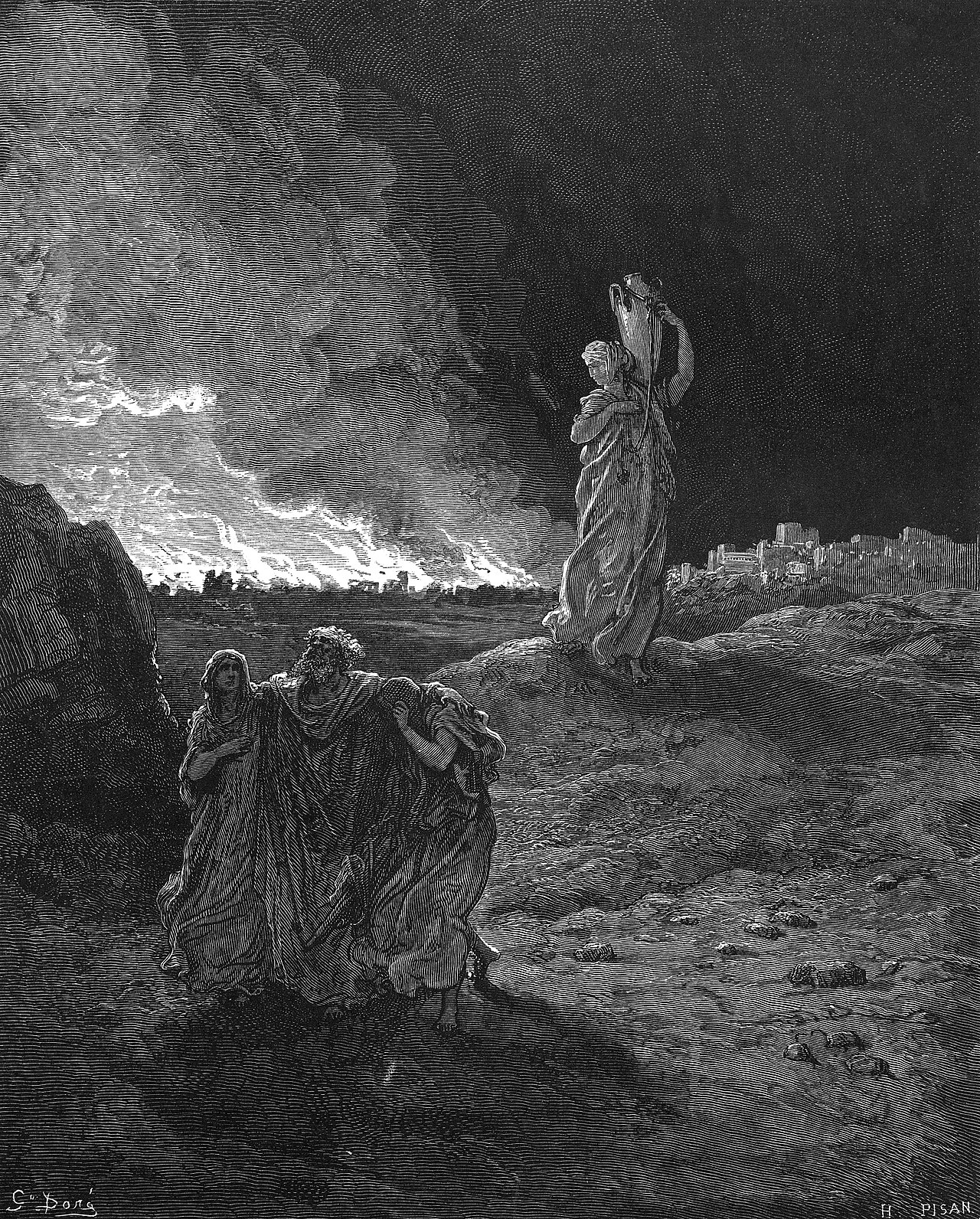
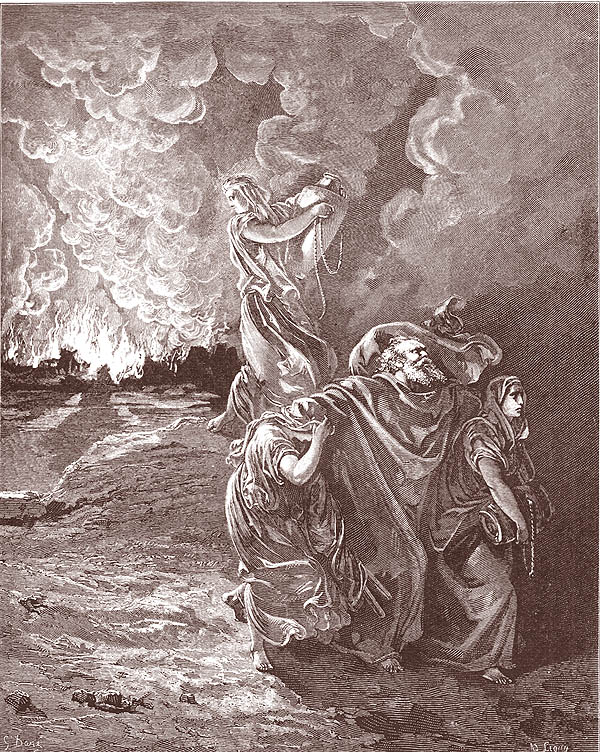
Two angels come to Sodom at even and find Lot sitting in the gate; he rises to meet them and bows to the ground. Before they lie down, the men of the city, the men of Sodom, old and young, all the people from every quarter, compass the house. Patriarchs and Prophets, chapter 14, says that Lot, seeing the abuse to which strangers were exposed in Sodom, made it his duty to guard them at their entrance by offering them lodging in his own house, and that when the angels bade him leave he delayed, until the heavenly messengers took him, his wife and his daughters by the hand and led them out. Then the LORD rains brimstone and fire upon Sodom and upon Gomorrah out of heaven and overthrows those cities, all the plain, all the inhabitants and what grows on the ground; Abraham, looking toward Sodom and Gomorrah in the morning, sees the smoke of the country go up as the smoke of a furnace, and God, remembering Abraham, has sent Lot out of the midst of the overthrow. “Lot in Sodom” observes that the Hebrew verb for “overthrew” recurs through the passage, so that the destruction is a reversal of the garden-like country of Genesis 13 and a precursor of the end-time judgment. Prophets and Kings, chapter 18, adds that from the destruction of the cities of the plain the region round about became a desolate waste. Gen 19:1; Gen 19:4; Gen 19:15-16; Gen 19:24-25; Gen 19:28-29.
Moses sets the overthrow of Sodom, Gomorrah, Admah and Zeboim as the picture of the land of Israel under the curses of the covenant, and in the song he teaches Israel the enemies’ vine is “of the vine of Sodom”, with grapes of gall. Isaiah says that without a very small remnant his people would have been as Sodom, addresses their rulers as rulers of Sodom, and charges Jerusalem and Judah with declaring their sin as Sodom and hiding it not; he foretells that Babylon, the glory of kingdoms, will be as when God overthrew Sodom and Gomorrah. Deut 29:23; Deut 32:32; Isa 1:9-10; Isa 3:8-9; Isa 13:19.
Jeremiah says that the prophets of Jerusalem are all to the LORD as Sodom, and foretells of Edom and of Babylon that, as in the overthrow of Sodom and Gomorrah and the neighbour cities, no man shall abide there. Lamentations counts the punishment of the daughter of his people greater than that of the sin of Sodom, “that was overthrown as in a moment, and no hands stayed on her” (BG1940: without human hands touching it). Amos says that the LORD overthrew some of Israel as God overthrew Sodom and Gomorrah, and Zephaniah that Moab shall be as Sodom and the children of Ammon as Gomorrah. Jer 23:14; Jer 49:17-18; Jer 50:1; Jer 50:40; Lam 4:6; Amos 4:11; Zeph 2:9.
Ezekiel makes Sodom the younger sister of Jerusalem, dwelling with her daughters at her right hand, while Samaria is the elder sister at her left. Sodom and her daughters have not done as Jerusalem has done; her iniquity was pride, fulness of bread and abundance of idleness, and she did not strengthen the hand of the poor and needy. In the day of Jerusalem’s pride Sodom was not mentioned by her mouth, yet the LORD will bring again the captivity of Sodom and her daughters together with Samaria’s and Jerusalem’s, the sisters will return to their former estate, and Jerusalem will receive her sisters, elder and younger, as daughters, but not by her covenant. Patriarchs and Prophets, chapter 14, quotes this description of Sodom’s iniquity and finds in riches and idleness the root of the sins that brought destruction on the cities of the plain. Ezek 16:46; Ezek 16:48-49; Ezek 16:53; Ezek 16:55-56; Ezek 16:61.
Jesus tells the twelve that it will be more tolerable for the land of Sodom and Gomorrha in the day of judgment than for the city that does not receive them; KJV gives the same saying in Mark, where BG1940 does not name the cities. In the woe on Chorazin and Bethsaida he says to Capernaum that if the mighty works done in it had been done in Sodom, it would have remained until this day, and that it will be more tolerable for the land of Sodom in the day of judgment than for Capernaum; to the seventy he repeats that it will be more tolerable in that day for Sodom than for the city that rejects them. In his discourse on the kingdom the day when Lot went out of Sodom and it rained fire and brimstone from heaven is the figure of the day of the Son of man. Patriarchs and Prophets, chapter 14, says that in the light of the Saviour’s warning the fate of Sodom is a solemn admonition to all who trifle with Heaven-sent light. Matt 10:15; Matt 11:23-24; Mark 6:11; Luke 10:12; Luke 17:28-29.
The Epistle to the Romans quotes Isaiah with the Greek form Sodoma (BG1940: Содом). Peter writes that God turned the cities of Sodom and Gomorrha into ashes as an ensample to the ungodly and delivered just Lot, vexed with the filthy conversation (BG1940: the dissolute life) of the wicked; Jude says that Sodom and Gomorrha and the cities about them are set forth for an example, suffering the vengeance of eternal fire. In Revelation the great city where the two witnesses lie dead is “spiritually called Sodom and Egypt, where also our Lord was crucified”; “The Two Witnesses Are Killed”, 7 May 2024, takes Sodom there to stand for gross immorality and Egypt for a culture that denied the true God. Rom 9:29; 2 Pet 2:6-7; Jude 1:7; Rev 11:8.