Achan
Achan is “the son of Carmi, the son of Zabdi, the son of Zerah, of the tribe of Judah” — that is, of the line of Carmi, Zabdi and Zerah in the tribe of Judah. Jericho had been declared accursed to the LORD, with the warning to keep from the accursed thing lest the camp of Israel be made a curse and troubled, and its silver and gold were to come into the treasury of the LORD; Achan takes of the accursed thing, and the anger of the LORD is kindled against the children of Israel. Josh 6:17-19; Josh 7:1.
After the defeat at Ai, Israel is brought by tribes, families, households and men: the tribe of Judah is taken, then the family of the Zarhites, then Zabdi, and from his household Achan. Ellen G. White, Patriarchs and Prophets, chapter 45, describes how Achan the son of Carmi was thus pointed out by the finger of God as the troubler of Israel. The Sabbath School lesson “The Sin of Achan”, 3 November 2025, reads the procedure as narrowing the guilt from Israel to one man, clearing the innocent, and leaving Achan time to confess. Josh 7:14-18.
Joshua says to him, “My son, give, I pray thee, glory to the LORD God of Israel, and make confession unto him” (BG1940: „Чадо мое“). Achan answers that he has sinned: he saw among the spoils “a goodly Babylonish garment, and two hundred shekels of silver, and a wedge of gold of fifty shekels weight”, coveted them and took them, and they are hidden in the earth in the midst of his tent, with the silver under it; messengers find them there and lay them out before the LORD. In the same chapter Ellen G. White traces the sin to covetousness, excited by the sight of a costly robe of Shinar, and says that Achan confessed only when his sin could no longer be concealed, without genuine repentance. The lesson “Fateful Choices”, 4 November 2025, observes that the text gives no indication of real repentance, compares his words “saw … coveted … took” with Eve in Genesis 3:6, and contrasts him with Rahab. Josh 7:19-23.
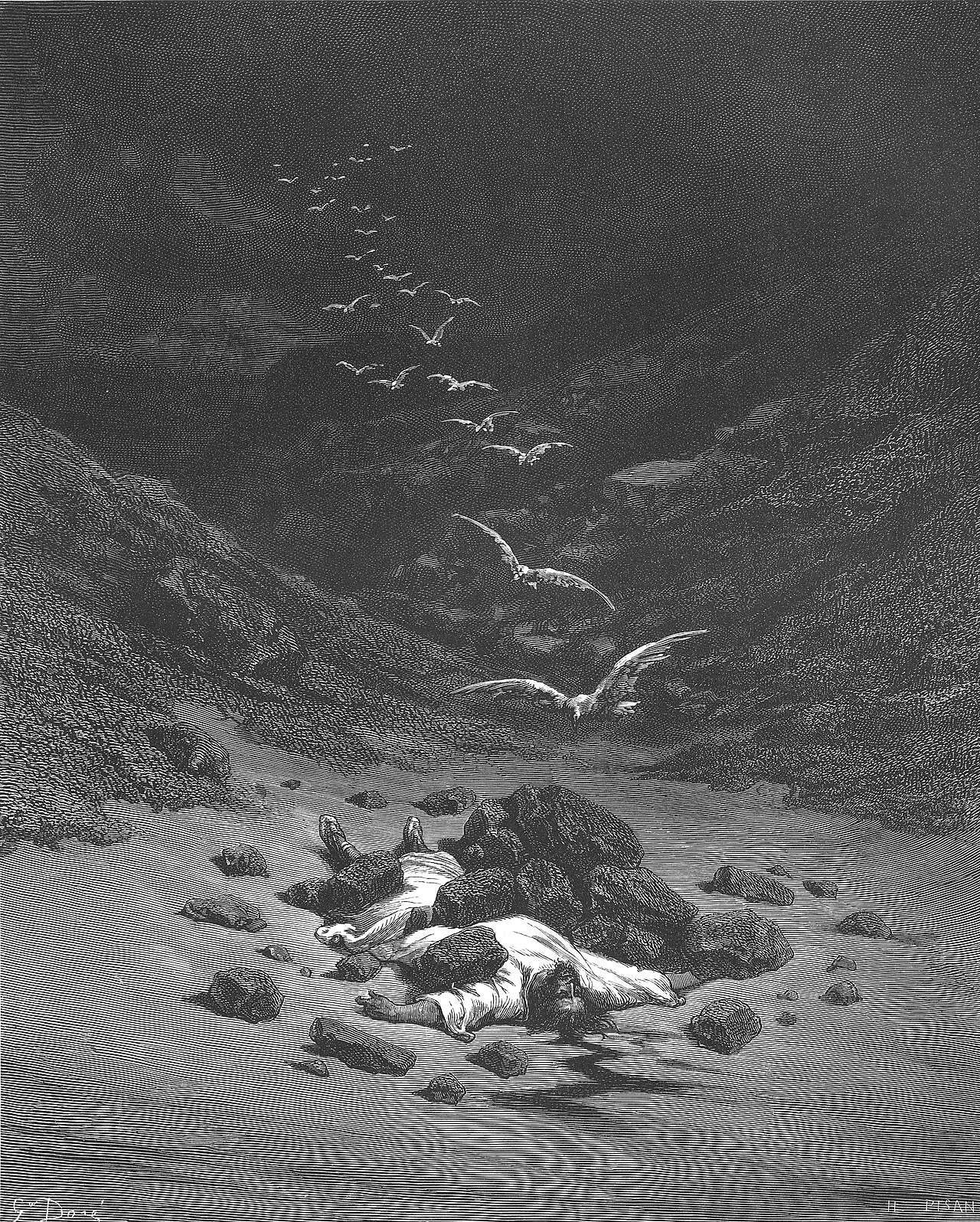
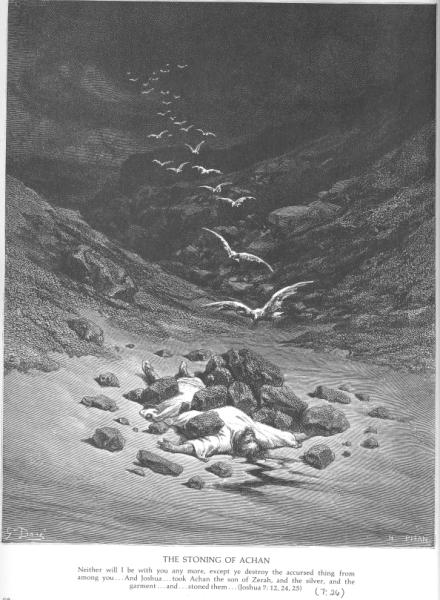
Joshua and all Israel take Achan “the son of Zerah” with the silver, the garment and the wedge of gold, his sons and daughters, his cattle, his tent and all that he has, to the valley of Achor. Joshua says, “Why hast thou troubled us? the LORD shall trouble thee this day”; all Israel stones him, and KJV continues that they “burned them with fire, after they had stoned them with stones”, where BG1940 has the singular, „изгориха го с огън“ after they stoned him. A great heap of stones is raised over him, the LORD turns from the fierceness of His anger, and the place is called the valley of Achor (BG1940 margin: “that is, trouble”). Smith says that he was stoned with his whole family; Easton, that he was stoned and then he and all that belonged to him were consumed by fire. Josh 7:24-26.
When the eastern tribes build their altar by the Jordan, the envoys of the congregation recall him: “Did not Achan the son of Zerah commit a trespass in the accursed thing, and wrath fell on all the congregation of Israel? and that man perished not alone in his iniquity.” The lesson “Haunted by the Past”, 9 December 2025, notes that “trespass” is the same Hebrew word as for Achan's sin in Joshua 7:1 and treats his case as a precedent for treachery in the altar dispute; Ellen G. White, Patriarchs and Prophets, chapter 48, says that the ten tribes remembered how, in Achan's case, God had rebuked the lack of vigilance in discovering the sins among them. Josh 22:16; Josh 22:20.
Chronicles names him Achar, “the troubler of Israel, who transgressed in the thing accursed”, as the son of Carmi; BG1940 writes Ахар with the margin note “in Joshua 7:1, Achan”. Easton explains Achar as “one who troubles”, given in commemoration of his crime; Smith renders the name Achan “troubler”, and Hitchcock gives “he that troubleth”. 1 Chr 2:7.