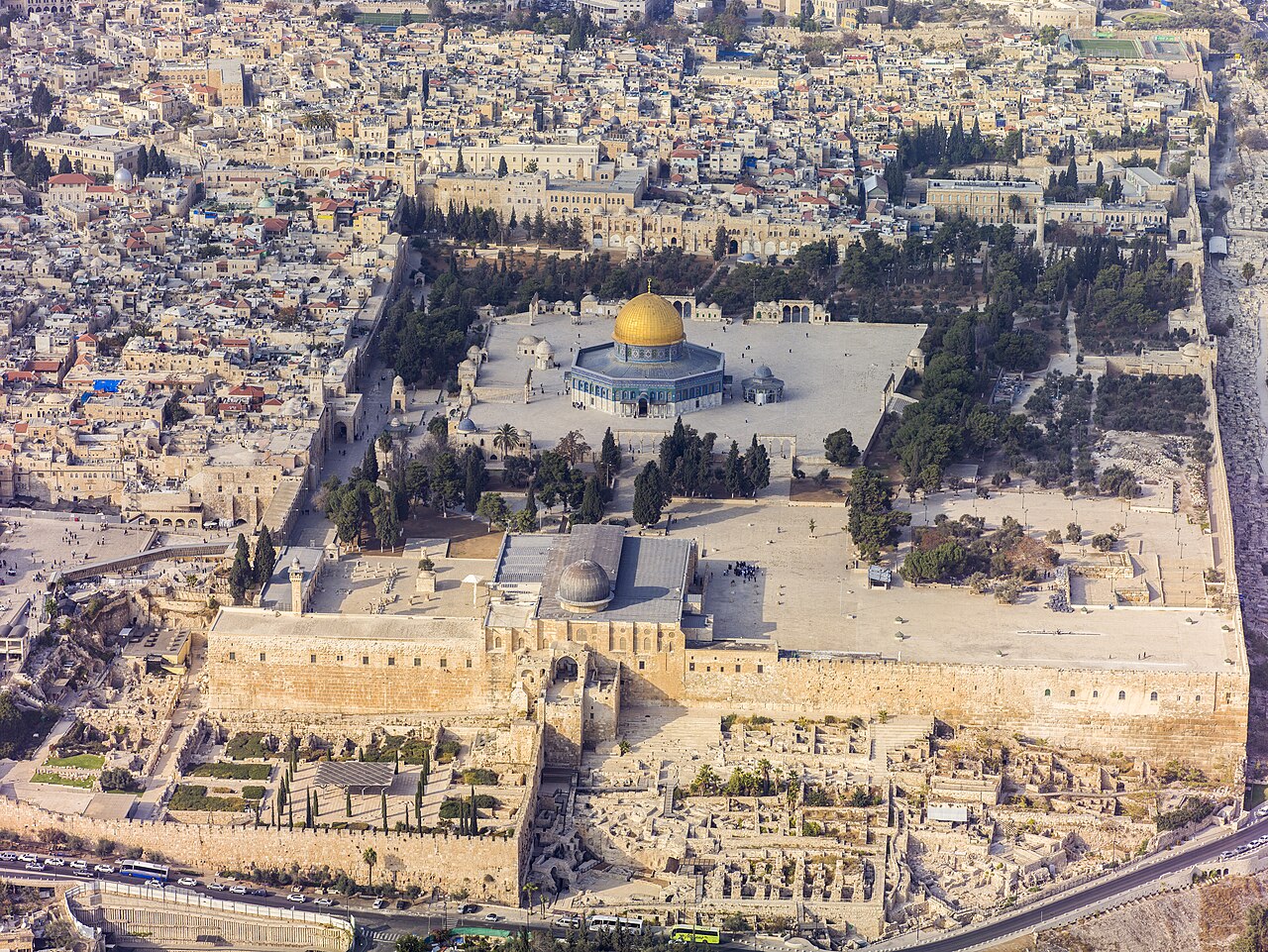
Jerusalem
Jerusalem is a royal and religious center in the biblical sources. The Davidic accounts identify the earlier settlement as Jebus and its inhabitants as Jebusites; the captured stronghold is called Zion and the City of David. The later texts associate Jerusalem with the temple, the gathering of Israel’s leaders and worshippers, and major events in the ministry of Jesus and the beginnings of Christian witness. 2 Sam 5:6-10 1 Chr 11:4-9 1 Kgs 8:1-13 Acts 2:1-13
Jesus’ arrival on a colt carries royal significance. The connection with the promised king in Zechariah explains the entry as a public messianic claim. The scriptural evidence supports that interpretation without supplying the precise gate through which the procession entered. Mark 11:1-11 Zech 9:9-10 (“The Triumphal Entry”)
In the city’s earlier royal history, the accounts of its incorporation into David’s kingdom emphasize conquest and building. Joab is named in the capture and repair, while David takes residence in the stronghold and enlarges the city. Under Solomon, the national gathering brings the covenant ark into the temple’s inner sanctuary. The tablets inside it recall Moses and the covenant connected with the departure from Egypt. The cloud that fills the sanctuary is described as the glory of the Lord. Political rule and covenant worship are therefore closely joined in these records. 2 Sam 5:6-10 1 Chr 11:4-9 1 Kgs 8:1-13
The later destruction is presented in Chronicles in relation to rejected divine messengers. The temple, walls and palaces are burned or broken down, and survivors are taken to Babylon. The same account names Jeremiah in explaining the period of desolation and Cyrus in the proclamation permitting a return and rebuilding. Ezra preserves the written invitation and the instruction to support returning worshippers. These notices establish successive periods of destruction and restoration, without requiring an imported date to be treated as the wording of Scripture. 2 Chr 36:15-23 Ezra 1:1-4 (Destruction of Solomon's Temple (the house of the LORD) by Nebuzaradan) (Cyrus decreed the Temple in Jerusalem should be rebuilt)
Nehemiah receives authorization from Artaxerxes in the king’s twentieth year. The request includes letters to the provincial governors and to Asaph, keeper of the royal forest, for timber for the fortress gates, city wall and his residence. The subsequent inspection records damaged walls and burned gates. Nehemiah’s appeal receives a collective commitment to the work, while Sanballat, Tobiah and Geshem oppose the undertaking. Royal authorization, material provision and local resistance are therefore documented features of the restoration. Neh 2:1-20 (Nehemiah's first return to Jerusalem)
The Gospel entry situates Jesus near Bethphage, Bethany and the Mount of Olives. The acclamations invoke David’s kingdom, and Jesus enters the temple before returning to Bethany. Luke also preserves his lament over Jerusalem and the warning of siege and destruction. The city is therefore described both as the setting of public recognition and as the object of a warning about failure to recognize its visitation. Mark 11:1-11 Luke 19:41-44 (Triumphal Entry)
The city-associated trial accounts name Annas, Caiaphas, Pilate and Herod, who is explicitly in Jerusalem at the time; Simon Peter’s denial is recorded in the priestly courtyard setting. John 18:12-24 Luke 23:1-12 John locates the crucifixion of Jesus at Golgotha, near the city, and records his death. John 19:16-22 John 19:28-37 Joseph of Arimathea and Nicodemus prepare the body for burial in a new garden tomb. The resurrection account names Mary Magdalene and Simon Peter in connection with the empty tomb and records Mary Magdalene’s encounter with the risen Jesus. These testimonies connect Jerusalem with priestly hearings, the governor’s authority, execution, burial and testimony to the resurrection. John 19:38-42 John 20:1-18 (Jewish Trials) (Roman Trials) (Crucifixion and Burial) (Resurrection and Ascension)
Jerusalem remains the starting point of the commissioned witness after the resurrection. Jesus instructs the disciples to wait for the Holy Spirit and extends their task to the ends of the earth. At Pentecost, people from many regions hear the great works of God in their own languages. Acts records differing responses within this gathering. The evidence locates the emergence of the wider mission in the city’s international religious setting, rather than confining the message to its local population. Acts 1:4-8 Acts 2:1-13 (The Holy Spirit comes)
The city’s name also appears in the prophetic vision of New Jerusalem. Revelation places this holy city in the setting of a new heaven and earth and describes it descending from God. Divine presence among his people accompanies the removal of tears, death and pain. This is the promised city of renewed creation, giving the name a prophetic horizon alongside the records of Jerusalem’s earthly history. Rev 21:1-4