По-големият от двамата синове на Яков от Рахил (Бит. 30:23, 24), която при раждането му казала: „Бог отне [евр. ‘asaph] позора ми“. „Господ да ми прибави [евр. yoseph] друг син“ (Бит. 30:24). Той бил дете, вероятно на шест години, когато баща му се върнал от Харан в Ханаан и се установил в стария патриархален град Хеврон. „Израил обичаше Йосиф повече от всичките си деца, защото беше син на старините му“, и му „направи дълга дреха с ръкави“ (Бит. 37:3, бележка в полето на R.V.), тоест дълга и широка дреха, каквато носели децата на знатните. Това изглежда е правилният превод на думите. Изразът обаче може да бъде преведен и като „дреха от много парчета“, тоест съшита от множество малки парчета с различни цветове.
Когато бил около седемнадесетгодишен, Йосиф си навлякъл завистта и омразата на братята си (Бит. 37:4). Те „го мразеха и не можеха да му говорят миролюбиво“. Гневът им се усилил, когато им разказал сънищата си (37:11).
Яков, желаейки да получи вести за синовете си, които били отишли със стадата си в Сихем, на около 60 мили от Хеврон, изпратил Йосиф като свой пратеник да се осведоми за тях. Йосиф установил, че те били напуснали Сихем и отишли в Дотан, където ги последвал. Щом го видели да идва, започнали да заговорничат срещу него и щели да го убият, ако Рувим не се бил намесил. Накрая го продали на група исмаилски търговци за двадесет сребърника (сикли) (около 2 долара, 10 шилинга), с десет сребърника по-малко от тогавашната цена на роб, защото „малко ги интересуваше колко ще получат за него, стига да се отърват от него“. Тези търговци се спускали с разнообразни стоки към египетския пазар, отвели го там и накрая го продали като роб на Потифар, „фараонов служител и началник на стражата“ (Бит. 37:36). „Господ благослови дома на египтянина заради Йосиф“ и Потифар го поставил за управител на дома си. Накрая, след като жената на Потифар отправила срещу него лъжливо обвинение, той незабавно бил хвърлен в държавния затвор (39; 40), където останал поне две години. След известно време „началникът на виночерпците“ и „началникът на хлебарите“ от фараоновия двор били хвърлени в същия затвор (40:2). Всеки от тези нови затворници сънувал сън през една и съща нощ; Йосиф разтълкувал сънищата им и събитията се развили така, както бил казал.
Благодарение на това по-късно началникът на виночерпците си спомнил за Йосиф, когато и фараонът сънувал. По негово предложение Йосиф бил изведен от затвора, за да разтълкува сънищата на царя. Фараонът останал много доволен от мъдростта, с която Йосиф разтълкувал сънищата му, и от съвета му относно предсказаните тогава събития; той го поставил над цялата египетска земя (Бит. 41:46) и му дал името Цафнат-Панеах. Йосиф се оженил за Асенета, дъщерята на жреца на Он, и така станал член на жреческото съсловие. По това време Йосиф бил около тридесетгодишен.
Както Йосиф бил разтълкувал, настъпили седем години на изобилие, през които той натрупал огромни количества жито в построени за тази цел житници. След тези години настъпили седем години на глад „по цялото лице на земята“, когато „от всички страни идваха в Египет при Йосиф да купуват жито“ (Бит. 41:56, 57; 47:13, 14). Така „Йосиф събра всички пари, които се намираха в египетската земя и в ханаанската земя, за житото, което купуваха“. След това целият добитък и цялата земя, а накрая и самите египтяни станали собственост на фараона.
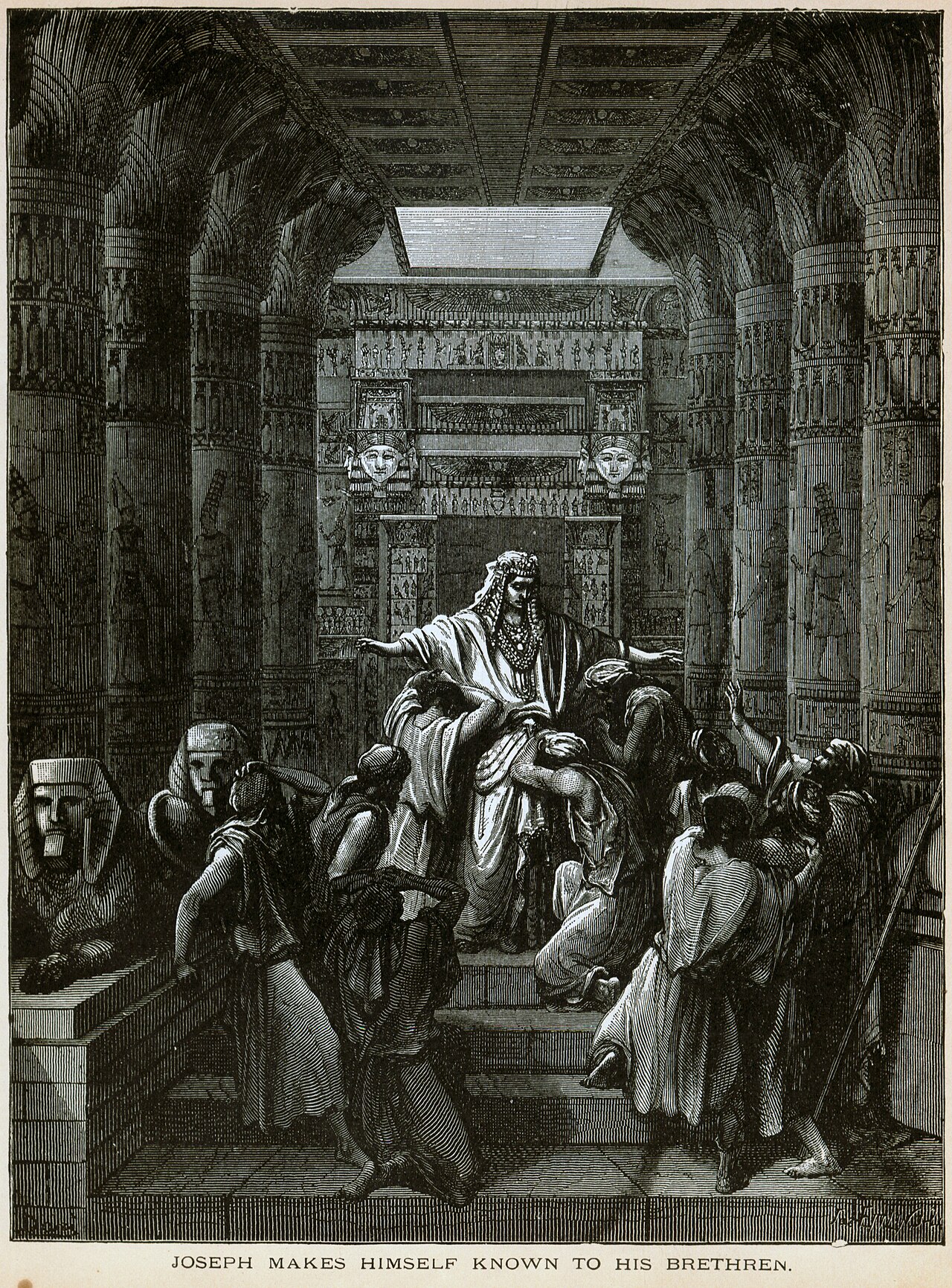
През този период на глад братята на Йосиф също слезли в Египет, за да купят жито. Историята на отношенията му с тях и на начина, по който накрая им разкрил кой е, е един от най-интересните разкази, които могат да се прочетат (Бит. 42-45). Йосиф заръчал на братята си да се върнат и да доведат Яков и семейството му в египетската земя, като казал: „Ще ви дам най-доброто от египетската земя и ще ядете от изобилието на земята. Не жалете вещите си, защото най-доброто от цялата земя е ваше“. И така Яков и семейството му, на брой седемдесет души, заедно с „всичко, което имаха“, слезли в Египет. Те били настанени в земята Гесем, където Йосиф срещнал баща си, „хвърли се на шията му и дълго плака на шията му“ (Бит. 46:29).
Разкопките на д-р Навил показали, че земята Гесем е Вади Тумилат, между Исмаилия и Заказик. В Гесем (на египетски Qosem) те имали пасища за стадата си, намирали се близо до азиатската граница на Египет и били встрани от египетското население. Един надпис говори за тази област като за предоставена на странстващите пастири от Азия.
Накрая Яков починал и в изпълнение на обещанието, което бил изискал от него, Йосиф отишъл в Ханаан, за да погребе баща си в „нивата на хетееца Ефрон“ (Бит. 47:29-31; 50:1-14). Това е последното записано действие на Йосиф, който отново се върнал в Египет.
„„Приказката за двамата братя“, египетска повест, написана за сина на фараона от времето на потисничеството, съдържа епизод, много подобен на библейския разказ за отношението на жената на Потифар към Йосиф. Потифар и Потифера са египетското Pa-tu-pa-Ra, „дарът на бога на слънцето“. Името, дадено на Йосиф, Цафнат-Панеах, вероятно е египетското Zaf-nti-pa-ankh, „хранител на живия“, тоест на фараона. В надписите има много примери за чужденци в Египет, които получават египетски имена и се издигат до най-висшите държавни длъжности.“
От жена си Асенета Йосиф имал двама синове, Манасия и Ефрем (Бит. 41:50). Йосиф получил от братята си обещание, че когато дойде времето Бог да „ги доведе в земята, за която се е клел на Авраам, на Исаак и на Яков“, те ще изнесат костите му от Египет. Накрая той починал на сто и десет години; „балсамираха го и го положиха в ковчег“ (Бит. 50:26). Това обещание било вярно изпълнено. Много по-късно, когато настъпил Изходът, техните потомци носели тялото със себе си през четиридесетте години на странстване и накрая го погребали в Сихем, в участъка земя, който Яков купил от синовете на Емор (Ис.Нав. 24:32; срв. Бит. 33:19). Със смъртта на Йосиф завършила патриархалната епоха в историята на Израил.
Фараонът, при когото Йосиф се издигнал, вероятно бил Апепи, или Апопис, последният от хиксоските царе. Някои обаче смятат, че Йосиф дошъл в Египет при царуването на Тутмос III (вж. ФАРАОН), дълго след прогонването на хиксосите.
Името Йосиф обозначава двете племена Ефрем и Манасия във Втор. 33:13-17; царството Израил в Езек. 37:16, 19, Ам 5:6; и целия заветен народ на Израил в Пс. 81:4.
Покажи английския оригинал
The elder of the two sons of Jacob by Rachel (Gen. 30:23, 24), who, on the occasion of his birth, said, “God hath taken away [Heb. ‘asaph] my reproach.” “The Lord shall add [Heb. yoseph] to me another son” (Gen. 30:24). He was a child of probably six years of age when his father returned from Haran to Canaan and took up his residence in the old patriarchal town of Hebron. “Now Israel loved Joseph more than all his children, because he was the son of his old age,” and he “made him a long garment with sleeves” (Gen. 37:3, R.V. marg.), i.e., a garment long and full, such as was worn by the children of nobles. This seems to be the correct rendering of the words. The phrase, however, may also be rendered, “a coat of many pieces”, i.e., a patchwork of many small pieces of divers colours.
When he was about seventeen years old Joseph incurred the jealous hatred of his brothers (Gen. 37:4). They “hated him, and could not speak peaceably unto him.” Their anger was increased when he told them his dreams (37:11).
Jacob desiring to hear tidings of his sons, who had gone to Shechem with their flocks, some 60 miles from Hebron, sent Joseph as his messenger to make inquiry regarding them. Joseph found that they had left Shechem for Dothan, whither he followed them. As soon as they saw him coming they began to plot against him, and would have killed him had not Reuben interposed. They ultimately sold him to a company of Ishmaelite merchants for twenty pieces (shekels) of silver (about $2, 10s.), ten pieces less than the current value of a slave, for “they cared little what they had for him, if so be they were rid of him.” These merchants were going down with a varied assortment of merchandise to the Egyptian market, and thither they conveyed him, and ultimately sold him as a slave to Potiphar, an “officer of Pharaoh’s, and captain of the guard” (Gen. 37:36). “The Lord blessed the Egyptian’s house for Joseph’s sake,” and Potiphar made him overseer over his house. At length a false charge having been brought against him by Potiphar’s wife, he was at once cast into the state prison (39; 40), where he remained for at least two years. After a while the “chief of the cupbearers” and the “chief of the bakers” of Pharaoh’s household were cast into the same prison (40:2). Each of these new prisoners dreamed a dream in the same night, which Joseph interpreted, the event occurring as he had said.
This led to Joseph’s being remembered subsequently by the chief butler when Pharaoh also dreamed. At his suggestion Joseph was brought from prison to interpret the king’s dreams. Pharaoh was well pleased with Joseph’s wisdom in interpreting his dreams, and with his counsel with reference to the events then predicted; and he set him over all the land of Egypt (Gen. 41:46), and gave him the name of Zaphnath-paaneah. He was married to Asenath, the daughter of the priest of On, and thus became a member of the priestly class. Joseph was now about thirty years of age.
As Joseph had interpreted, seven years of plenty came, during which he stored up great abundance of corn in granaries built for the purpose. These years were followed by seven years of famine “over all the face of the earth,” when “all countries came into Egypt to Joseph to buy corn” (Gen. 41:56, 57; 47:13, 14). Thus “Joseph gathered up all the money that was in the land of Egypt, and in the land of Canaan, for the corn which they bought.” Afterwards all the cattle and all the land, and at last the Egyptians themselves, became the property of Pharaoh.
During this period of famine Joseph’s brethren also came down to Egypt to buy corn. The history of his dealings with them, and of the manner in which he at length made himself known to them, is one of the most interesting narratives that can be read (Gen. 42-45). Joseph directed his brethren to return and bring Jacob and his family to the land of Egypt, saying, “I will give you the good of the land of Egypt, and ye shall eat the fat of the land. Regard not your stuff; for the good of all the land is yours.” Accordingly Jacob and his family, to the number of threescore and ten souls, together with “all that they had,” went down to Egypt. They were settled in the land of Goshen, where Joseph met his father, and “fell on his neck, and wept on his neck a good while” (Gen. 46:29).
The excavations of Dr. Naville have shown the land of Goshen to be the Wady Tumilat, between Ismailia and Zagazig. In Goshen (Egyptian Qosem) they had pasture for their flocks, were near the Asiatic frontier of Egypt, and were out of the way of the Egyptian people. An inscription speaks of it as a district given up to the wandering shepherds of Asia.
Jacob at length died, and in fulfilment of a promise which he had exacted, Joseph went up to Canaan to bury his father in “the field of Ephron the Hittite” (Gen. 47:29-31; 50:1-14). This was the last recorded act of Joseph, who again returned to Egypt.
“The ‘Story of the Two Brothers,’ an Egyptian romance written for the son of the Pharaoh of the Oppression, contains an episode very similar to the Biblical account of Joseph’s treatment by Potiphar’s wife. Potiphar and Potipherah are the Egyptian Pa-tu-pa-Ra, ‘the gift of the sun-god.’ The name given to Joseph, Zaphnath-paaneah, is probably the Egyptian Zaf-nti-pa-ankh, ‘nourisher of the living one,’ i.e., of the Pharaoh. There are many instances in the inscriptions of foreigners in Egypt receiving Egyptian names, and rising to the highest offices of state.”
By his wife Asenath, Joseph had two sons, Manasseh and Ephraim (Gen. 41:50). Joseph having obtained a promise from his brethren that when the time should come that God would “bring them unto the land which he sware to Abraham, to Isaac, and to Jacob,” they would carry up his bones out of Egypt, at length died, at the age of one hundred and ten years; and “they embalmed him, and he was put in a coffin” (Gen. 50:26). This promise was faithfully observed. Their descendants, long after, when the Exodus came, carried the body about with them during their forty years’ wanderings, and at length buried it in Shechem, in the parcel of ground which Jacob bought from the sons of Hamor (Josh. 24:32; comp. Gen. 33:19). With the death of Joseph the patriarchal age of the history of Israel came to a close.
The Pharaoh of Joseph’s elevation was probably Apepi, or Apopis, the last of the Hyksos kings. Some, however, think that Joseph came to Egypt in the reign of Thothmes III. (see PHARAOH), long after the expulsion of the Hyksos.
The name Joseph denotes the two tribes of Ephraim and Manasseh in Deut. 33:13-17; the kingdom of Israel in Ezek. 37:16, 19, Amos 5:6; and the whole covenant people of Israel in Ps. 81:4.